They’ve sold their hip clothing designs out of their basement and out of the back of their car. Now the young designers and marketers behind Toronto’s Too Black Guys can boast that their wares are being sold out of film-maker Spike Lee’s shop in Brooklyn, as well as five other funky U.S. stores from Washington to L.A.
Neither of the co-owners studied fashion – Adrian, 24, holds a BA in economics and Robert, 23, studied marketing at community college. Still, they have designed their own T-shirts, jeans, baseball caps and sweatshirts, and the message is at least as important as the medium.
“They forgot to ask my name and called me negro,” reads a typical shirt. Earl Smith, the manager at Lee’s Brooklyn shop, says he loves the clothes but adds that customers often ask his staff to explain what the thought-provoking garments mean.
Toronto – It’s Tuesday, November 5 – American election night. A crisp autumn evening greets our search for the political philosophy buried in the US Democratic Party. Is it really the liberal heart of the United States as legend has it, or is it, as critics charge, a carbon copy of the arch-rival Republicans?
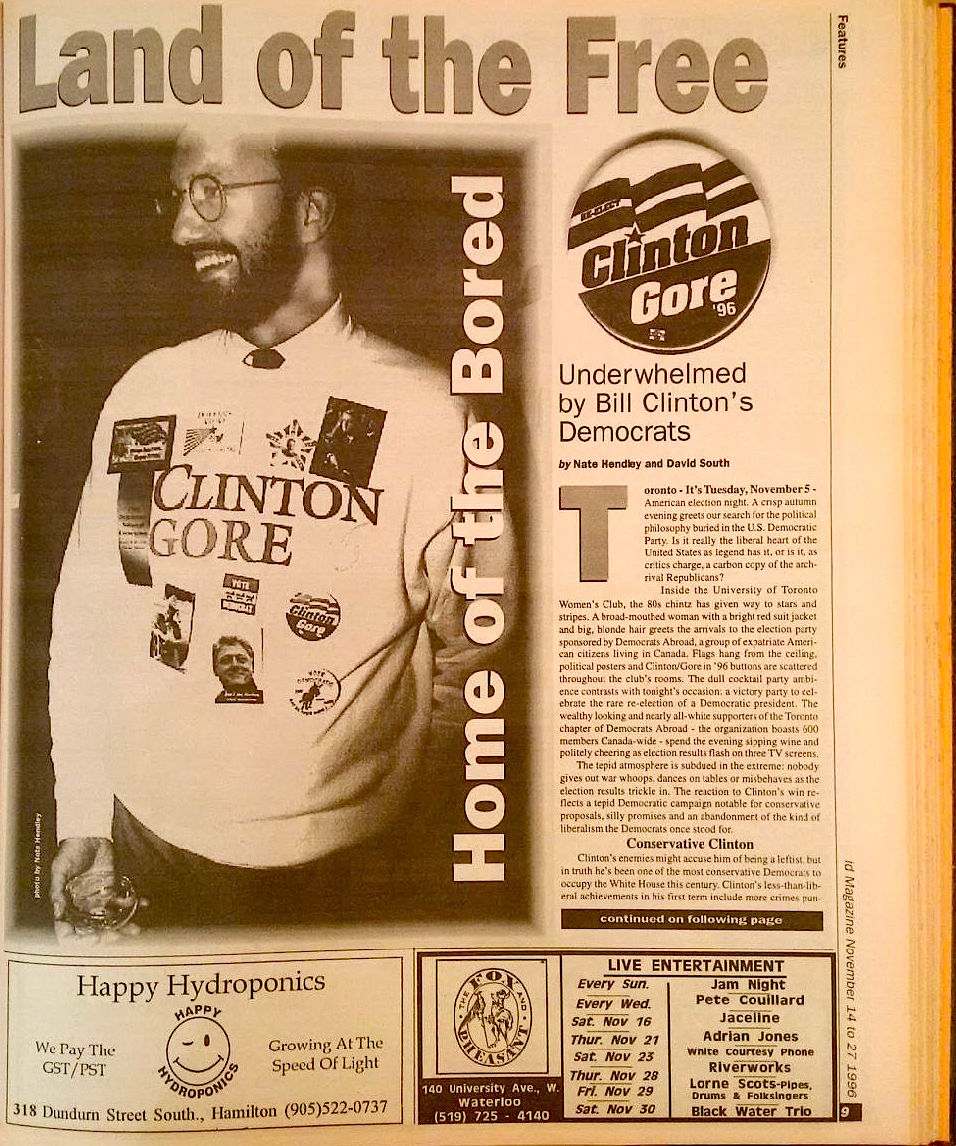
Inside the University of Toronto Women’s Club, the 80s chintz has given way to stars and stripes. A broad-mouthed woman with a bright red suit jacket and big, blonde hair greets the arrivals to the election party sponsored by Democrats Abroad, a group of expatriate American citizens living in Canada. Flags hang from the ceiling, political posters and Clinton/Gore in ’96 buttons are scattered throughout the club’s rooms. The dull cocktail party ambience contrasts with tonight’s occasion: a victory party to celebrate the rare re-election of a Democratic president. The wealthy looking and nearly all-white supporters of the Toronto chapter of Democrats Abroad – the organization boasts 600 members Canada-wide – spend the evening sipping wine and politely cheering as election results flash on three TV screens.
The tepid atmosphere is subdued in the extreme: nobody gives out war whoops, dances on tables or misbehaves as the election results trickle in. The reaction to Clinton’s win reflects a tepid Democratic campaign notable for conservative proposals, silly promises and an abandonment of the kind of liberalism the Democrats once stood for.
Conservative Clinton
Clinton’s enemies might accuse him of being a leftist, but in truth he’s been one of the most conservative Democrats to occupy the White House this century. Clinton’s less-than-liberal achievements in his first term include more crimes punishable by the death penalty, a promised additional 100,000 police on the streets, “V-Chip” technology in television sets, an intensification of the war on drugs and an abandonment of federal responsibility for welfare. Clinton’s re-election campaign featured promises to encourage school kids to wear uniforms, a vow to get even tougher on drug use by such measures as forcing teenagers to pass urine tests before issuing them driver’s licenses, and a recommitment to eliminating the US federal deficit.
The mostly monied professionals at the party are well aware of Clinton’s rightward turn since taking office in 1992, but put the president’s conservative leanings down to pragmatic politics.
“Am I disappointed in Clinton?” asks Bill Cronau, the past chair of Democrats Abroad and self-professed liberal. “Sure, but I’m not surprised that Clinton became more conservative. He is a Southerner after all.”
Arkansas-born Clinton used law and order issues “to chop GOP off,” adds Cronau, an insurance manager for Manulife, on the president’s theft of the Republican’s thunder.
The closest thing at the party to an actual living American politician is Tom Ward. Ward, with a detached air and the glow of a politician, soon attracted an audience when he entered the room. Ward twice ran unsuccessfully to become a Democratic congressman for Indiana, and agrees that overall Clinton has been “a disappointment as a liberal.”
He also agrees the president has moved far more to the right than previous Democratic presidents such as Jimmy Carter or Lyndon Johnson. Still, Ward, who has lived in East York since 1989, gives Clinton liberal kudos for his attempted passage of health care reforms. Yet Clinton’s proposed health care plan fell apart in 1994 following intense debate and criticism from the Republicans. Ward says he would try to introduce Canadian political ideas such as universal health care and stricter gun control were he to return to Indiana for a third run at Congress.
Canada or Clinton?
Joan Sumner, a psychologist originally from New York City, says she was initially impressed by Canada’s health care system, and by Clinton’s attempt at passing similar legislation in the US. But now she’s having second thoughts.
The Republicans, under Ronald Reagan and George Bush “decimated the health care system in the United States,” she says. “To run a medical practice became like running a business. It became difficult to collect from the insurance companies, who were reluctant to pay for psychiatric care.”
Sumner, who works with people who have “closed-head injuries,” has lived in Canada for 11 years. At the time she arrived, she found Canada’s health care system in good shape. “Now it’s a disaster and going from bad to worse. Truth be told, I am thinking of looking back across the border, especially with Clinton’s second term. The federal Liberals and the provincial government have no commitment to the people of Ontario.”
She complains about the extent of America’s influence on the Canadian political system.
Mike Harris, she fears, is borrowing his ideas from conservative Republican governor Christine Todd Williams in New Jersey. She would prefer Harris to look to liberals like former New York governor Mario Cuomo for inspiration. Unfortunately, Cuomo’s version of liberalism is out of fashion in both Canada and the United States these days.
While nearly everyone at the party expresses displeasure with Clinton’s turn to the right, few can explain why they supported him over his Republican challenger, Bob Dole.
In one corner is a bearded man in a white sweatshirt littered with Clinton/Gore campaign buttons. This super-supporter is Tim Wilkins, a Toronto social worker originally from Florida. When asked what policies attracted him to support the Democrats, Wilkins becomes flustered and unable to give any specifics.
“Been with the Democrats since 1988,” says Wilkins. “I could not identify with the Republicans at all. I think Bush was a very poor selection, and when he selected Dan Quale as his running mate, I thought ‘my Lord, you’ve just blown that ticket.’ The Republicans are just too right-wing, completely out of touch with Americans. And that’s an example of what’s happening tonight. Bob Dole and (running mate) Jack Kemp are completely out of touch. They have no agenda, no economic plan.”
Clinton and Chretien
Byron Toben, a Montreal Democrat, thinks a Clinton win will cement the close personal relationship between Clinton and prime minister Jean Chretien.
“Clinton and Chretien have something of a mutual admiration society going,” says Toben, who does immigration work, helping US citizens to move to Canada. “Clinton and Chretien are both on the same wavelength.”
Anne Kerr, the Canadian-born wife of Tom Ward, also agrees. She says Clinton’s victory is important to Canada because Liberals have more in common with the Democrats than the Republicans.
True enough, both Chretien and Clinton represent parties traditionally viewed as left-of-centre. Both men ran on vaguely liberal platforms for election, and both turned sharply conservative after deciding that deficit-reduction was more important than social spending or government activism. The federal Liberals in Canada and the Democrats in the United States now support conservative agendas that aren’t too much different than the platforms of their right-wing rivals. The biggest difference between the two nations, as Ward points out, is that the United States now lacks any major left-wing party such as the New Democrats. The Greens, running as a left-wing alternative to the Democrats, with consumer crusader Ralph Nader as their candidate, pulled in slightly more than a half-million votes on November 5. That is more than other minor parties such as the Libertarians or US Taxpayers Party, but hardly enough to convince Clinton to turn sharply leftwards in his second term.
Disappointment with Clinton’s first term aside, the Democrats Abroad party briefly jolts awake towards the end of the evening when Clinton’s re-election is confirmed. Champagne corks are popped by the club’s wait staff, but nobody is in a hurry to grab a glass. The mood becomes slightly effervescent as tipsy Democrats grow more animated, only to be hit with some mind-numbing post-victory speeches by the group’s executive. After a few toasts, the moment passes and a steady stream of Democrats slips out, thankful their man had won over Bob Dole, becoming the first Democratic president to win a second consecutive term in office since Franklin Roosevelt in 1936.
Id Magazine was published in Guelph, Canada in the 1990s.
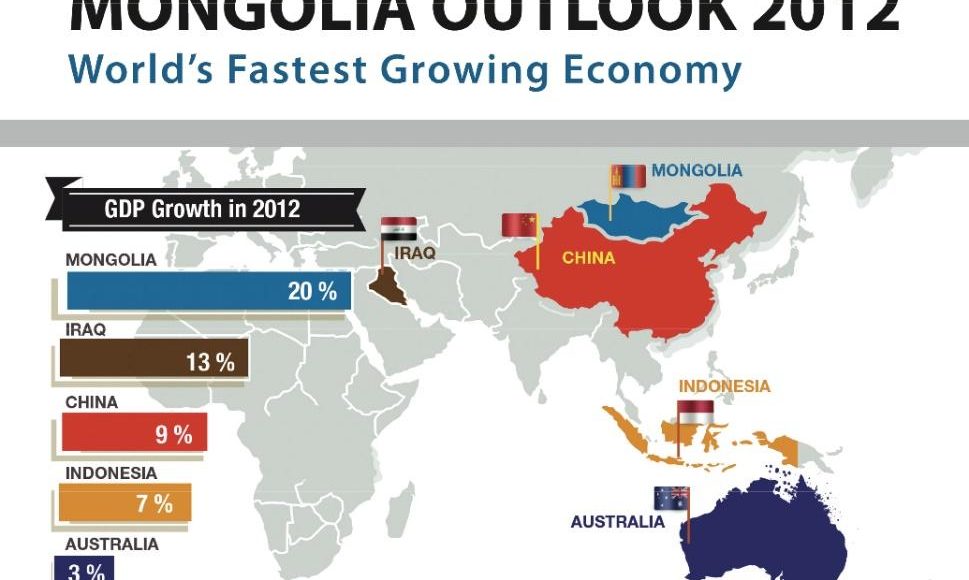
The world has changed considerably since then; and so has Mongolia. The digital revolution has rolled across the planet, the attacks of 9/11 unleashed a wave of violence and wars, and Mongolia even became the fastest-growing economy in the world a few years ago (2012). But back when this book was researched, Mongolia was just coming out of decades of isolation within the Soviet orbit under Communism, and the country experienced in the 1990s “one of the biggest peacetime economic collapses ever” (Mongolia’s Economic Reforms: Background, Content and Prospects, Richard Pomfret, University of Adelaide, 1994).
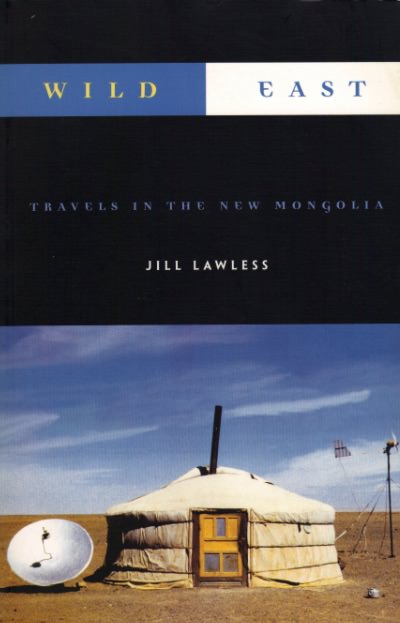
That collapse made for some crazy times, as Wild East shows.
Wild East was called one of the top 10 Canadian travel books of 2000 by The Globe and Mail.
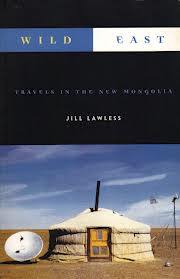
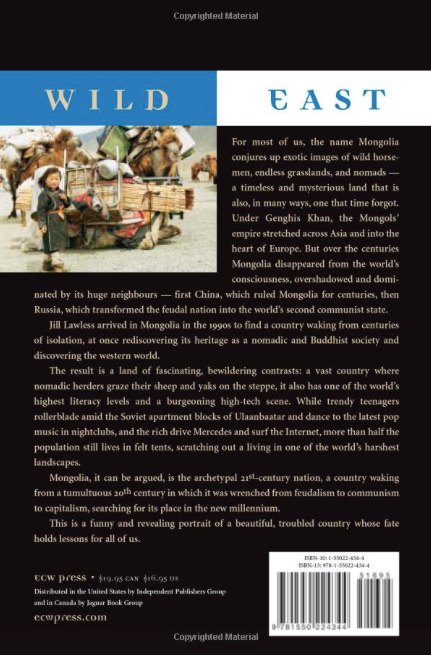
Reviews for Wild East: Travels in the New Mongolia by Jill Lawless:
The Globe and Mail
“Engaging…a revealing and often amusing account of her journeys through a beautiful country awakening from a tumultuous era.”
The Georgia Straight, Vancouver
“This readable and reportorial book is the perfect antidote to … those tiresomely difficult, pointlessly dangerous, and essentially fake expedtions undertaken against the advice of local people who know better.”
Toronto Star
“Lawless introduces us to Mongolia’s tabloid press, to teenage mineworkers, sharp-eyed young hustlers, nomads whose only possessions are their livestock, Mongolian wrestlers and Mongolian horse races.”
Mongolian Buryat Civilisation Bookstore
“Wryly funny and wide-spectrum account of Mongolia’s tumultuous rebirthing into the 21st century. Half the population lives in Soviet apartment blocks and watches satellite TV but the other half still eek a living from the exquisite, barren hills while living in nomadic felt tents. Of course, I’d much rather be in the tents… but whatever your preference, you will definitely enjoy Ms. Lawless’ writing. She was editor of an Ulaan Baator newspaper for two years, and she tells it like it is. Very highly recommended.”
“Jill Lawless’ book is not a scholarly tome per se, yet it is of definite value to the contemporary Mongolian scholar … Lawless’ period is 1997-1999, the heart of the tumultuous and ill-spent years of Democratic Coalition Government… a period of great hopes for democratic flowering and free market enterprise leading the nation to prosperity and progress.”
Copies of Wild East: Travels in the New Mongolia by Jill Lawless are still available in various editions and languages.A promotional poster for Wild East from 2003.
The New York Post called Wild East: Travels in the New Mongolia “harrowing, hilarious” (April 26, 2016).New brand sites for Jill Lawless and Wild East on the way for 2021.
“This is a good, fun book about life in Mongolia. … it’s an interesting and often amusing series of stories loosely connected.”
On the difference between Wild East: Travels in the New Mongolia and other travel writing on contemporary Mongolia:
“Others sent me Jill Lawless’s Wild East: The New Mongolia, a compilation of pieces she wrote when she was editor of Mongolia’s English-language newspaper, the UB Post, during Mongolia’s transition from a socialist people’s republic to young democracy. With the wind shaking the frame of my ger, I lit the stove and read what these and other writers claimed to have found just outside my flapping felt walls.
“By the time veteran journalist Jasper Becker’s Mongolia: Travels in an Untamed Land arrived, I had put aside books written since Mongolia opened up to the West in the early 1990s. Most Western travellers and writers discovered the same sights from the back of a borrowed horse. Only Lawless had investigated the place over time on its own terms. The others, full of pith and vinegar and a standard set of assumptions about what they would find, built books on flights of fancy – golfing across Mongolia, following the path of medieval monks, ‘rediscovering shamanism’ – that were flimsier even than those that had set me in motion. The books were as exciting as museum diorama, papier-mâché models of their ‘medieval’ travels and capitalist fantasies.” Three Years in Mongolia: Trying to be a Travel Writer, Luke Meinzen, Kill Your Darlings, 10 April 2012
“In the early 2000s, Canadian journalist Jill Lawless accepted a correspondent position at a news outlet in the remote and isolated foreign capital of Ulaanbaatar, Mongolia. At that time, Mongolia’s media was newly privatized from beneath Communist oversight, and her role was as much a consultant for how to run a newspaper under freedom of the press, as she was a journalist with the UB Post.
“A political anthropologist, she uses complex-systems tools to analyze three different databases: Mongolians’ changing ideas on democracy and capitalism, the emergence of early states all over the world, and 19-20th century Cozumel.”
The Santa Fe Institute “is the world’s leading research center for complex systems science.”
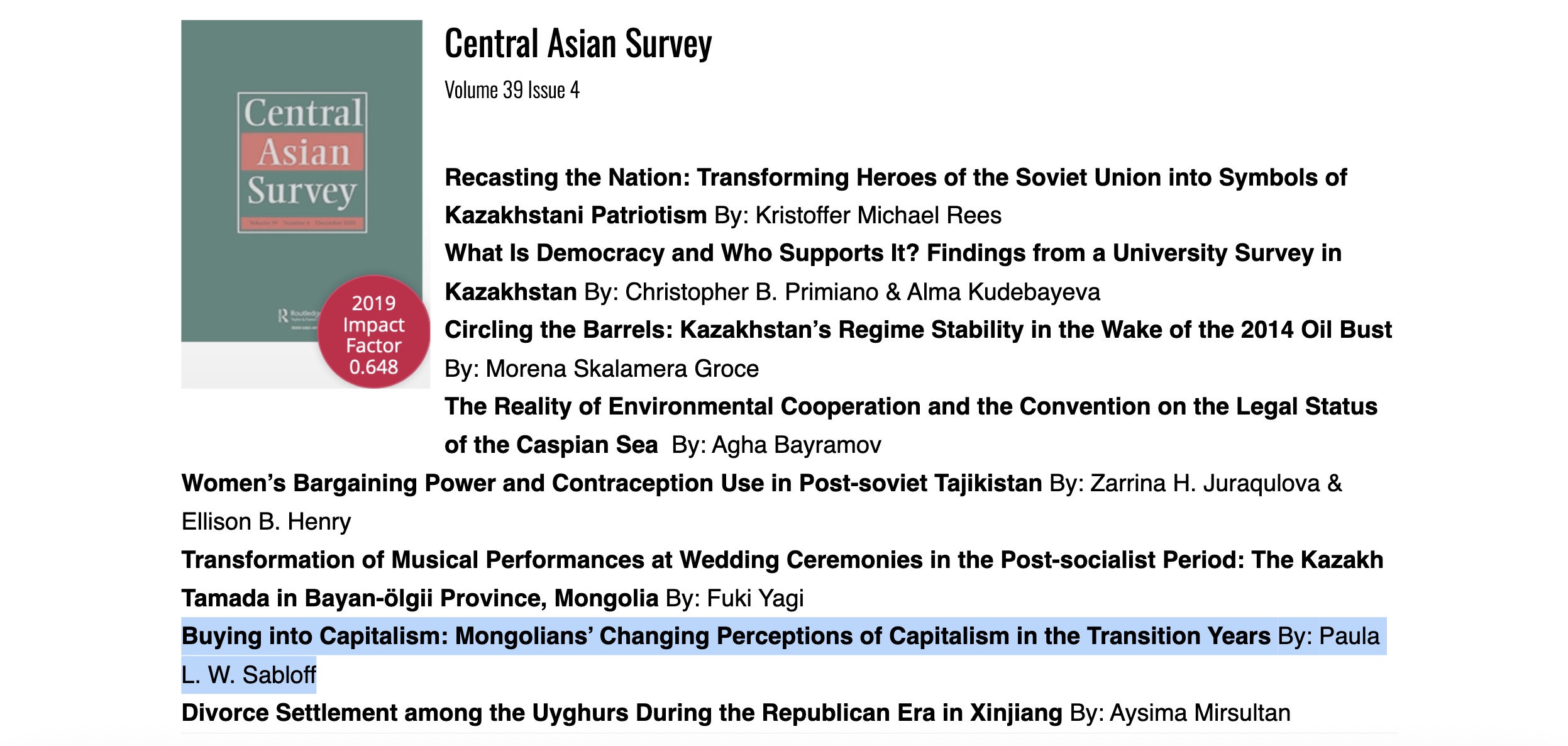
Paula L. W. Sabloff (2020) Buying into capitalism: Mongolians’ changing perceptions of capitalism in the transition years, Central Asian Survey, 39:4, 556-577, DOI: 10.1080/02634937.2020.1823819.










 David South Consulting
You must be logged in to post a comment.