Category: Blogroll

  • Big Data Can Transform the Global South’s Growing Cities

    Big Data Can Transform the Global South’s Growing Cities

    By David SouthDevelopment Challenges, South-South Solutions

    SOUTH-SOUTH CASE STUDY

    The coming years will see a major new force dominating development: Big Data. The term refers to the vast quantities of digital data being generated as a result of the proliferation of mobile phones, the Internet and social media across the global South – a so-called ‘data deluge’ (UN Global Pulse). It is an historically unprecedented surge in data, much of it coming from some of the poorest places on the planet and being gathered in real time.

    Big Data will have a profound impact on how the cities of the future develop, and will re-shape the way the challenges and problems of human development are handled.

    Estimates by Cisco (cisco.com) foresee 10 billion mobile Internet-enabled devices around the world by 2016. With the world population topping 7.3 billion by then, that will work out to 1.4 devices per person.

    Some estimates say 90 per cent of the digital data ever generated in the world has been produced in the past two years. It is also estimated that available digital data will increase by 40 per cent every year (UN Global Pulse). This digital transformation is being accompanied by another trend: the largest migration in human history from rural to semi-urban and urban areas.

    This presents an unprecedented opportunity to make this rapid urbanization and social change smarter and more responsive to human needs, and to avoid the failures of the past, from over-crowding to crime, disease, pollution, unemployment and poverty. Some believe data collection can radically alter development by flagging up problems quickly, giving cities the chance to respond and correct negative trends before they get out of control. In short, to build in resilience by way of digital technology.

    The latest region to see rapid industrialization and urbanization has been Asia – in particular China, a country that since the 1980s has simultaneously lifted the largest number of people in world history out of poverty and undertaken the biggest migration ever from rural to urban areas.

    And now Africa is beginning to follow in Asia’s wake.

    Unlike previous waves of industrialization and urbanization, Africa’s transformation is occurring in the age of the mobile phone, the Internet, personal computers and miniature electronic devices capable of more computing power than the computers used during the Apollo space programme (http://www.nasa.gov/audience/foreducators/diypodcast/rocket-evolution-index-diy.html). This changes the game significantly.

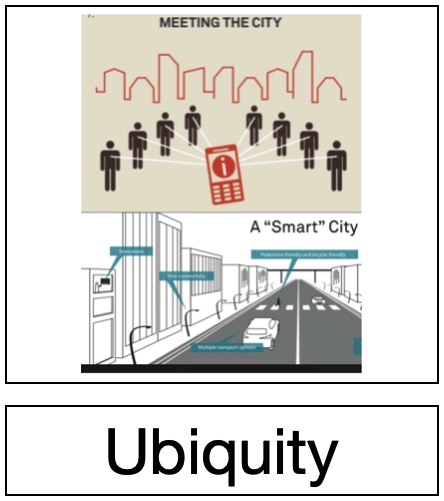
    This 21st-century approach to urban growth is at its most sophisticated, and utopian, in so-called “smart cities.” These are built-from-scratch cities that use the “Internet of Things”, where everything, from lamp posts to garbage bins to roads are embedded with microchips and radio frequency transmitters (RFID chips) (http://en.wikipedia.org/wiki/Radio-frequency_identification) to communicate data in real time. By analyzing this data, cities can be responsive to human needs and mitigate problems – improving waste collection and traffic management, reducing crime and pollution. Services can be customized to residents’ needs and liberate them to spend more time on things that matter such as their own health, family, work and hobbies. Examples of these cities include Tianjin Eco-city (tianjinecocity.gov.sg) in China, Masdar (masdar.ae) in Abu Dhabi in the United Arab Emirates and Songdo International Business District (songdo.com) in the Republic of Korea.

    These experimental smart cities are springing up in the East, and it will be the East – as well as Africa – that will see most of the action going forward. As the global management consulting firm McKinsey noted in its report Urban World: Mapping the Economic Power of Cities: “Over the next 15 years, the center of gravity of the urban world will move south and, even more decisively, east.”

    Cities in the global South will be generating the new prosperity of the 21st century. And it is widely accepted that people living in cities have the potential to become very efficient economically while rapidly driving prosperity higher.

    The McKinsey report says that “by 2025, developing-region cities of the City 600 (a list gathered by McKinsey) will be home to an estimated 235 million middle-class households earning more than (US) $20,000 a year at purchasing power parity (PPP).

    “Emerging-market mega-and middleweight cities together – 423 of them are included in the City 600 – are likely to contribute more than 45 percent of global growth from 2007 to 2025 (http://www.mckinsey.com/insights/urbanization/urban_world).”

    The world’s future prosperity is going to be found in the urban, the digitally connected, and the middle class.

    Tracking all this digital change is the UN Global Pulse. UN Global Pulse (unglobalpulse.org) was started by Secretary-General Ban Ki-moon in 2009 with a mandate to study these changes and build expertise in applying Big Data to global development. UN Global Pulse functions as a network of innovation labs where research on Big Data for development is conceived and coordinated. It partners with experts from UN agencies, governments, academia, and the private sector to research, develop, and mainstream approaches for applying real-time digital data to 21st-century development challenges.

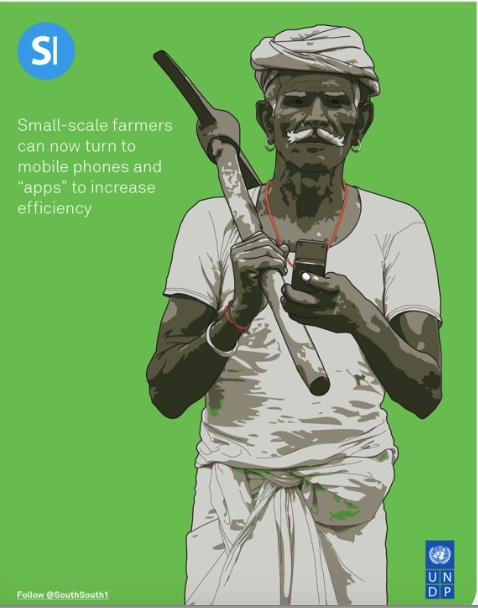
    Unlike major technological trends of the past, this one is not restricted to the industrialized, developed world. Through the spread of mobile phone technology, billions of people are now using a device that constantly collects digital data, even in the poorest places on earth.

    From an international development perspective, Big Data has five characteristics, according to UN Global Pulse: it is digitally generated, passively produced by people interacting with digital services, automatically collected, can be geographically or temporally traced and can be continuously analyzed in real time.

    Sources of Big Data include chatter from social networks, web server logs, traffic flow sensors, satellite imagery, telemetry from vehicles and financial market data.

    The key to using Big Data is combining datasets and then contrasting them in lots of different ways and doing it very quickly. The purpose?  Better decision-making, based on an understanding of what is really happening on the ground.

    This data exceeds the capability of existing database software. It is either too much, or comes in too quickly, or can’t be handled using current software technology. Tackling this problem is creating a whole new wave of opportunities for those working in information technology.

    As technology and processing power continue to improve, the cost of wrestling with this data and putting it to use is coming down.

    The data can be analyzed for patterns and hidden information that before would have been too difficult to gather. This approach has been used by big companies such as WalMart (walmart.com), but it has cost them a large amount of money and time.

    Pioneers in Big Data include search engine Google, email and search provider Yahoo, online shopping service Amazon and social media service Facebook. Many supermarkets use Big Data to analyze the way customers behave when they are shopping, combining it with their social and geographical data.

    But new developments in hardware, cloud architecture, and open-source software mean Big Data processing is more accessible, including for small start-ups, who can just rent the capacity required on a cloud-based service (http://en.wikipedia.org/wiki/Cloud_computing).

    In the past, governments and planners had a ready excuse as to why they could not keep on top of ballooning urban populations and the chaos they brought. They could just throw up their hands and say “We do not know who these people are or what to do about them!”

    This excuse does not work in the age of the mobile phone. It is now relatively easy to deploy the power of the networked computing inside mobile phones to map urban slums and identify the needs of the people there. Parse that data, and you have an accurate account of what is happening in the slum – all in real-time.

    Making sense of all this information is creating its own new industries as innovators, entrepreneurs and companies step forward to chart this brave new world.

    Historically, significant improvements in human development have occurred only after large-scale gathering of data and information on the actual living conditions of the population. For example, prototypes of today’s infographics (http://en.wikipedia.org/wiki/Infographic) – informative visual representations of complex data – were created during the great attempts at tackling poverty and disease in Europe in the 19th century. Today’s masters of this technique include the Swedish doctor, academic and statistician Hans Rosling (gapminder.org), whose dynamic infographics are renowned for changing people’s perceptions of global problems.

    UN Global Pulse notes “much of the data used to track progress toward the Millennium Development Goals (MDGs) dates back to 2008 or earlier and doesn’t take into account the more recent economic crisis.

    “While this may feed a perception that there is a scarcity of information about the wellbeing of populations, the opposite is in fact true. Thanks to the digital revolution, there is an ocean of data, being continuously generated in both developed and developing nations, that did not exist even a few years ago.”

    UN Global Pulse believes Big Data can be used to protect social development gains when crises strike. Rather than undoing decades of good development work and human development achievements, Big Data can help to create agile responses to crisis as it happens.

    UN Global Pulse believes the same data, tools and analytics used by business can be turned to help the public sector understand “where people are losing the fight against hunger, poverty and disease, and to plan or evaluate a response.”

    Published: June 2014

    Resources

    1) Big Data: The Next Frontier for Innovation, Competition, and Productivity, Publisher: McKinsey Global Institute. Website: mckinsey.com

    2) United Nations Global Pulse: Global Pulse is an innovation initiative launched by the Executive Office of the United Nations Secretary-General, in response to the need for more timely information to track and monitor the impacts of global and local socio-economic crises. The Global Pulse initiative is exploring how new, digital data sources and real-time analytics technologies can help policymakers understand human well-being and emerging vulnerabilities in real-time, in order to better protect populations from shocks. Website: http://www.unglobalpulse.org/

    3) Business Models for the Data Economy by Q. Ethan McCallum and Ken Gleason. Website: http://www.oreilly.com/data/free/business-models-for-the-data-economy.csp?intcmp=il-strata-free-product-lgen_biz_models_for_data_economy_strata_right_rail

    4) Building Data Science Teams by D. J. Patil, Publisher: Radar. Website: http://www.oreilly.com/data/free/building-data-science-teams.csp

    5) Big Data for Development Primer, Publisher: UN Global Pulse. Website: http://www.slideshare.net/unglobalpulse/big-data-for-development-a-primer

    6) Mobile Phone Network Data for Development, Publisher: UN Global Pulse. Website: http://www.slideshare.net/unglobalpulse/mobile-data-for-development-primer-october-2013

    7) Big Data, Big Impact: New Possibilities for International Development, Publisher: World Economic Forum. Website: http://www.weforum.org/reports/big-data-big-impact-new-possibilities-international-development

    8) How numbers rule the world by Lorenzo Fioramonti, Publisher: Zed Books. Website: http://www.zedbooks.co.uk/node/16850

    9) Southern Innovator Issue 1: Mobile Phones and Information Technology: Considered a landmark work capturing this fast-changing field, Issue 1 comes packed with stories and contacts. Website: http://books.google.co.uk/books?id=Q1O54YSE2BgC&dq=southern+innovator+issue+1&source=gbs_navlinks_s

    10) Urban world: Mapping the economic power of cities published by McKinsey Global Institute. Website: http://www.mckinsey.com/insights/urbanization/urban_world

    11) Hadoop: Is open source software for handling of large data sets across clusters of computers using simple programming models. Website: http://hadoop.apache.org/

    12) Pivotal: Pivotal develops software applications for big data. A testimonial on the Pivotal website sums it up: “With the ability to load a day’s worth of data for a million meters in under fifty (50) seconds, we are able to keep up with the tremendous amount of data generated and start experimenting with many useful smart grid analytics.” Website: gopivotal.com

    13) TotallyDot: A way to centralize all the social media people use into a single page. Website: totallydot.com

    https://davidsouthconsulting.org/2022/02/09/african-health-data-revolution/

    https://davidsouthconsulting.org/2020/12/04/big-data-can-transform-the-global-souths-growing-cities/

    https://davidsouthconsulting.org/2020/04/27/computing-in-africa-is-set-to-get-a-big-boost/

    https://davidsouthconsulting.org/2020/12/04/data-surge-across-global-south-promises-to-re-shape-the-internet/

    https://davidsouthconsulting.org/2020/12/11/false-data-makes-border-screening-corruptible/

    https://davidsouthconsulting.org/2022/09/27/india-2-0-can-the-country-make-the-move-to-the-next-level/

    https://davidsouthconsulting.org/2021/03/04/indian-id-project-is-foundation-for-future-economic-progress/

    https://davidsouthconsulting.org/2020/04/26/starting-from-scratch-the-challenge-of-transition/

    Development Challenges, South-South Solutions was launched as an e-newsletter in 2006 by UNDP’s South-South Cooperation Unit (now the United Nations Office for South-South Cooperation) based in New York, USA. It led on profiling the rise of the global South as an economic powerhouse and was one of the first regular publications to champion the global South’s innovators, entrepreneurs, and pioneers. It tracked the key trends that are now so profoundly reshaping how development is seen and done. This includes the rapid take-up of mobile phones and information technology in the global South (as profiled in the first issue of magazine Southern Innovator), the move to becoming a majority urban world, a growing global innovator culture, and the plethora of solutions being developed in the global South to tackle its problems and improve living conditions and boost human development. The success of the e-newsletter led to the launch of the magazine Southern Innovator.

    https://davidsouthconsulting.org/2022/11/01/southern-innovator-magazine-2010-2014/

    Creative Commons License

    This work is licensed under a
    Creative Commons Attribution-Noncommercial-No Derivative Works 3.0 License.

    ORCID iD: https://orcid.org/0000-0001-5311-1052.

    © David South Consulting 2022

  • Model Indian Villages to Keep Rural Relevant

    Model Indian Villages to Keep Rural Relevant

    By David SouthDevelopment Challenges, South-South Solutions

    (Havana, Cuba), November 2008

    SOUTH-SOUTH CASE STUDY

    The world’s rush to urban centres is the great challenge of the 21st century. In 2007, the world became a majority urban place. The consequences of this shift can be seen in the blight of urban poverty, with its slums and squalor, environmental degradation, and rising social tensions. But there are people working on keeping rural areas relevant and pleasant places to live. These rural advocates see a vibrant countryside as part of the solution to the world’s plethora of crises.

    In India, a pioneering initiative is reviving impoverished rural villages. Drawing on self-organizing methods used in India since 1200 BC, the Model Village India (www.modelvillageindia.org.in) is based around India’s democratic system of Panchayats: a village assembly of people stemming back to pre-colonial times.

    “Decentralizing is necessary if development is to reach the grassroots,” said the concept’s founder, Rangeswamy Elango, a head of the village of Kuthampakkam, 20 kilometres (12 miles) from the bustling city of Chennai, and one of the 12,600 Panchayats in the Indian state of Tamil Nadu.

    While all villages have the ability to use the Panchayat system to improve their lives, few are making the most of this system. The model villages are about showing other villages the true power they have at their disposal. And that with a plan and determination, they can increase their income and improve their quality of life, attracting more money from government and other sources to do so.

    The concept has now expanded to 30 model villages. At its core it is about being positive, eschewing griping about problems and instead getting down to work to solve them.

    “We demonstrate the basic infrastructure, sustainable housing, food security,” said Elango. “If the government is not bothering, maybe through the local people’s efforts, we can try to demonstrate a variety of development models.”

    As India’s economy has boomed, its small towns and villages have withered. Home to the majority of the country’s population, they are in crisis, with declining populations and high suicide rates. India’s urban slums are where people are going – they are growing 250 percent faster than the country’s population. India is a country in danger of neither having a viable rural economy, nor viable cities, but just vast tracts of slums.

    Originally left out of the first draft of India’s constitution, Panchayats became legitimized in 1992. They are now elected in every one of the 260,000 villages in India. If they use them, the local Panchayats have extensive powers to transform the destiny of a village, with control of budgets, and decision-making power on how services are to be delivered. This ranges from the provision of clean water, to burying the dead and building roads. The trick is in getting people to realize the power they wield over their destiny and how it can transform their economic situation.

    “The village-level local governments are constitutionally important bodies,” said Elango, “but the way it is implemented is not good. The system is unable to deliver the goods to the people.”

    The model village approach has revived once-declining villages plagued with high unemployment, chronic alcohol abuse, and domestic violence. The residents are involved in the building of new and healthier homes, providing clean drinking water, waste facilities, education services – including an academy dedicated to teaching the skills and lessons leaned by the villagers to other villages – and even trying to break down the barriers between people because of India’s caste social hierarchy.

    “Instead of having a big college, this is a practical people’s model,” Elango said. “It is not done by an academic but by a layman. The learning is spontaneous and emotional.”

    Elango is driven by making his village a model that works, and in turn, becoming a magnet for others wishing to improve their lives and their villages.

    Elango’s village was not able to support itself with its two crop harvests a year and the villagers resorted to illegal alcohol production instead to make a living. Despite being well connected by highway with nearby Chennai, the village was socially and economically dying.

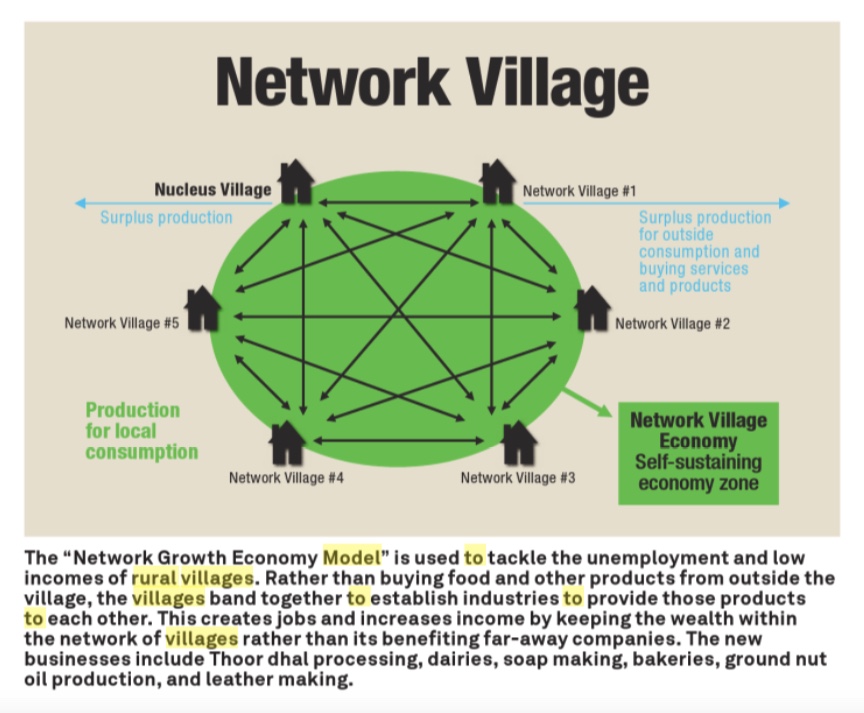
    Like a spreading ink spot, the concept is to create a network of like-minded villages that act as self-reinforcing positive role models, spreading the prosperity and stability outwards. The “Network Growth Economy Model” is a direct challenge to the “special economic zones that benefit only capitalist owners,” said Elango.

    Ambitious, Elango is hoping to draw in 2,000 villages over the next 10 years, until a tipping point is reached, and the model explodes across India.

    A native of the village, Elango became saddened by the community’s decline, including widespread domestic violence against women. The booming city of Chennai’s prosperity had not rippled out to the village, and it was still lacking good infrastructure and sanitation. A trained chemical engineer, he was elected the President of the Kuthambakkam Panchayat in 1996, and set about using his engineer’s perspective to draft the village’s five-year plan from 1996 to 2001.

    But the budget was tight. And he had to turn to innovative solutions: recycling building materials, conserving water and reducing electricity consumption. But the resourcefulness paid off, and the state of Tamil Nadu provided the money to upgrade roads, drains, build a community centre, child care facilities, 200 low cost toilets, and work sheds for the village’s industries. By the end of 2001, most basic needs were being met. He then turned to providing good quality housing for the villagers still living in thatch huts.

    He has used the “Network Growth Economy Model” to tackle the unemployment and low incomes. It works like this: rather than buying food and other products from outside the village, the villages band together to establish industries to provide those products to each other. This creates jobs and increases income by keeping the wealth within the network of villages, rather than it benefiting far-away companies. The new businesses include Thoor dhal processing, dairies, soap making, bakeries, ground nut oil production, and leather making.

    “India was strong when this model was in place – we had strong villages,” said Elango. “Globalization’s trickle down is not working for India.”

    Published: November 2008

    Resources

    • Unleashing India’s Innovation: Toward Sustainable and Inclusive Growth, a report by the World Bank. Website: http://web.worldbank.org/WBSITE/EXTERNAL/COUNTRIES/SOUTHASIAEXT/0,,contentMDK:21490203~pagePK:146736~piPK:146830~theSitePK:223547,00.html
    • NextBillion.net: Hosted by the World Resources Institute, it identifies sustainable business models that address the needs of the world’s poorest citizens. Website:http://www.wri.org
    • CIDEM and Ecosur specialise in building low-cost community housing using eco-materials. They have projects around the world and are based in Cuba. Website: http://www.ecosur.org

    Sponsored by BSHF. BSHF is now called World Habitat and it aims to seek out and share the best solutions to housing problems from around the world.

    https://davidsouthconsulting.org/2022/11/22/bio-ethanol-from-sturdy-and-once-unwanted-indian-plant/

    https://davidsouthconsulting.org/2022/09/29/cheap-indian-tablet-seeks-to-bridge-digital-divide/

    https://davidsouthconsulting.org/2022/10/09/entrepreneurs-use-mobiles-and-it-to-tackle-indian-traffic-gridlock/

    https://davidsouthconsulting.org/2021/08/29/indian-business-model-makes-green-energy-affordable/

    https://davidsouthconsulting.org/2022/10/25/indian-city-slum-areas-become-newly-desirable-places-to-live/

    https://davidsouthconsulting.org/2021/08/28/indian-entrepreneur-brings-dignity-to-poor-women/

    https://davidsouthconsulting.org/2021/03/04/indian-id-project-is-foundation-for-future-economic-progress/

    https://davidsouthconsulting.org/2022/10/18/indian-initiatives-to-make-travel-safer-for-women/

    https://davidsouthconsulting.org/2022/06/15/indian-mobile-phone-application-innovators-empower-citizens/

    https://davidsouthconsulting.org/2022/11/01/indian-newspapers-thrive-with-economy/

    https://davidsouthconsulting.org/2022/10/06/indian-solar-economy-brings-new-vocation-for-women/

    https://davidsouthconsulting.org/2022/10/06/indian-solar-power-pack-powers-villages/

    https://davidsouthconsulting.org/2022/10/25/indian-toilet-pioneer-champions-good-ideas/

    https://davidsouthconsulting.org/2022/10/18/indians-fighting-inflation-with-technology/

    Development Challenges, South-South Solutions was launched as an e-newsletter in 2006 by UNDP’s South-South Cooperation Unit (now the United Nations Office for South-South Cooperation) based in New York, USA. It led on profiling the rise of the global South as an economic powerhouse and was one of the first regular publications to champion the global South’s innovators, entrepreneurs, and pioneers. It tracked the key trends that are now so profoundly reshaping how development is seen and done. This includes the rapid take-up of mobile phones and information technology in the global South (as profiled in the first issue of magazine Southern Innovator), the move to becoming a majority urban world, a growing global innovator culture, and the plethora of solutions being developed in the global South to tackle its problems and improve living conditions and boost human development. The success of the e-newsletter led to the launch of the magazine Southern Innovator.

    https://davidsouthconsulting.org/2021/03/05/southern-innovator-issue-3/

    Creative Commons License

    This work is licensed under a
    Creative Commons Attribution-Noncommercial-No Derivative Works 3.0 License.

    ORCID iD: https://orcid.org/0000-0001-5311-1052.

    © David South Consulting 2023

  • Sex Workers’ Savings Help Make a Better Life

    Sex Workers’ Savings Help Make a Better Life

    By David SouthDevelopment Challenges, South-South Solutions

    SOUTH-SOUTH CASE STUDY

    Prostitution is called the world’s oldest profession, and can be found in one form or another in every country and society. And where poverty is rife and women have few economic choices, it flourishes. But it also flourishes in societies and economies undergoing rapid change, and where people move around more and more, as in the South’s fast-growing cities.

    The money to be made trafficking people for the sex trade is huge. Sex trafficking is organized crime’s fastest growing business, with up to two million people worldwide – mostly women and children – trafficked into the sex trade every year (UN). Approximately 80 percent of today’s trafficked people around the world are female, and up to 50 percent are under the age of 18 (The New Global Slave Trade by Ethan B. Kapstein).

    It is difficult to gauge the total number of prostitutes in the South: often, many women drift in and out of the profession for economic reasons. In Cambodia for example, Oxfam (http://www.oxfam.org.uk/) has put the number as high as 300,000 to 500,000, with one third of the sex workers below the age of 18. In India, there are more than 7 million prostitutes (UNICEF). It’s thought more than a third are forced into the sex trade, and most are under the age of 18. Many are between 12 and 15 years old.

    In India, Mumbai’s Kamathipura (http://www.netphotograph.com/viewset.php?id=23) area is called Asia’s biggest home to brothels: over 150,000 prostitutes work there. The women can make as little as 10 rupees (US 23 cents) per customer, and many have been sold by sex traffickers. But prostitutes in Kamathipura are being helped to get out of the poverty trap that leads them into sex work. Population Services International (www.psi.org) has set up bank accounts for the women working as prostitutes in the area so they can start saving to be able to buy their way to a better life. By saving as little as 10 rupees with each deposit, the women are able to set aside money and keep it safe from theft and from the pimps and madams who run the brothels.

    “It has helped a lot,” Reena, who moved to the area from Calcutta, told the Independent newspaper. “Now no one can steal the money.”

    “I was tricked here. I was in love with a man and came here with him. But when I got here he sold me,” said Simla, 42, from Nepal. Simla has two children outside the red light district and the money she saved was for school fees. Simla wants her children to avoid her fate: “I was fooled into this. I will not allow my children to do it,” she said.

    The bank accounts work like this: one of the women walks around the area with an envelope and a notebook. She gathers money from the sex workers, which is then deposited into a single bank account under the Sangini co-operative. When one of the women wants to get some money, it is returned by the cooperative. To date, over 2,500 women have deposited more than US $157,477.

    How does this money-saving help the women? Apart from slowly building up some wealth, it also gives them power; the power to say “no” to a customer who refuses to use a condom or who is abusive. It takes away a bit of the daily desperation that forces so many women to do things they don’t want to just to survive another day.

    And it is important their savings grow if they are to have a better future: competition is getting fiercer as the crisis in India’s rural areas drives more women to the cities. And more turn to prostitution to survive. This has its own market dynamics: younger women become the desired commodity and older prostitutes see their incomes go down – a young woman can charge 100 rupees (US $2.31) for sex, while older women only get 30 rupees (US 69 cents).

    Resources

    • Coalition Against Trafficking in Women – Asia Pacific: international network of feminist groups, organizations and individuals fighting the sexual exploitation of women globally. Websitehttp://www.catw-ap.org/
    • UN.GIFT: Global Initiative to Fight Human Trafficking: this website is packed with resources, including an anti-trafficking toolkit. Websitehttp://www.ungift.org/
    • Anti-Trafficking Alliance: A charity founded in 2005 to prevent, tackle and eliminate forced abduction and trafficking into sexual slavery and to empower survivors. Websitehttp://www.atalliance.org.uk/
    • Trading Women: a documentary about sex trafficking of women in the Thai sex trade narrated by Angelina Jolie. Websitehttp://www.un.org/Pubs/chronicle/2003/issue2/0203p37.html

    More on the role played by sex work in an economic crisis (especially as a survival and/or resilience strategy), or when there are high levels of poverty present in a country:

    Risks and resiliency of women engaged in sex work in Mongolia

    Authored by: Catherine E. Carlson , Laura Cordisco Tsai , Toivgoo Aira , Marion Riedel , Susan S. Witte

    Routledge Handbook of Sexuality Studies in East Asia

    Read more on sex work in the 1990s here: From Special Report: Sexual Dealing: Today’s Sex Toys Are Credit Cards & Cash: A Report On The Sex-For-Money Revolution

    Read more on the development of sex new media in the 1990s here: From Special Report: NMM (New Media Markets) Spotlight On The Emergence Of Satellite Porn Channels In The UK

    Financial Times business card 1995
    As a reporter for two Financial Times newsletters, New Media Markets and Screen Finance, I covered the rapidly growing UK (and Scandinavian) television and new media markets and the expanding film-financing sector in Europe.

    And from the WHO (World Health Organization): Sex Workers: Part of the Solution

    Creative Commons License

    This work is licensed under a
    Creative Commons Attribution-Noncommercial-No Derivative Works 3.0 License.

    ORCID iD: https://orcid.org/0000-0001-5311-1052.

    © David South Consulting 2022
  • Nollywood: Booming Nigerian Film Industry

    Nollywood: Booming Nigerian Film Industry

    By David SouthDevelopment Challenges, South-South Solutions

    SOUTH-SOUTH CASE STUDY

    The digital revolution in filmmaking over the last decade has given birth to an African success story: Nollywood – Nigeria’s answer to Hollywood, uses low-cost digital filmmaking and editing to tell local stories — in the process making money and creating thousands of jobs.

    This do-it-yourself (DIY), straight-to-DVD and video market has in just 13 years ballooned into a US $250 million-a-year industry employing thousands of people. In terms of the number of films produced each year, Nollywood is now in third place behind India’s Bollywood and America’s Hollywood. Despite rampant pirating of DVDs and poor copyright controls, directors, producers, actors, stars, vendors and technicians are all making a living in this fast-growing industry.

    The power of creative industries to create jobs and wealth has been a focus of UNESCO, through its Global Alliance for Cultural Diversity. UNESCO has been in the forefront in helping African countries re-shape their policies to take cultural industries into consideration. The promotion of cultural industries also has been incorporated into the New Partnership for Africa’s Development (NEPAD).

    What is particularly attractive about Nollywood to the poor in the South is its rough-and-ready approach to filmmaking: combining low-cost digital cameras and film editing software on personal computers, with small budgets and fast turn-around times. Films are made on location using local people. These factors make getting into filmmaking accessible and within reach of more people.

    Nollywood grew out of frustration, necessity and crisis: in the late 1980s and early 1990s, Nigerian cities became crime hotbeds. People were terrified to go out on the streets, and this led to the closing down of many movie theatres. Desperate for entertainment at home – and unsatisfied with foreign imports from India and the West – Nigerians turned to telling their own stories to stave off the boredom of staying in.

    The film credited with sparking off the industry is 1992’s Living in Bondage – a huge financial hit credited with raising the level of professionalism and production values in Nigerian cinema.

    Now, between 500 and 1,000 feature-length movies are made each year, selling well across the continent of Africa. Average productions take 10 days and cost around US $15,000 (www.thisisnollywood.com). Nollywood stars are famous throughout Africa – and Nigeria culturally dominates West Africa just as the US does the world. It is estimated there are 300 producers and that 30 titles go to shops and market stalls every week. On average, a film sells 50,000 copies: a hit will sell several hundred thousand. With each DVD costing around US $2, it is affordable to most Nigerians and very profitable for the producers.

    “These are stories about Africa, not someone else’s,” well-known actor Joke Silva told the Christian Science Monitor.

    Focused on Africa, the films’ themes revolve around AIDS, corruption, women’s rights, the occult, crooked cops and prostitution. They do so well because they speak directly to the lives of slum-dwellers and rural villagers.

    “We are telling our own stories in our way, our Nigerian way, African way,” said director Bond Emeruwa. “I cannot tell the white man’s story. I don’t know what his story is all about. He tells his story in his movies. I want him to see my stories too.”

    The big brands – Sony, Panasonic, JVC and Canon – all produce cameras capable of high-definition digital filmmaking and these have become the staple tools of this filmmaking revolution.

    More and more, the films are capitalising on the large African diaspora around the world, on top of Africa’s large internal market. And this is offering a step-up into the global marketplace for Nigerian directors and producers.

    The Nollywood phenomemon has been documented in the documentary This is Nollywood, directed by Franco Sacchi, a teacher from the Center of Digital Imaging Arts at Boston University.

    The prospects for the industry are only looking up: the Nigeria in the Movies project has been launched to help grow the industry, establish standards, improve distribution and broaden its international appeal and awareness. It also offers filmmaking grants for neophyte filmmakers.

    Of course, filmmaking can be a tricky business: authorities in largely Muslim northern Nigeria have imposed 32 restrictions on the local film industry — nicknamed “Kannywood” after the city of Kano. A six-month ban lost the industry US $29 million and put thousands out of work: a sign of the economic importance of this DIY filmmaking business. The message is clear: filmmakers need to be sensitive to the cultural norms of the communities in which they work.

    Kannywood, started in 1992, has 268 production companies and 40 editing studios, employing over 14,000 people.

    Adim Williams is one Nigerian director who is getting an international audience. He spends about US $40,000 on films that take two weeks to shoot. He has already secured an American release of a comedy, Joshua. Another director, Tunde Kelani, is regularly featured at international film festivals, where Nollywood screenings are more common.

    And some, like young director Jeta Amata, believe Nollywood’s cheap, fast-production, DIY approach has a lot to teach Hollywood, with its expensive filmmaking and ponderous production cycles.

    Published: March 2008

    Resources

    • This is Nollywood: A documentary about Nigeria’s booming movie industry.
      Website: http://www.thisisnollywood.com
      There is also an inspiring trailer to the film here.
      Website: http://www.thisisnollywood.com
    • The global charity Camfed (dedicated to eradicating poverty in Africa through the education of girls and empowerment of women) has projects to teach women filmmaking skills.
      Website: http://uk.camfed.org
    • Festival Panafricain du Cinema et de la Television de Ouagadoogou 2009: Africa’s biggest film festival.
      Website: http://www.fespaco.bf/
    • Naijarules: Billing itself as the “largest online community of lovers and critics of Nollywood”, an excellent way to connect with all the players in the business.
      Website: http://www.naijarules.com/vb/index.php
    • Nollywood Foundation: Based in the US, aims to bring Nigerian films and culture to an international audience and to promote new films and new media.
      Website:http://www.nollywoodfoundation.org/home.php

    https://davidsouthconsulting.org/2022/03/30/angolan-film-grabs-attention-at-film-festival/

    https://davidsouthconsulting.org/2022/04/01/bolivian-film-schools-film-scene-paying-off/

    https://davidsouthconsulting.org/2022/04/01/new-african-film-proving-power-of-creative-economy/

    https://davidsouthconsulting.org/2021/02/04/new-cuban-film-seeks-to-revive-sector/

    https://davidsouthconsulting.org/2022/03/30/riverwood-kenyan-super-fast-super-cheap-filmmaking/

    Development Challenges, South-South Solutions was launched as an e-newsletter in 2006 by UNDP’s South-South Cooperation Unit (now the United Nations Office for South-South Cooperation) based in New York, USA. It led on profiling the rise of the global South as an economic powerhouse and was one of the first regular publications to champion the global South’s innovators, entrepreneurs, and pioneers. It tracked the key trends that are now so profoundly reshaping how development is seen and done. This includes the rapid take-up of mobile phones and information technology in the global South (as profiled in the first issue of magazine Southern Innovator), the move to becoming a majority urban world, a growing global innovator culture, and the plethora of solutions being developed in the global South to tackle its problems and improve living conditions and boost human development. The success of the e-newsletter led to the launch of the magazine Southern Innovator.  

    Follow @SouthSouth1

    Google Books: https://books.google.co.uk/books?id=DqmXBgAAQBAJ&dq=development+challenges+march+2008&source=gbs_navlinks_s

    Slideshare: http://www.slideshare.net/DavidSouth1/development-challengessouthsouthsolutionsmarch2008issue-44443163

    Southern Innovator Issue 1: https://books.google.co.uk/books?id=Q1O54YSE2BgC&dq=southern+innovator&source=gbs_navlinks_s

    Southern Innovator Issue 2:https://books.google.co.uk/books?id=Ty0N969dcssC&dq=southern+innovator&source=gbs_navlinks_s

    Southern Innovator Issue 3:https://books.google.co.uk/books?id=AQNt4YmhZagC&dq=southern+innovator&source=gbs_navlinks_s

    Southern Innovator Issue 4: https://books.google.co.uk/books?id=9T_n2tA7l4EC&dq=southern+innovator&source=gbs_navlinks_s

    Southern Innovator Issue 5:https://books.google.co.uk/books?id=6ILdAgAAQBAJ&dq=southern+innovator&source=gbs_navlinks_s

    One of the many stories we covered on Africa’s fast-growing cities from 2007. It was witnessing first-hand Africa’s innovators and their adaptive use of mobile and information technologies that inspired us to give birth to Southern Innovator’s first issue.

    Citations

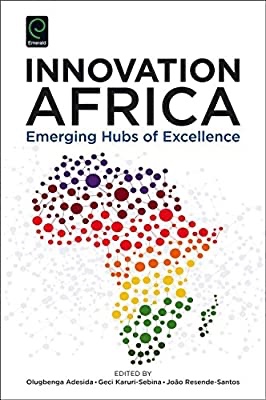
    Cited in Innovation Africa: Emerging Hubs of Excellence edited by Olugbenga Adesida, Geci Karuri-Sebina, Joao Resende-Santos (Emerald Group Publishing, 2016).

    https://davidsouthconsulting.org/2021/03/05/southern-innovator-issue-2/

    Creative Commons License

    This work is licensed under a
    Creative Commons Attribution-Noncommercial-No Derivative Works 3.0 License.

    ORCID iD: https://orcid.org/0000-0001-5311-1052.

    © David South Consulting 2023