Categories
Archive data Development Challenges, South-South Solutions Newsletters digital ID Southern Innovator magazine

Cash Machines for the Poor

By David SouthDevelopment Challenges, South-South Solutions

SOUTH-SOUTH CASE STUDY

Access to basic banking services for the poor is weak at the best of times. Many are openly discriminated against as a ‘bad risk’ by banks, and denied the sort of banking services middle and higher income people take for granted. Yet it is a myth that the poor do not have money or do not wish to save and invest for their future or for business.

The so-called Bottom of the Pyramid (BOP) – the four billion people around the world who live on less than US $2 a day – are being targeted by a wide range of businesses. Indian business consultant and professor CK Prahalad, the man who coined the term BOP, has gone so far as to claim this is a market potentially worth US $13 trillion, while the World Resources Institute puts it at US $5 trillion in its report, The Next 4 Billion.

And contrary to popular perception, the poor do have buying power, as has been documented by Massachusetts Institute of Technology (MIT) professors Abhijit Banerjee and Esther Duflo in their paper “The Economic Lives of the Poor”. Surveying 13 countries, they found those living on less than a dollar a day, the very poor, actually spent 1/3 of their household income on things other than food, including tobacco, alcohol, weddings, funerals, religious festivals, radios and TVs. The researchers also found that the poor increasingly used their spending power to seek out private sector options when the public sector failed to provide adequate services.

India, where 63 percent of the BoP market is rural and 304.11 million people are illiterate (Human Development Report), makes for a particularly tricky market to reach with bank machines: the average transaction is just 100 rupees (£1.25).

But a Madras-based company has come up with the Gramateller – a low-cost, blue-and-white bank machine custom-designed for the poor and illiterate. Vortex received funding of 2 million rupees (US $48,000) from an investment company, Aavishkar, that specializes in micro-venture capital — small sums for new business ideas. The advantage of micro-venture capital funding is its longer payback time: a young company does not get driven out of business by having to pay back the cash before the idea has been realized. Normally, venture capital helps a business to grow quickly but the venture capitalist wants to see an immediate profit on the investment.

Vortex’s chief executive officer, V.Vijay Babu, said: “The idea was conceived by Prof. Jhunjhunwala of IITM (Indian Institute of Technology Madras) in the course of an exploratory project focused on using ICT to deliver modern banking services to rural India.”

“It was found that branch-based banking is too expensive to be extended to remote rural locations where the volume and size of transactions are small. Using conventional ATMs (automatic teller machines) as a channel posed many difficulties because these ATMs were not built to operate in [illiterate] environments. Hence the need for developing an ATM specific to this context.”

Costing just a 10th as much to build as an ordinary cash machine, Gramateller has a fingerprint scanner for the illiterate, and is able to accept dirty and crumpled bank notes. Vortex came up with an ingenious solution to do this, said Babu: “Vortex developed a beltless dispenser design that in many ways mimics the way a human teller would pick and count notes.”

Vortex hopes to massively expand access to cash machines: at present, India has just 30,000 machines, or one for every 43,000 people (the US has a machine for every 1,000 people). These machines are being piloted with India’s biggest private bank, ICICI, and they have garnered interest from Indonesian banks as well.

“We are running pilots for two leading banks with about 10 ATMs,” said Babu. “Though it is still early, the initial response has been very encouraging – rural users find fingerprint authentication intuitive and simple and the ATM convenient and easy to use. A few users also gave feedback that our ATMs look less intimidating, maybe because it is placed in a non-air conditioned room with easy access and also is different in shape from a typical ATM.”

Furthermore the cash machines have taken a beating to see if they are robust enough for rural India: “The ATMs were tested for extended operating cycles under the harshest of environments that would prevail in the rural context — using soiled currencies, operating in non-air conditioned and dusty environments, subjecting the machine to typical fluctuations in line voltages and power outages. User-acceptance was tested by enlisting the participation of rural and semi-urban people to carry out test transactions.”

As for thieves getting their hands on the cash before the poor, Vortex maintains the machines will not become the victim of thieves: each machine will only carry a fifth of the money of city-dwelling bank machines.

Elsewhere in the South, a South African research and analysis company BMI-TechKnowledge (http://www.bmi-t.co.za/) in its latest report identifies a boom in banking services across Africa. In particular, South Africa, Botswana, Namibia, Angola, Mauritius, Tanzania, Kenya, Ghana, Nigeria, Egypt and Morocco – all have seen surges in profit and services as a result of improving banking regulations and political conditions. Maybe future markets for the Gramateller to reach Africa’s poor lie ahead?

Published: August 2008

Resources

  • Unleashing India’s Innovation: Toward Sustainable and Inclusive Growth, a report by the World Bank.
    Website: web.worldbank.org
  • xigi.net (pronounced ‘ziggy’ as in zeitgeist) is a space for making connections and gathering intelligence within the capital market that invests in good. It’s a social network, tool provider, and online platform for tracking the nature and amount of investment activity in this emerging market also referred to as blended value investing. xigi’s goal is to help this international emerging market to grow through market formation activities that guide and educate a growing wave of new money, while connecting it to the emergent entrepreneurs and deals on the internet.
    Website: http://www.xigi.net/
  • The new report Global Savings, Assets and Financial Inclusion by the Citi Foundation is packed with innovative approaches that are allowing the BoP (bottom of the pyramid) to use their income to build assets and more sustainable livelihoods.
    Website: http://www.newamerica.net
  • NextBillion.net: Hosted by the World Resources Institute, it identifies sustainable business models that address the needs of the world’s poorest citizens.
    Websites: http://www.nextbillion.net/ and World Resources Insitute

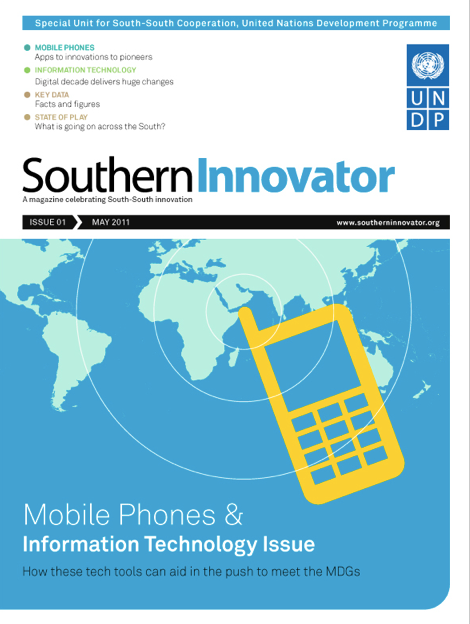
Development Challenges, South-South Solutions was launched as an e-newsletter in 2006 by UNDP’s South-South Cooperation Unit (now the United Nations Office for South-South Cooperation) based in New York, USA. It led on profiling the rise of the global South as an economic powerhouse and was one of the first regular publications to champion the global South’s innovators, entrepreneurs, and pioneers. It tracked the key trends that are now so profoundly reshaping how development is seen and done. This includes the rapid take-up of mobile phones and information technology in the global South (as profiled in the first issue of magazine Southern Innovator), the move to becoming a majority urban world, a growing global innovator culture, and the plethora of solutions being developed in the global South to tackle its problems and improve living conditions and boost human development. The success of the e-newsletter led to the launch of the magazine Southern Innovator. 

Creative Commons License

This work is licensed under a
Creative Commons Attribution-Noncommercial-No Derivative Works 3.0 License.

ORCID iD: https://orcid.org/0000-0001-5311-1052.

© David South Consulting 2023

Categories
Archive Development Challenges, South-South Solutions Newsletters digital ID

Anti-bribery Website in India Inspires Others

By David SouthDevelopment Challenges, South-South Solutions

SOUTH-SOUTH CASE STUDY

An Indian website tackling corruption has been so successful it has inspired a wave of followers in China.

The I Paid a Bribe website – motto: “Uncover the Market Price of Corruption” – was set up by the Janaagraha Centre for Citizenship and Democracy (http://www.janaagraha.org), a non-profit organisation based in Bangalore, India.

Janaagraha is dedicated to working with government and citizens to “improve the quality of life in Indian cities and towns,” according to its website.

Janaagraha’s initiatives strive “to make government departments transparent and accountable,” and the ipaidabribe programme (http://www.ipaidabribe.com) fits in with that goal. It seeks to harness the collective voices of the citizens to report and quantify incidents of corruption. The website will help to paint a picture of the level of corruption in cities and help the NGO in its fight to improve government oversight systems and procedures and to improve law enforcement and adherence to regulations.

The website tackles the “pernicious effect of corruption on destroying city life and disempowering citizens,” according to Raghunandan Thoniparambil, the site’s programme coordinator. “The original idea was that the website could become a simple means of tracking the market price of corruption – a kind of price prediction mechanism.”

He said the original idea was tongue in cheek and propelled by cynicism – but the site’s creators soon realized that “such an effort was indeed a very powerful one.”

The website displays reports and analytics on bribe patterns by city and by transaction amounts, frequency and averages.

The long-term goal is to reduce corruption faced by Indians when they use government services. The website asks users to log both recent and past incidences of bribery. It says: “Please tell us if you resisted a demand for a bribe, or did not have to pay a bribe, because of a new procedure or an honest official who helped you. We do not ask for your name or phone details, so feel free to report on the formats provided.”

Neither accusers nor accused are identified by name – only the incidents are logged. The website is funded by a grant of US $3 million and the NGO is planning to launch a mobile phone application as well.

The website doesn’t pursue individuals because it has found this approach is a distraction to getting systemic improvements by government.

“By not allowing names to be published, we have eliminated any incentive for any individual to make a false or malicious complaint,” said Thoniparambil. “Since nobody will gain anything by reporting a false complaint on our site because we do not act on complaints, we expect that the stories on the site are true.”

The site has been so popular it has spawned imitators in China and elsewhere. Thoniparambil said Janaagraha has been approached by civil society organisations in 13 countries about collaborating.

After a story was published in the Beijing News about I Paid a Bribe, a flurry of ‘tips’ and accusations flooded the Internet in China, and people set up similar websites to gather information on bribery and corruption in their country. One web developer called “Peater Q” set up a Chinese version of I Paid a Bribe, calling it wohuilule.com. Another two websites that popped up included “I Bribe…” (http://www.wxhwz.com) and http://www.tmzg.org. Some of the dozens of websites have been taken down, but others have received official support and encouragement.

“Peater Q” says he is a young Communist Party member and has received government permission for his site. He says the name of his site, wohuilule.com, is a Chinese translation of “I paid a bribe.”

These are still early days as these websites work out how to balance the need to ferret out corruption and bribery and the need to avoid gossip, rumour and slander. It is clear the damage done to a country when corruption and bribery get out of control is significant.

The United Nations’ Global Compact on anti-corruption calls it “one of the world’s greatest challenges.”

A report by the Carnegie Endowment for International Peace on Chinese corruption (http://carnegieendowment.org/2007/10/09/corruption-threatens-china-s-future/g4) found it threatens the country’s future by increasing socioeconomic inequality and social unrest. The report found 10 percent of government spending, contracts, and transactions goes to kickbacks and bribes, or is simply stolen. It also found the indirect costs of corruption to include efficiency losses, waste and damage to the environment, public health, education, credibility and morale.

“Corruption both undermines social stability (sparking tens of thousands of protests each year), and contributes to China’s environmental degradation, deterioration of social services, and the rising cost of health care, housing, and education,” the report said.

I Paid a Bribe is being used to build up an intelligent picture of corruption and bribery in India so that real change can be made.

“Citizens’ reports on the nature, number, pattern, types, locations and frequency of actual corrupt acts and values of bribes will add up to a valuable knowledge bank that will contribute to a reduction in bribe payments,” Thoniparambil said.

Not only does the website raise awareness about the problem and its dynamics, it maps out the path corruption takes through a public service. This, the website hopes, will enable better “more consistent standards of law enforcement and better vigilance and regulation.”

“We believe that every citizen who reports a story on our website about paying a bribe is angry enough to begin to resist it,” explains Thoniparambil.

“Except for using the data that we receive for further analysis, we will not take the complaints and stories forward. We do not intend to invoke the courts.”

But these websites need to be run with caution and care and they do have their critics.

“If you wanted to tarnish the reputation of the government or a department within it, or settle a vendetta, you could just get all of your friends to post claims against them,” Raymond Fisman, a professor at Columbia Business School who has studied corruption, told the BBC.

“There is no way of credibly aggregating the information to assess the magnitude of the problem,” he added.

Thoniparambil, however, remains positive that corruption and bribery are problems that can be tackled.

“I believe that corruption has grown this big only because as citizens, we have tolerated it,” he explains. “If we actively oppose it and there are enough of us, the government has to buckle down and tackle the problem effectively.

“Corruption may be rampant in India, but it is not endemic,” believes Thoniparambil. “Blaming it on our value systems is a poor alibi with no substance in it. I do not believe that Indians are inherently corrupt; our value systems are as good or as bad as anybody else’s. Corruption is not a social trend that arises out of an erosion of value systems; it is born out of systems failure. Corruption flourishes because we have poorly designed governance systems in the country.”

Thoniparambil sites a number of Indian successes to back up his optimism: competition in telephone service providers has reduced corruption; booking of railway tickets online has taken the power away from corrupt ticket sellers; and government departments have been forced to state how long services will take to complete.

Thoniparambil believes it is about changing the relationship between citizens and the public services they receive.

“We would like citizens to begin to realize that public services are our entitlements,” he says. “These are not favours dispensed from above. They ought not to be pessimistic about corruption. Countries have cleaned up very dramatically and the processes by which it has been done have been documented.

“Reduction of bribery in India will improve access to government services, particularly for the poor, reduce the cost of delivery of such services, speed up business and recourse to legal remedies. It will improve the quality of infrastructure and will be deeply empowering for Indian citizens.”

“It is only the collective energy of people that can turn the tables on the corrupt.”

Published: August 2011

Resources

1) United Nations Global Compact: A website packed with resources on how to tackle corruption and how to network globally with others to tackle corruption. Website:http://www.unglobalcompact.org/Issues/transparency_anticorruption/

2) India Against Corruption: India Against Corruption movement is an expression of collective anger of people of India against corruption. This is their campaign website. Website:http://www.indiaagainstcorruption.org/

Read more about the perils of bribery here: The Strange Saga of “South-South News”

Development Challenges, South-South Solutions was launched as an e-newsletter in 2006 by UNDP’s South-South Cooperation Unit (now the United Nations Office for South-South Cooperation) based in New York, USA. It led on profiling the rise of the global South as an economic powerhouse and was one of the first regular publications to champion the global South’s innovators, entrepreneurs, and pioneers. It tracked the key trends that are now so profoundly reshaping how development is seen and done. This includes the rapid take-up of mobile phones and information technology in the global South (as profiled in the first issue of magazine Southern Innovator), the move to becoming a majority urban world, a growing global innovator culture, and the plethora of solutions being developed in the global South to tackle its problems and improve living conditions and boost human development. The success of the e-newsletter led to the launch of the magazine Southern Innovator. 

https://davidsouthconsulting.org/2022/10/18/indians-fighting-inflation-with-technology/

https://davidsouthconsulting.org/2020/04/23/the-strange-saga-of-south-south-news-may-2018/

https://davidsouthconsulting.org/2022/02/09/ugandan-project-pioneers-transparent-development/

https://davidsouthconsulting.org/2022/11/18/web-2-0-networking-to-eradicate-poverty/

https://davidsouthconsulting.org/2022/06/16/web-2-0-to-the-rescue-using-web-and-text-to-beat-shortages-in-africa/

Creative Commons License

This work is licensed under a
Creative Commons Attribution-Noncommercial-No Derivative Works 3.0 License.

ORCID iD: https://orcid.org/0000-0001-5311-1052.

© David South Consulting 2022

Categories
Archive data Development Challenges, South-South Solutions Newsletters digital ID

India 2.0: Can the Country Make the Move to the Next Level?

By David SouthDevelopment Challenges, South-South Solutions

SOUTH-SOUTH CASE STUDY

With the global economic crisis threatening to cause turmoil in the emerging markets of the global South, it is becoming clear that what worked for the past two decades may not work for the next two.

For India, the legacy issues of poverty still need to be addressed, and the country’s impressive information technology (IT) industry – which has driven so much of India’s growth – will face stiff competition from other countries in the global South. Some argue that if the IT industry hopes to keep growing and contributing to India’s wealth, things will need to change.

Unlike China, where heavy investment in infrastructure and a strong link between government and the private sector has driven the impressive manufacturing boom in the country, in India the government has de-regulated and taken a back seat, leaving the private sector and entrepreneurs to drive the change and do the innovation.

Many believe various areas need urgent attention if India is to continue to enjoy good growth rates in the coming years. Areas in need of attention include infrastructure, healthcare and education (thesmartceo.in), in particular the knowledge to work in the information technology industry of the 21st century.

One of the founders of Indian outsourcing success Infosys (infosys.com), executive co-chairman Senapathy Gopalakrishnan, told Britain’s Telegraph newspaper, “So many people’s lives have been changed by IT in India.

“People from the middle class and lower middle class have become global employees and have the opportunity to work with some of the best companies in the world. But the challenge for India is that this industry can only create so many jobs. IT is not going to solve the unemployment problem in India.”

But the coming next wave of change in information technology is an opportunity to be seized to reduce unemployment if enough people are educated to handle it.

According to Gopalakrishnan: “I strongly believe, and it’s backed up by data, that there is a shortage of computer professionals everywhere in the world, including India. The application of computers is growing dramatically and will continue to grow dramatically over the next 20 to 30 years. We have to train and create the workforce necessary to grow this industry.”

Various media stories have called this next phase India 2.0. If India 1.0 was the highly successful information technology outsourcing industry developed in the late 1980s, through the 1990s and 2000s, then India 2.0 is the next wave of IT innovation being driven by Big Data, automation, robotics, smart technologies and the so-called “Internet of things.”

Big Data is defined as the large amounts of digital data continually generated by the global population. The speed and frequency with which data is produced and collected – by an increasing number of sources – is responsible for today’s data deluge (UN Global Pulse). It is estimated that available digital data will increase by 40 per cent every year. Just think of all those mobile phones people have, constantly gathering data.

Processing this data and finding innovative ways to use it will create many of the new IT jobs of the future.

“We are living in a world which is boundary-less when it comes to information, and where there is nowhere to hide,” continues Gopalakrishnan, “If you have a cellphone, somebody can find out exactly where you are. Through social networks you’re sharing everything about yourself. You are leaving trails every single moment of your life. Theoretically, in the future you’ll only have to walk through the door at Infosys and we’ll know who you are and everything about you.”

Unlike in the late 1980s, when India was the pioneer in IT outsourcing for large multinational companies and governments, competition is fierce across the global South. The mobile-phone revolution and the spread of the Internet have exponentially increased the number of well-educated people in the global South who could potentially work in IT. China, the Philippines, Kenya, Nigeria and Ghana are just some of the countries heavily involved in this area.

If India fails to meet the India 2.0 challenge, it risks seeing its successful companies and entrepreneurs leaving to work their magic elsewhere in Asia and the new frontiers of Africa, just as many of its best and brightest of the recent past became pioneers and innovators in California’s Silicon Valley.

India’s IT sector contributed 1.2 per cent to the country’s gross domestic product (GDP) in 1998; by 2012, this was 7.5 per cent (Telegraph). The IT industry employs 2.5 million people in India, and a further 6.5 million people indirectly. IT makes up 20 per cent of India’s exports and, according to the National Association of Software and Services Companies (nasscom.in), the industry has revenue of US $100 billion.

India is now the IT and outsourcing hub for more than 120 of the Fortune 500 companies in the United States.

Out of India’s 3.5 million graduates every year, 500,000 are in engineering – a large pool of educated potential IT workers. India produces the world’s third largest group of engineers and scientists, and the second largest group of doctors.

IT has become a route that catapults bright Indian youth into 21st-century businesses and science parks and to the corporations of the world.

One visible example of the prosperity brought by IT services in India is the booming technology sector based in the city of Bangalore (also called Bengaluru) (http://en.wikipedia.org/wiki/Bangalore).

Reflective of the contradictions of India, Bangalore has 10 per cent of its workforce now working in IT, but also 20 per cent of its population living in urban slums.

The nearby Electronics City (elcia.in) is considered “India’s own silicon valley and home to some of the best known global companies.”

To date, aspects of India 2.0 are already taking shape.

One company is called Crayon Data (crayondata.com). It uses Big Data and analytics to help companies better understand their customers and increase sales and deliver more personal choices.
Edubridge (http://acumen.org/investment/edubridge/) is helping to bridge the gap for rural youth with varied education backgrounds and long-term jobs. Edubridge trains youth for the real needs of employers to increase the chances they will get a job. This includes jobs in the IT business process outsourcing sector and banking and financial services.

Infosys is working on innovations for the so-called “Internet of things,” in which smart technologies connect everyday items to the grid and allow for intelligent management of resources and energy use. Infosys is developing sophisticated software using something called semantic analytics – which analyses web content (http://en.wikipedia.org/wiki/Semantic_analytics) – to sort through social media and the Internet to track customer responses to products.

Elsewhere, former Infosys Chief Executive Nanden Nilekani is involved in a Big Data innovation to address the problem of social and economic exclusion of India’s poor. Called Aadhaar (http://uidai.gov.in/), the government-run scheme is gathering biometric data on every Indian to build the world’s largest biometric database. After being enrolled and having fingerprints and iris scans taken, each individual is given a 12-digit identification number. So far 340 million people have been registered with the scheme, and it is hoped 600 million will be registered by the end of 2014.

The idea is to use a combination of access to mobile phones and these unique ID numbers to widen access to all sorts of products and services to poor Indians, including bank accounts for the millions who do not have one. Many people, lacking any identity or official acknowledgment they exist, were prevented from engaging with the formal economy and formal institutions. Being able to save money is a crucial first step for getting out of poverty and it is hoped information technology will play an important role in achieving this.

Published: March 2014

Resources

1) India 2.0 by Mick Brown. Website: http://s.telegraph.co.uk/graphics/india2.0/part-one#top

2) Electronic City Bangalore: Regional information portal for Electronic City, an industrial technology hub located in Bangalore South, India. This portal is becoming the most favourite haunt of ECitizens living and/or working in Electronic City. Website: http://www.electronic-city.in/

3) Electronics City Industries Association: Welcome to the Electronics City, India’s own silicon valley and home to some of the best known global companies. Located in Bangalore, the Electronics City was conceived way back in the mid-1970?s as an Industrial Estate exclusively for Electronics Industries. Today the industrial estate boasts is an oasis of large, medium and small industries spanning software services, hardware; high end telecommunications; manufacture of indigenous components; electronic musical instruments, just  to name a few. Website: elcia.in

4) Godrej E-City: Situated in Electronic city and connected through NICE road and the elevated expressway, Godrej E-City brings your workplace and other major conveniences within your immediate reach. Your travel times become shorter and hassle-free. You have more time for your family and yourself. It’s time to move closer to happiness. Website: https://www.godrejproperties.com/godrejecity/overview

5) Infosys: Infosys is a global leader in consulting, technology and outsourcing solutions. As a proven partner focused on building tomorrow’s enterprise, Infosys enables clients in more than 30 countries to outperform the competition and stay ahead of the innovation curve. Website: http://www.infosys.com/pages/index.aspx

6) Tech Hub Bangalore: partnering with the UK India Business Council to establish TechHub in Bangalore.TechHub is a community and workspace for technology entrepreneurs with 1000’s of members, building the most exciting startups in Europe. We have physical community spaces in London, Manchester, Bucharest, Swansea and Riga and have members from over 50 countries.The Bangalore site will be part of a wider scheme in partnership with other British firms such as Rolls Royce, ADS, Bangalore Cambridge Innovation Network, BAe and PA Consulting with the aim of forging stronger links between the UK and India. Website: http://www.techhub.com/blog/techhub-expands-to-bangalore/

https://davidsouthconsulting.org/2022/09/29/cheap-indian-tablet-seeks-to-bridge-digital-divide/

https://davidsouthconsulting.org/2022/02/17/digital-mapping-to-put-slums-on-the-map/

https://davidsouthconsulting.org/2022/10/09/entrepreneurs-use-mobiles-and-it-to-tackle-indian-traffic-gridlock/

https://davidsouthconsulting.org/2022/10/20/the-e-reader-battle-reaches-india/

https://davidsouthconsulting.org/2022/10/25/indian-city-slum-areas-become-newly-desirable-places-to-live/

https://davidsouthconsulting.org/2021/03/04/indian-id-project-is-foundation-for-future-economic-progress/

https://davidsouthconsulting.org/2022/11/01/indian-newspapers-thrive-with-economy/

https://davidsouthconsulting.org/2022/10/18/indians-fighting-inflation-with-technology/

https://davidsouthconsulting.org/2022/10/06/indian-solar-power-pack-powers-villages/

https://davidsouthconsulting.org/2021/03/31/new-weapon-against-crime-in-the-south/

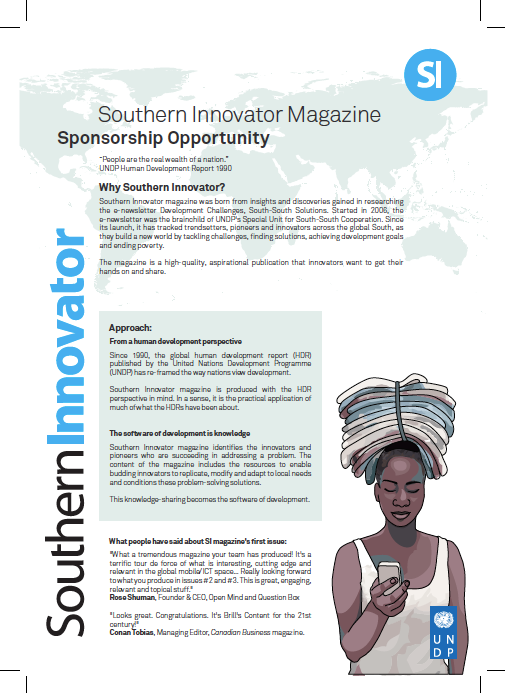
Development Challenges, South-South Solutions was launched as an e-newsletter in 2006 by UNDP’s South-South Cooperation Unit (now the United Nations Office for South-South Cooperation) based in New York, USA. It led on profiling the rise of the global South as an economic powerhouse and was one of the first regular publications to champion the global South’s innovators, entrepreneurs, and pioneers. It tracked the key trends that are now so profoundly reshaping how development is seen and done. This includes the rapid take-up of mobile phones and information technology in the global South (as profiled in the first issue of magazine Southern Innovator), the move to becoming a majority urban world, a growing global innovator culture, and the plethora of solutions being developed in the global South to tackle its problems and improve living conditions and boost human development. The success of the e-newsletter led to the launch of the magazine Southern Innovator.  
https://davidsouthconsulting.org/2021/03/05/southern-innovator-issue-1/

Creative Commons License

This work is licensed under a
Creative Commons Attribution-Noncommercial-No Derivative Works 3.0 License.

ORCID iD: https://orcid.org/0000-0001-5311-1052.

© David South Consulting 2022

Categories
Archive Blogroll data Development Challenges, South-South Solutions Newsletters digital ID Southern Innovator magazine

Digital Mapping to put Slums on the Map

By David SouthDevelopment Challenges, South-South Solutions

SOUTH-SOUTH CASE STUDY

Mobile phones are more and more part of daily life in the South’s slums – even for the poorest people. One result is that it has now become possible to undertake digital mapping initiatives to truly find out who is where and what is actually going on.

About one-third of the world’s urban dwellers live in slums, and the United Nations estimates that the number of people living in such conditions will double by 2030 as a result of rapid urbanization in developing countries. How to improve their living conditions and raise their standard of living is the big challenge of the 21st century.

With just over five years until the 2015 deadline to meet the Millennium Development Goals (http://www.undp.org/mdg/), and the current economic downturn reversing some gains, any tool that can make development decisions more precise has to be a benefit.

People are now turning to the growing penetration of digital technologies into slums and poor areas to find solutions. With mobile phones available across much of the global South, and plans underway to expand access to broadband internet even in poorly served Africa, it is becoming possible to develop a digital picture of a slum area and map its needs and population.

Put to the right use, this powerful development tool can fast-track the delivery of aid and also better connect people to markets and government services.

In November, an NGO called Map Kibera (www.mapkibera.org) began work on an ambitious project to digitally map Africa’s largest slum, Kibera in Nairobi, Kenya .

The partners behind Map Kibera are Humanitarian OpenStreetMap, JumpStart International, WhereCampAfrica, the Social Development Network, Pamoja Trust, Hands on Kenya and others.

Estimates place the number of residents in Kibera at one million, but nobody really knows how many live there (UN-HABITAT). The slum is typical of such deprived areas, lacking in health and water resources and plagued by chaotic traffic and housing. Few fully grasp where everything is in the sprawl.

While data does exist on the slum, it is not shared or collated into one source. The Map Kibera project uses an open-source software programme, OpenStreetMap (http://www.openstreetmap.org/), to allow users to edit and add information as it is gathered. This information is then free to use by anybody wanting to grasp what is actually happening in Kibera: residents, NGOs, private companies and government officials.

This will literally put Kibera on Kenya’s map.

The mapping team started with 12 young people recruited in Kibera to start the work in November of this year. They will be trained and also receive support from the growing Nairobi technology community.

“The project will provide open-source data that will help illustrate the living conditions in Kibera,” said Map Kibera’s Mikel Maron. “Without basic knowledge of the geography of Kibera it is impossible to have an informed discussion on how to improve the lives of residents of Kibera.”

Workshops will communicate with local residents and show them the findings available from the map. Paper maps will be distributed to residents and then updated as new information comes in. It is critical local people are kept informed to build trust and avoid conflict. As can be seen from the Google Street Views (http://www.google.co.uk/help/maps/streetview/) controversy, nobody likes to be mapped without their permission or consent.

Like Kenya, Brazil has a long history of sprawling slums sprouting around its cities. Called favelas, they are complex places, with both rudimentary dwellings and elaborate mansions. Walking into a favela can be a journey through the dreams and aspirations of generations of people, often reflected in their dwellings. Favelas have many services, including hospitals, and there are restaurants and coffee shops. In short, while they are not in the official development plans, the favelas are vibrant economic entities and home to hundreds of thousands of people.

But since they are chaotic and undocumented by official maps, the economic and social development of the favelas is hindered as even basic services like mail delivery are difficult to provide.

An NGO called Rede Jovem (http://www.redejovem.org.br/) is deploying youths armed with GPS (global positioning system)-equipped (http://en.wikipedia.org/wiki/Global_Positioning_System) mobile phones to map the favelas of Rio de Janerio. To start with, they are mapping five favelas: Complexo do Alemão, Cidade de Deus, Morro do Pavão-Pavãozinho, Morro Santa Marta and Complexo da Maré.

“The main goal was to mark public interest spots on a map and show places like schools and institutions and hospitals and restaurants,” Natalia Santos, the executive coordinator for Rede Jovem, told MobileActive (www.mobileactive.org) . “We wanted to spread the news about what slums do have, so all the people can get to know that the slum is not just a place for violence and marginality and robbery.”

The mapping process works like this: the mappers physically travel around the favela and upload information on each, individual landmark (restaurants, roads etc.) as they go. They use Nokia N95s mobile phones that are connected to Google Maps (www.maps.google.com).

According to Santos, reporters enter the information on the map displayed on the phone, and they can video or photograph to add more detail. They are using Wikimapa (www.wikimapa.org.br), and Twitter (www.twitter.com) to log the information.

As Rede Jovem recruited young mappers, they discovered an interesting fact: the male reporters (aged between 17 and 25) were frightened to enter a favela with a mobile phone for fear of either being mugged or being stopped by the police. Because of this fact, all the mappers are young women.

They are ambitious for the future despite their funds running out in December. “We want everyone who has a cell phone with GPS to be a wikireporter,” said Santos .

How important it is to the favela residents to be recognised like this can’t be overstated. “I think they are very happy because they’re seeing that they exist,” said Santos. “And the mailman says that now he can deliver the mail.”

Published: December 2009

Resources

  • Mobile Active.org: MobileActive.org is a community of people and organizations using mobile phones for social impact. They are committed to increasing the effectiveness of NGOs around the world who recognize that the over 4 billion mobile phones provide unprecedented opportunities for organizing, communications, and service and information delivery. Website: http://www.mobileactive.org
  • Google Android: Get inventing! This software enables anyone to start making applications for mobile phones. And it offers a platform for developers to then sell the applications to others. Website: http://www.android.com/
  • Ushahidi: is a website that was developed to map reports of violence in Kenya after the post-election fallout at the beginning of 2008. The new Ushahidi Engine is being created to use the lessons learned from Kenya to create a platform that allows anyone around the world to set up their own way to gather reports by mobile phone, email and the web – and map them. It is being built so that it can grow with the changing environment of the web, and to work with other websites and online tools. Website: http://blog.ushahidi.com/
  • Textually.org: is the entry point of three weblogs devoted to cell phones and mobile content, focusing on text messaging and cell phone usage around the world, tracking the latest news and social impact of these new technologies. Website: http://www.textually.org/
  • Betavine Social Exchange has launched. It’s a matching site for NGOs looking for mobile solutions, and developers who can help build them, all brought to you by Vodafone. Website: http://www.betavine.net

Citations

Resilient Urban Regeneration in Informal Settlements in the Tropics: Upgrading Strategies in Asia and Latin America, Publisher: Springer Singapore (2020)

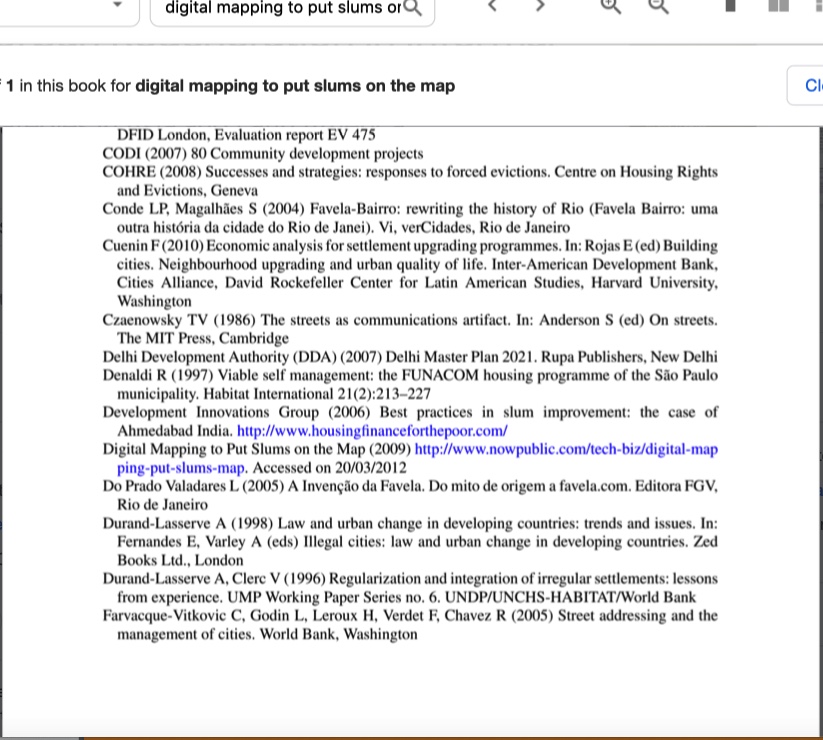
The story first appeared in the UN e-newsletter Development Challenges, South-South Solutions in 2009. It was simultaneously published on the Vancouver, Canada-based crowd-powered news website, NowPublic. It was then published in the UN magazine Southern Innovator.

Streets as Tools for Urban Transformation in Slums: A Street-led Approach to Citywide Slum Upgrading, Publisher: United Nations Human Settlements Programme (UN-Habitat) (2012)

Other Stories on Mapping

https://davidsouthconsulting.org/2021/08/28/african-entrepreneur-wants-to-bring-order-to-urban-chaos/

https://davidsouthconsulting.org/2020/12/04/big-data-can-transform-the-global-souths-growing-cities/

https://davidsouthconsulting.org/2021/03/04/indian-id-project-is-foundation-for-future-economic-progress/

https://davidsouthconsulting.org/2022/10/31/mapping-beirut-brings-city-to-light/

https://davidsouthconsulting.org/2022/10/17/mapping-to-protect-kenyas-environment-the-emazingira-solution/

https://davidsouthconsulting.org/2021/03/31/new-weapon-against-crime-in-the-south/

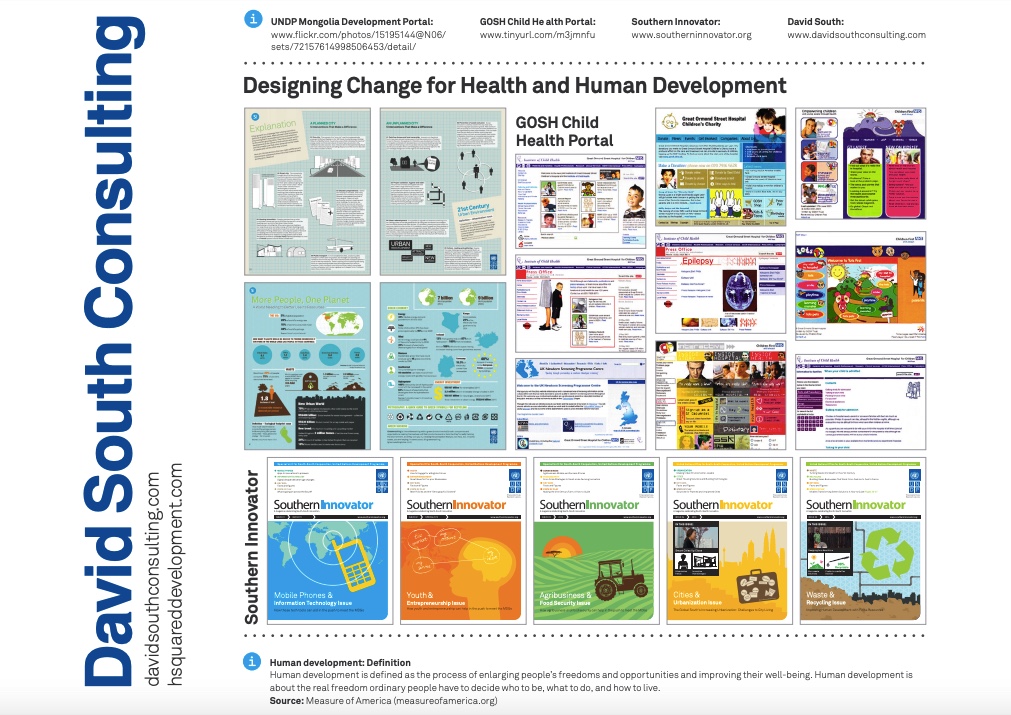
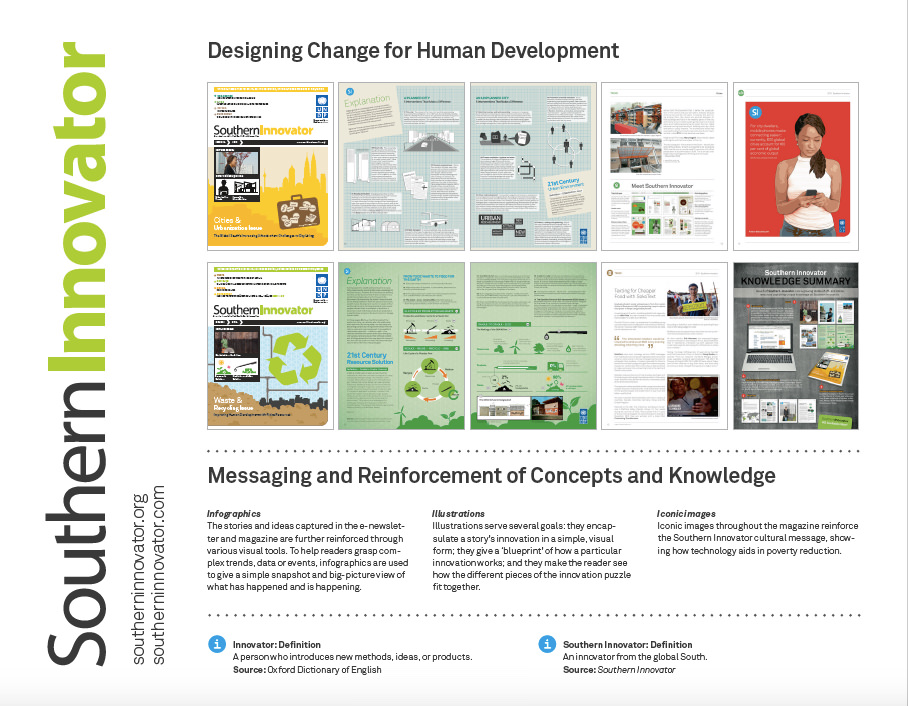
By 2014, Southern Innovator had published five issues and become a recognised global innovation brand.

https://davidsouthconsulting.org/2021/03/05/southern-innovator-issue-4/

Follow @SouthSouth1

Slideshare: http://www.slideshare.net/DavidSouth1/development-challengessouthsouthsolutionsnovember2010issue

Southern Innovator Issue 1: https://books.google.co.uk/books?id=Q1O54YSE2BgC&dq=southern+innovator&source=gbs_navlinks_s

Southern Innovator Issue 2: https://books.google.co.uk/books?id=Ty0N969dcssC&dq=southern+innovator&source=gbs_navlinks_s

Southern Innovator Issue 3: https://books.google.co.uk/books?id=AQNt4YmhZagC&dq=southern+innovator&source=gbs_navlinks_s

Southern Innovator Issue 4: https://books.google.co.uk/books?id=9T_n2tA7l4EC&dq=southern+innovator&source=gbs_navlinks_s

Southern Innovator Issue 5: https://books.google.co.uk/books?id=6ILdAgAAQBAJ&dq=southern+innovator&source=gbs_navlinks_s

Creative Commons License

This work is licensed under a
Creative Commons Attribution-Noncommercial-No Derivative Works 3.0 License.

ORCID iD: https://orcid.org/0000-0001-5311-1052.

© David South Consulting 2022