Categories
Archive data Development Challenges, South-South Solutions Newsletters Southern Innovator magazine

Dabbawallahs Use Web and Text to Make Lunch on Time

By David SouthDevelopment Challenges, South-South Solutions

SOUTH-SOUTH CASE STUDY

The developing world’s rapidly growing cities are bringing with them whole new ways of living and working. One rapidly expanding category of citizen is the office worker. A symbol of growing prosperity, the office worker also tends to be a time-poor person who often must commute large distances between home and workplace.

These long commutes mean that many workers have lost the old ability to go home for lunch. This has led to an expanding new field of business: catering to all these office workers’ appetites.

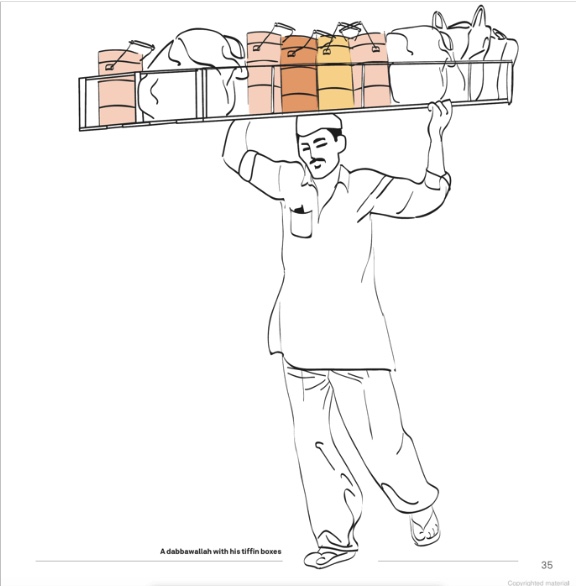
Every morning Mumbai’s legendary dabbawallahs (it means “box-carrier” or “lunchpail man”) fan out across the city to collect freshly prepared lunches from people’s homes and restaurants. They then efficiently use the transport network to quickly deliver lunches to the customers’ workplaces. Once just for the elite, the dabbawallah lunch has become the norm for Mumbai’s middle class office workers. Lunches are packed into small, metal tiffin boxes, ingeniously organized so each component of the meal is sealed in its own section and kept warm.

With a plethora of religious and cultural practices, Indians are particular about what they eat. In Mumbai there are 200,000 office workers receiving cooked lunches every day delivered straight to their desks. This is done by an army of 5,000 dabbawallahs. While their delivery accuracy was already impressive – only six deliveries in a million go astray – they realized they had to adapt to the city’s rapid changes. In addition to their network using trains, hand-carts and bicycles to get the lunches to desks, they have turned to the internet and mobile phone SMS text messaging to take orders.

It is a 125-year old industry that has grown at the rate of five to ten per cent a year and all are paid the same no matter what their function in the business.

With foreign direct investment into developing countries surging – according to the United Nations Conference on Trade and Development (UNCTAD), it rose by 12 per cent from 2005 to 2006 – the number of office workers is on the rise too.

The trend is especially pronounced in India, which is on track to overtake the United Kingdom as the world’s fifth largest economy by 2010, according to investment bankers Goldman Sachs.

India’s cities are booming. Mumbai is one of the top five global megacities as well as the world’s most crowded metropolis. The dabbawallahs are an excellent example of how a business can move with the times.

A key component in India’s new-found success has been a willingness to do things better and become more efficient; the key to this is often information technology. The new technology for the dabbawllahs has been built for them by software engineer Manish Tripathi – he has even been adopted as an honorary tiffinwallah.

“When people move to Mumbai for work, and need a lunchbox carrier, who do they ask?” he said. “They ask their friends, or their neighbour. Now, they just need to go to the website and they can find out how to get in touch with us. They can also get in touch with us via SMS.”

The move online has been a great success said Tripathi: “We get 10 to 15 enquiries more a day via SMS and the website.”

Raghunath Medge from the dabbawallahs cooperative said they are also making money by selling advertising on table mats. They have also turned to being a health service: they distribute health advice, beginning with this year’s World AIDS Day. An “AIDS kit”, comprising a car calendar and fliers on testing and counselling tied neatly with a red ribbon, was distributed ahead of World AIDS Day December 1.

“The kit was attached to empty lunch boxes and delivered to about 100,000 clients’ homes,” said Raghunath Megde,

Targeting hungry office workers is a goldmine for others too: in Saigon, Vietnam, the Ben Thann restaurant capitalised on its proximity to an area with a fast-growing office worker population to increase its profits. “Since our restaurant began serving lunch for office workers our business has increased by 60 per cent. This increase in number of guests enjoying the new menu was the main reason for Ben Thanh’s decision to introduce a buffet lunch,” said Nguyen Thi Thu Thao, deputy manager of Ben Thanh Restaurant.

In the past, the dabbawallahs were visited by Prince Charles and British entrepreneur multimillionaire Richard Branson, to study their working methods. It looks like this next round of innovation will equally grab the world’s attention.

Published: December 2007

Resources 

  • The New York Times has an excellent slideshow of the dabbawallahs at work: Click here to view 
  • The official website of the dabbawallahs: http://www.mydabbawala.com/

“I think you [David South] and the designer [Solveig Rolfsdottir] do great work and I enjoy Southern Innovator very much!” 

Ines Tofalo, Programme Specialist, United Nations Office for South-South Cooperation
Creative Commons License

This work is licensed under a
Creative Commons Attribution-Noncommercial-No Derivative Works 3.0 License.

ORCID iD: https://orcid.org/0000-0001-5311-1052.

© David South Consulting 2023
Categories
Archive data Development Challenges, South-South Solutions Newsletters Southern Innovator magazine

Web 2.0 to the Rescue! Using Web and Text to Beat Shortages in Africa

By David SouthDevelopment Challenges, South-South Solutions

SOUTH-SOUTH CASE STUDY

The beep-beep of a received text on a mobile phone is now becoming a much-needed lifeline to Africans. Zimbabweans, who continue to struggle every day with inflation that has shot to 3,731 percent (Zimbabwe Central Statistical Office), have usd African ingenuity and 21st century technology to survive another day.

New website services have become a literal lifeline for millions suffering from economic and social hardships. At least four new web-based services have stepped in to link expatriate Zimbabweans working outside the country with their relatives back home. All share a common service: people can log into the websites and shop and select what they like to purchase or transfer to their relativs. Once a purchase has been made, a message is sent by mobile phone text to Zimbabwe, either transferring money credits or credits for fuel, food or medical services.

Mukuru.com is the most elaborate and ambitious of the services, and is expanding across Africa (currently in Zimbabwe and South Africa, it is expanding to Kenya, Malawi and Zambia). Started in 2006, it now boasts 8,000 customers and is averaging 1,200 orders per month, ranging from money transfers to fuel and digital satellite television subscriptions. A voucher number sent by mobile phone also allows the recipient to swap a PIN (personal identification) number for coupons redeemable at certain garages.

One of the great advantages of this new technology is its ability to give real-time updates and tracking throughout the transaction. Senders are informed about every stage of the transaction, right up until the gas is gushing into the car’s tank.

“Basically anybody who is able to work will do their best to support family back home,” said Mukuru’s UK-based Nix Davies. “Mukuru’s birth is the result of our inability to sit back and watch, as well as the desperate need to help those back home. The power of an instant SMS being able to provide value to its recipient is inspiring.

“Launching Mukuru.com has not been without its hurdles,” continues Davies. “Promoting a brand with one foot in the first world and having to deal with third world inconsistencies is always challenging.” Mukuru also has plans to expand into travel, freight, mail (letters are printed out and sent within Zimbabwe), and music to help local musicians.

Over at another website, Zimbuyer.com, expatriate Zimbabweans can buy groceries for their relatives at home and make sure that the money is not spent on the wrong thing.
“They’re a lot of people who left Zimbabwe and, for example, have left their children over there,” a spokesman told the BBC’s website. “But sometimes the money they have sent home for the care of the children is diverted into other things. With our service, people buy the stuff – and we deliver them to the recipients so they know what they’re buying.”

Zimbuyer’s website is similar to food shopping websites in developed countries. Prices are listed in British pounds, but the food items are Zimbabwean staples like sadza maize, Cashel Valley Baked Beans and Ingrame Camphor Cream – all delivered to people living in Harare, Chitungwiza and Bulawayo.Zimbuyer’s most popular products are cooking oil and sugar, while “power generators are proving popular because the electricity always goes off nearly every day.”

Another service is Zimland.com, which has a network of 52 supermarkets nationwide. As it starkly boasts on its website, it gives Zimbabweans abroad “a quick and efficient way of ensuring their families do not starve in Zimbabwe.”

The Zimland Superstore offers a variety of hampers of food and essentials for families, from the Madirativhange to the Mafidhlongo to the Hotch Potch Delux, and boys and girls ‘Back to School’ hampers.

Yet another service has taken on the problem of paying for medical and health services. Beepee Medical Services allows Zimbabweans to pay for doctors’ appointments, prescription drugs and surgery for relatives.

Launched in September 2006 by Dr Brighton Chireka and his wife Prisca, a nurse, the business is small but growing.

“Mostly we’re running it as a service to help people,” said Dr Chireka, adding he gets about two consultation bookings a day (US $30 an appointment). “It should be able to pay for itself… We’ve employed people who are working full-time in Zimbabwe. This side (the UK), it’s on a part-time basis to answer the calls.”

Please visit the following link for more information:

An up-to-date report from The Economist magazine on the country situation in Zimbabwe: www.economist.com

Published: November 2008

https://davidsouthconsulting.org/2022/10/14/anti-bribery-website-in-india-inspires-others/

https://davidsouthconsulting.org/2022/06/24/dabbawallahs-use-web-and-text-to-make-lunch-on-time/

https://davidsouthconsulting.org/2022/03/07/david-south-consulting-ranked-in-the-top-10-million-websites/

https://davidsouthconsulting.org/2021/05/25/ger-mongolias-first-web-magazine-and-a-pioneering-web-project-for-the-united-nations-12-january-2016/

https://davidsouthconsulting.org/2022/06/25/shoes-with-sole-ethiopian-web-success-story/

https://davidsouthconsulting.org/2022/10/21/social-networking-websites-a-way-out-of-poverty/

https://davidsouthconsulting.org/2021/05/14/un-ukraine-web-development-experience-2000/

https://davidsouthconsulting.org/2022/11/18/web-2-0-networking-to-eradicate-poverty/

Creative Commons License

This work is licensed under a
Creative Commons Attribution-Noncommercial-No Derivative Works 3.0 License.

ORCID iD: https://orcid.org/0000-0001-5311-1052.

© David South Consulting 2023

Categories
Archive data Development Challenges, South-South Solutions Newsletters Southern Innovator magazine

Indian Mobile Phone Application Innovators Empower Citizens

By David SouthDevelopment Challenges, South-South Solutions

SOUTH-SOUTH CASE STUDY

With mobile phones becoming ubiquitous across the global South, the opportunity to make money – and possible fortunes – by providing ‘apps’ for these devices is now a reality.

Apps (http://en.wikipedia.org/wiki/Application_software) – applications which allow users of new mobile phones to do everything from running a business to banking to navigating chaotic cities – have quickly become a very creative space and a dynamic market for innovators and entrepreneurs. Because they are pieces of software and are relatively inexpensive to create, requiring only time and hard work, an individual working out of their home can develop an app, introduce it to the online marketplace and see if it will succeed.

The only limit is the imagination.

They are also a great way to solve people’s problems and possibly make some money in the process. As economies and cities grow across the South, many everyday difficulties can be tackled with these apps.

Apps are revolutionary because they solve the problem of how to view websites on mobile phones and smartphones (http://en.wikipedia.org/wiki/Smartphone). Apps are designed for a small screen and have simple functionality and design. They often can function without any constant connection to the Internet, updating themselves sporadically when the phone can connect with phone networks or the Internet. They are also either free or inexpensive, using micro-payments to make a profit. The essence of the micro-payment business model is to charge a small amount and turn this into a large amount by having large numbers of people download the app. It is a successful business formula that has made many vast fortunes throughout the age of the mass consumer market, which began in the late 19th century.

Bart Decrem, co-founder of Tapulous, a maker of apps for the iPhone (http://tapulous.com), told The Economist: “Apps are nuggets of magic.”

Apps are sold in online stores run by companies like Apple (http://itunes.apple.com/us/genre/ios/id36?mt=8), Google, Sweden’s GetJar (http://www.getjar.com), and South Korea’s SK Telecom. Apple’s store has over 425,000 apps and Google’s Android Market has more than 250,000. Other stores include Mobihand, PocketGear, Mobango, Handango, Blackberry App World and Handster (http://www.handster.com).

Research firm Gartner (http://www.gartner.com/technology/home.jsp) estimated that 18 billion apps have been downloaded since Apple opened its first app store in 2008. Remarkably, it forecasts this number could rise to 49 billion by 2013. The most popular topics include games, weather forecasts, social networks, maps, music and news.

The dynamic documented so far for apps seems to follow the way music charts work. A few apps, out of the many on offer, become big sellers and popular favourites, getting the most users. Partly this reflects the difficulty of quickly searching through all the apps available in the world to find the right one, a process that favours well-marketed apps.

The recent TechSparks 2011 App4India (http://www.facebook.com/techspark) contest showcased the creative thinking about apps now happening in India.

One Indian success story is the 1000Lookz (http://www.vdime.com/pro1.htm) app, developed by Vasan Sowriraj (http://www.vdime.com/about.htm), which helps women perform a virtual beauty makeover. A woman can check what shades work best for her skin tone by using her own photos uploaded to the app. The user adds features like foundation, blush, gloss, eye-shadow, eye-liner and lipstick. The app uses facial recognition and skin tone detection technology to assist the virtual makeover. It was developed by VDime Innovative Works headquarterd in Atlanta, Georgia, with its technology developed by its Indian division.

1000Lookz’ mission is to create “innovative products that bring cheer to consumers’ faces.”

Sowriraj got his experience from working as a key member of the team developing special image processing for the Indian Space and Research Organisation (http://www.isro.org).

The same team has also developed another service enabling users to transform standard emoticons – those cartoons used in electronic communications to convey emotions – into emoticons using your own face image. It is called Humecons (http://www.humecons.com), and its slogan is “Emote Yourself”.

The India TV Guide, based in Bangalore, India’s software hub (http://en.wikipedia.org/wiki/International_Tech_Park,_Bangalore), is a mobile phone application developed by Jini Labs (http://www.jinilabs.com) offering programme listings for 150 television channels broadcast in India, and allows viewers to save reminders for favourite shows and build favourites lists.

Jini Labs also makes Jini Books (http://itunes.apple.com/in/app/jinibooks/id404988026?mt=8), a clever app to display books, magazines and journals that are hard to find in conventional shops. It is free and promises to have “indie book authors and publishers – including small size, mid-size independent publishers, university presses, e-book publishers, and self-published authors.”

A very useful app improving people’s lives is the Indian Railway Lite app. India’s railways are a critical part of the country’s economy, and the world’s largest railway system. The complexity of trying to work out the train schedule has been made easier with the app.

Founded by Srinath Reddy, the app’s chief technology officer at RSG Software Services (http://www.rsgss.com), the app enables users to discover train connections between stations, and find which trains pass through stations, while navigating the Indian Railways website. It is a good example of how an app can quickly become a big hit. It became the second most popular on the Apple India app store and is downloaded more than 1,000 times a day.

One of the advantages of the app is its ability to function without access to the Internet. It draws on its own database of information and offers a friendlier user interface than the Indian State Railways website.

“This feature has proved to be very popular as users can access train information even while they are travelling and are out of network range,” Reddy told Yourstory.in. “We update the app at regular intervals and the user has to download a new version of the app to get updated information. Trains are generally added once in a few months and the timetable does not change significantly, so the user can use the same version until the next one is released.”

The app’s creators initially found it difficult to get information and updates from Indian Railways.

“We took around four to five months to build the app,” Reddy said. “Significant effort went into compiling the train and station data as this was not easily available. Refining the UI (user interface) took quite some time as well.”

The company saw a market for the app because there were so many iPhone (http://en.wikipedia.org/wiki/IPhone) users in India. The app was downloaded 45,000 times between June and September, and other versions, including one for Google Android (www.android.com) are in the works to broaden access to people without an iPhone.

The company has its headquarters in Ranchi, India and has four development centers in India located in Delhi, Pune, Ranchi and Hyderabad. Currently, the company has approximately 250 employees with core competencies in Apple, Filemaker and Open Source technologies.

The Tuk Tuk 2 app is a clever and practical application for users of India’s ubiquitous motorized and bicycle rickshaws. They are an important part of the country’s transport infrastructure – but a journey in one can be a stressful experience for many reasons. This app seeks to lesson the stress.

Tuk Tuk 2 app (https://market.android.com/details?id=com.mindhelix.tuktuk2&hl=en) is designed to introduce fairness to the auto rickshaw marketplace. It empowers travellers to track where they are on a journey, check the fare and find the distance covered. It helps to reduce exploitation of travellers and makes sure they know where they are at all times: a powerful resource in crowded, busy and confusing cities.

It was developed by Mind Helix Technologies (http://www.mindhelix.com), founded in 2009 as a dedicated application development company with a mission to empower people with its apps. And that is really what apps are all about!

Published: October 2011

Resources

1) Mobile phone boot camp: Entrepreneurial Programming and Research on Mobiles: Website: http://www.media.mit.edu/ventures/EPROM/entrepreneurship.html

2) Mobile Active: MobileActive.org connects people, organizations, and resources using mobile technology for social change. Website: http://mobileactive.org/

3) Teams of motorcyclists with mobile phones in Lagos, Nigeria take pictures of traffic gridlock and open road, send it to central control, who grade it “slow”, “moving” or “free” and in turn send the message to subscribers. Website: http://www.traffic.com.ng

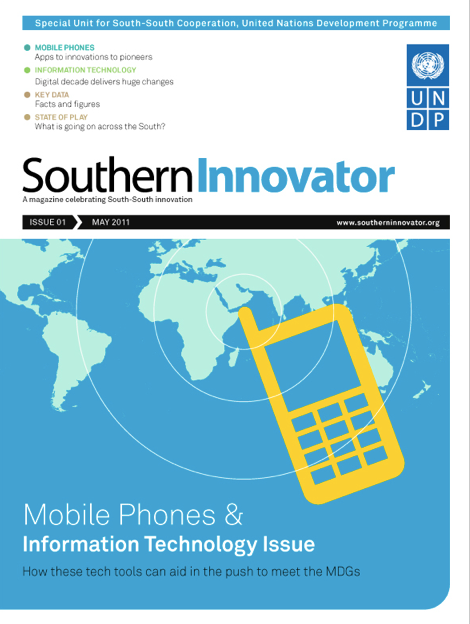
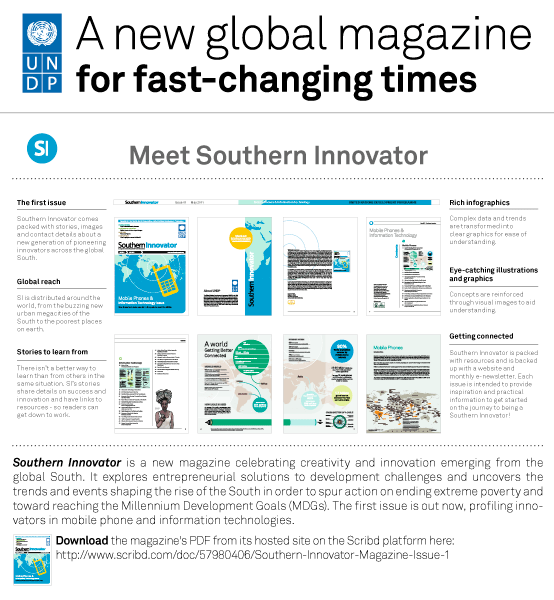
4) Southern Innovator magazine: New global magazine’s first issue tackles the boom in mobile phone and information technologies across the global South. Website: www.scribd.com/doc/57980406/Southern-Innovator-Issue-1

Creative Commons License

This work is licensed under a
Creative Commons Attribution-Noncommercial-No Derivative Works 3.0 License.

ORCID iD: https://orcid.org/0000-0001-5311-1052.

© David South Consulting 2023

Categories
Archive Blogroll data Development Challenges, South-South Solutions Newsletters digital ID Southern Innovator magazine

Digital Mapping to put Slums on the Map

By David SouthDevelopment Challenges, South-South Solutions

SOUTH-SOUTH CASE STUDY

Mobile phones are more and more part of daily life in the South’s slums – even for the poorest people. One result is that it has now become possible to undertake digital mapping initiatives to truly find out who is where and what is actually going on.

About one-third of the world’s urban dwellers live in slums, and the United Nations estimates that the number of people living in such conditions will double by 2030 as a result of rapid urbanization in developing countries. How to improve their living conditions and raise their standard of living is the big challenge of the 21st century.

With just over five years until the 2015 deadline to meet the Millennium Development Goals (http://www.undp.org/mdg/), and the current economic downturn reversing some gains, any tool that can make development decisions more precise has to be a benefit.

People are now turning to the growing penetration of digital technologies into slums and poor areas to find solutions. With mobile phones available across much of the global South, and plans underway to expand access to broadband internet even in poorly served Africa, it is becoming possible to develop a digital picture of a slum area and map its needs and population.

Put to the right use, this powerful development tool can fast-track the delivery of aid and also better connect people to markets and government services.

In November, an NGO called Map Kibera (www.mapkibera.org) began work on an ambitious project to digitally map Africa’s largest slum, Kibera in Nairobi, Kenya .

The partners behind Map Kibera are Humanitarian OpenStreetMap, JumpStart International, WhereCampAfrica, the Social Development Network, Pamoja Trust, Hands on Kenya and others.

Estimates place the number of residents in Kibera at one million, but nobody really knows how many live there (UN-HABITAT). The slum is typical of such deprived areas, lacking in health and water resources and plagued by chaotic traffic and housing. Few fully grasp where everything is in the sprawl.

While data does exist on the slum, it is not shared or collated into one source. The Map Kibera project uses an open-source software programme, OpenStreetMap (http://www.openstreetmap.org/), to allow users to edit and add information as it is gathered. This information is then free to use by anybody wanting to grasp what is actually happening in Kibera: residents, NGOs, private companies and government officials.

This will literally put Kibera on Kenya’s map.

The mapping team started with 12 young people recruited in Kibera to start the work in November of this year. They will be trained and also receive support from the growing Nairobi technology community.

“The project will provide open-source data that will help illustrate the living conditions in Kibera,” said Map Kibera’s Mikel Maron. “Without basic knowledge of the geography of Kibera it is impossible to have an informed discussion on how to improve the lives of residents of Kibera.”

Workshops will communicate with local residents and show them the findings available from the map. Paper maps will be distributed to residents and then updated as new information comes in. It is critical local people are kept informed to build trust and avoid conflict. As can be seen from the Google Street Views (http://www.google.co.uk/help/maps/streetview/) controversy, nobody likes to be mapped without their permission or consent.

Like Kenya, Brazil has a long history of sprawling slums sprouting around its cities. Called favelas, they are complex places, with both rudimentary dwellings and elaborate mansions. Walking into a favela can be a journey through the dreams and aspirations of generations of people, often reflected in their dwellings. Favelas have many services, including hospitals, and there are restaurants and coffee shops. In short, while they are not in the official development plans, the favelas are vibrant economic entities and home to hundreds of thousands of people.

But since they are chaotic and undocumented by official maps, the economic and social development of the favelas is hindered as even basic services like mail delivery are difficult to provide.

An NGO called Rede Jovem (http://www.redejovem.org.br/) is deploying youths armed with GPS (global positioning system)-equipped (http://en.wikipedia.org/wiki/Global_Positioning_System) mobile phones to map the favelas of Rio de Janerio. To start with, they are mapping five favelas: Complexo do Alemão, Cidade de Deus, Morro do Pavão-Pavãozinho, Morro Santa Marta and Complexo da Maré.

“The main goal was to mark public interest spots on a map and show places like schools and institutions and hospitals and restaurants,” Natalia Santos, the executive coordinator for Rede Jovem, told MobileActive (www.mobileactive.org) . “We wanted to spread the news about what slums do have, so all the people can get to know that the slum is not just a place for violence and marginality and robbery.”

The mapping process works like this: the mappers physically travel around the favela and upload information on each, individual landmark (restaurants, roads etc.) as they go. They use Nokia N95s mobile phones that are connected to Google Maps (www.maps.google.com).

According to Santos, reporters enter the information on the map displayed on the phone, and they can video or photograph to add more detail. They are using Wikimapa (www.wikimapa.org.br), and Twitter (www.twitter.com) to log the information.

As Rede Jovem recruited young mappers, they discovered an interesting fact: the male reporters (aged between 17 and 25) were frightened to enter a favela with a mobile phone for fear of either being mugged or being stopped by the police. Because of this fact, all the mappers are young women.

They are ambitious for the future despite their funds running out in December. “We want everyone who has a cell phone with GPS to be a wikireporter,” said Santos .

How important it is to the favela residents to be recognised like this can’t be overstated. “I think they are very happy because they’re seeing that they exist,” said Santos. “And the mailman says that now he can deliver the mail.”

Published: December 2009

Resources

  • Mobile Active.org: MobileActive.org is a community of people and organizations using mobile phones for social impact. They are committed to increasing the effectiveness of NGOs around the world who recognize that the over 4 billion mobile phones provide unprecedented opportunities for organizing, communications, and service and information delivery. Website: http://www.mobileactive.org
  • Google Android: Get inventing! This software enables anyone to start making applications for mobile phones. And it offers a platform for developers to then sell the applications to others. Website: http://www.android.com/
  • Ushahidi: is a website that was developed to map reports of violence in Kenya after the post-election fallout at the beginning of 2008. The new Ushahidi Engine is being created to use the lessons learned from Kenya to create a platform that allows anyone around the world to set up their own way to gather reports by mobile phone, email and the web – and map them. It is being built so that it can grow with the changing environment of the web, and to work with other websites and online tools. Website: http://blog.ushahidi.com/
  • Textually.org: is the entry point of three weblogs devoted to cell phones and mobile content, focusing on text messaging and cell phone usage around the world, tracking the latest news and social impact of these new technologies. Website: http://www.textually.org/
  • Betavine Social Exchange has launched. It’s a matching site for NGOs looking for mobile solutions, and developers who can help build them, all brought to you by Vodafone. Website: http://www.betavine.net

Citations

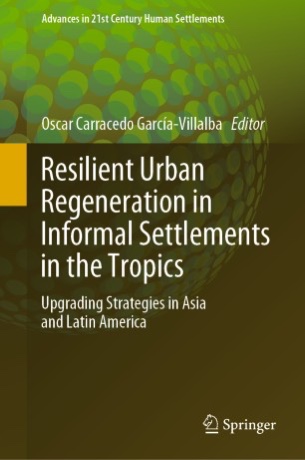
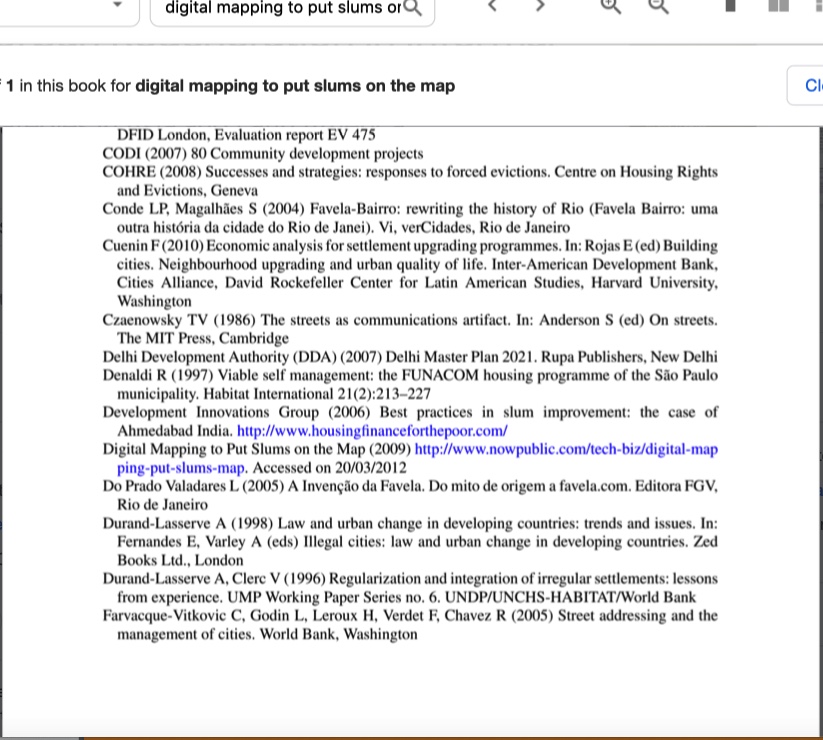
Resilient Urban Regeneration in Informal Settlements in the Tropics: Upgrading Strategies in Asia and Latin America, Publisher: Springer Singapore (2020)

The story first appeared in the UN e-newsletter Development Challenges, South-South Solutions in 2009. It was simultaneously published on the Vancouver, Canada-based crowd-powered news website, NowPublic. It was then published in the UN magazine Southern Innovator.

Streets as Tools for Urban Transformation in Slums: A Street-led Approach to Citywide Slum Upgrading, Publisher: United Nations Human Settlements Programme (UN-Habitat) (2012)

Other Stories on Mapping

https://davidsouthconsulting.org/2021/08/28/african-entrepreneur-wants-to-bring-order-to-urban-chaos/

https://davidsouthconsulting.org/2020/12/04/big-data-can-transform-the-global-souths-growing-cities/

https://davidsouthconsulting.org/2021/03/04/indian-id-project-is-foundation-for-future-economic-progress/

https://davidsouthconsulting.org/2022/10/31/mapping-beirut-brings-city-to-light/

https://davidsouthconsulting.org/2022/10/17/mapping-to-protect-kenyas-environment-the-emazingira-solution/

https://davidsouthconsulting.org/2021/03/31/new-weapon-against-crime-in-the-south/

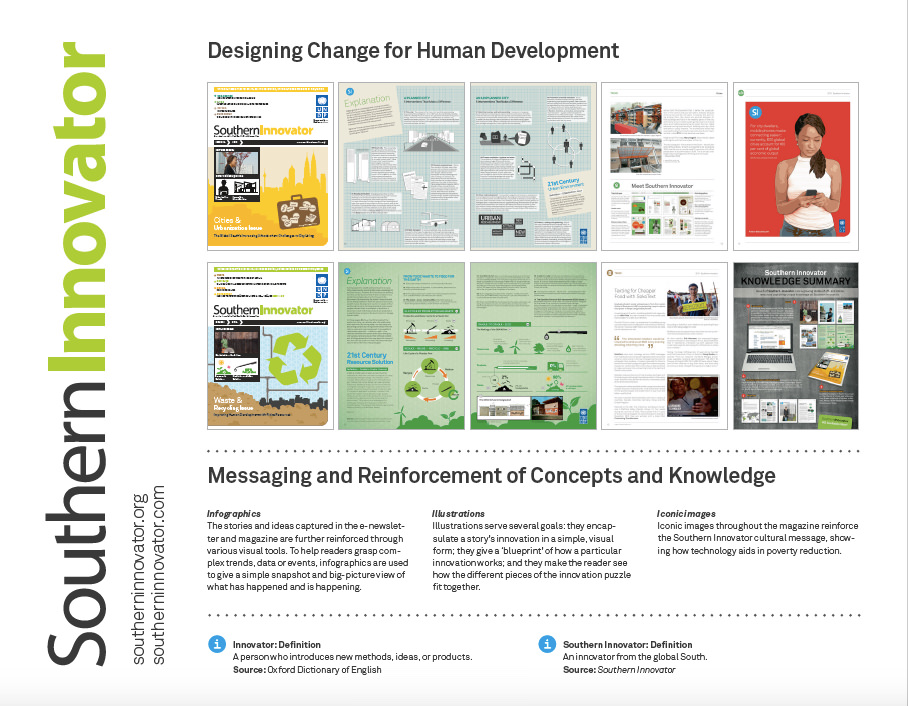
By 2014, Southern Innovator had published five issues and become a recognised global innovation brand.

https://davidsouthconsulting.org/2021/03/05/southern-innovator-issue-4/

Follow @SouthSouth1

Slideshare: http://www.slideshare.net/DavidSouth1/development-challengessouthsouthsolutionsnovember2010issue

Southern Innovator Issue 1: https://books.google.co.uk/books?id=Q1O54YSE2BgC&dq=southern+innovator&source=gbs_navlinks_s

Southern Innovator Issue 2: https://books.google.co.uk/books?id=Ty0N969dcssC&dq=southern+innovator&source=gbs_navlinks_s

Southern Innovator Issue 3: https://books.google.co.uk/books?id=AQNt4YmhZagC&dq=southern+innovator&source=gbs_navlinks_s

Southern Innovator Issue 4: https://books.google.co.uk/books?id=9T_n2tA7l4EC&dq=southern+innovator&source=gbs_navlinks_s

Southern Innovator Issue 5: https://books.google.co.uk/books?id=6ILdAgAAQBAJ&dq=southern+innovator&source=gbs_navlinks_s

Creative Commons License

This work is licensed under a
Creative Commons Attribution-Noncommercial-No Derivative Works 3.0 License.

ORCID iD: https://orcid.org/0000-0001-5311-1052.

© David South Consulting 2022