Category: Archive

An archive of published content for media and clients.

  • Old Adage Gets New Life

    Old Adage Gets New Life

    By David SouthDevelopment Challenges, South-South Solutions

    SOUTH-SOUTH CASE STUDY

    Education is recognized as critical for development and improving people’s lives. Universal primary education is a Millennium Development Goal and countries are now allocating more funds for primary education across the global South. However, the options available to youth after primary education are often very limited.

    The World Bank estimates that only nine percent of youth in the developing world will be able to go to a university or benefit from higher education scholarships. For the vast majority of youth, getting a job is often the only viable option to securing a livelihood; but in most developing countries the number of formal sector jobs is low and the only option is self-employment. Acquiring relevant training and practical skills can be crucial to becoming successfully self-employed. But where will the training and skills come from and who will provide it and pay for it?

    This dilemma is being addressed by the “self-sufficient schools” concept. The model combines entrepreneurship and vocational education through school-based businesses that blend training and revenue-generation. The principle is simple: entrepreneurship and entrepreneurial skills are taught by successful entrepreneurs.

    The model is being pioneered in several countries and has been successfully applied by UK-based charity TeachAManToFish in Ghana and Paraguay, targeting rural youth from farming families through a network of 250 vocational experts and institutions in 45 countries. The approach promotes a model for making education both more relevant and financially sustainable in rural communities.

    Self-sufficient schools share several characteristics: they produce and sell goods and services; they focus on developing an entrepreneurial culture; they make a direct connection between theory, practical work and financial reward; they encourage learning by doing; they strive to keep improving in order to remain economically competitive; students are encouraged to work cooperatively; and students receive support after graduating, often in the form of microfinance for their new businesses.

    In the South American nation of Paraguay, the Fundacion Paraguaya – San Francisco Agricultural High School – run by an NGO committed to poverty reduction through supporting entrepreneurship – found that small-scale farmers not only knew how to produce food, they also knew how to make a prosperous living out of it when given the right tools. Taking over a school previously run by a religious order, the NGO had the opportunity to put the concept to the test.

    The organization’s head, Martin Burt states, ”It is not a matter of knowing how to grow the crop, or raise the animal; it is a matter of how to make money and then how to be financially successful doing farming in poor countries.”

    The Paraguayan school is half way through its five-year plan, and already is covering two thirds of its recurring costs from the production and sale of goods and services, including specialist cheeses.

    Published: May 2007

    Resources

    • A paper on the concept of self-sufficient schools: Click here
    • CIDA City Campus, Johannesburg, South Africa: CIDA is the country’s only “’free’, open-access, holistic, higher educational facility” and is “operated and managed by its students, from administration duties to facilities management. In addition every student is required to return to their rural schools and communities, during holidays, to teach what they have learnt.”
    • The First International Conference on Self-Sufficient Schools is being planned by TeachAManToFish. Expressions of interest are sought from all individuals and organizations interested in taking part in the conference. Email conference@teachamantofish.org.uk for more information.

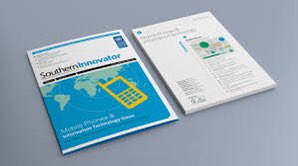
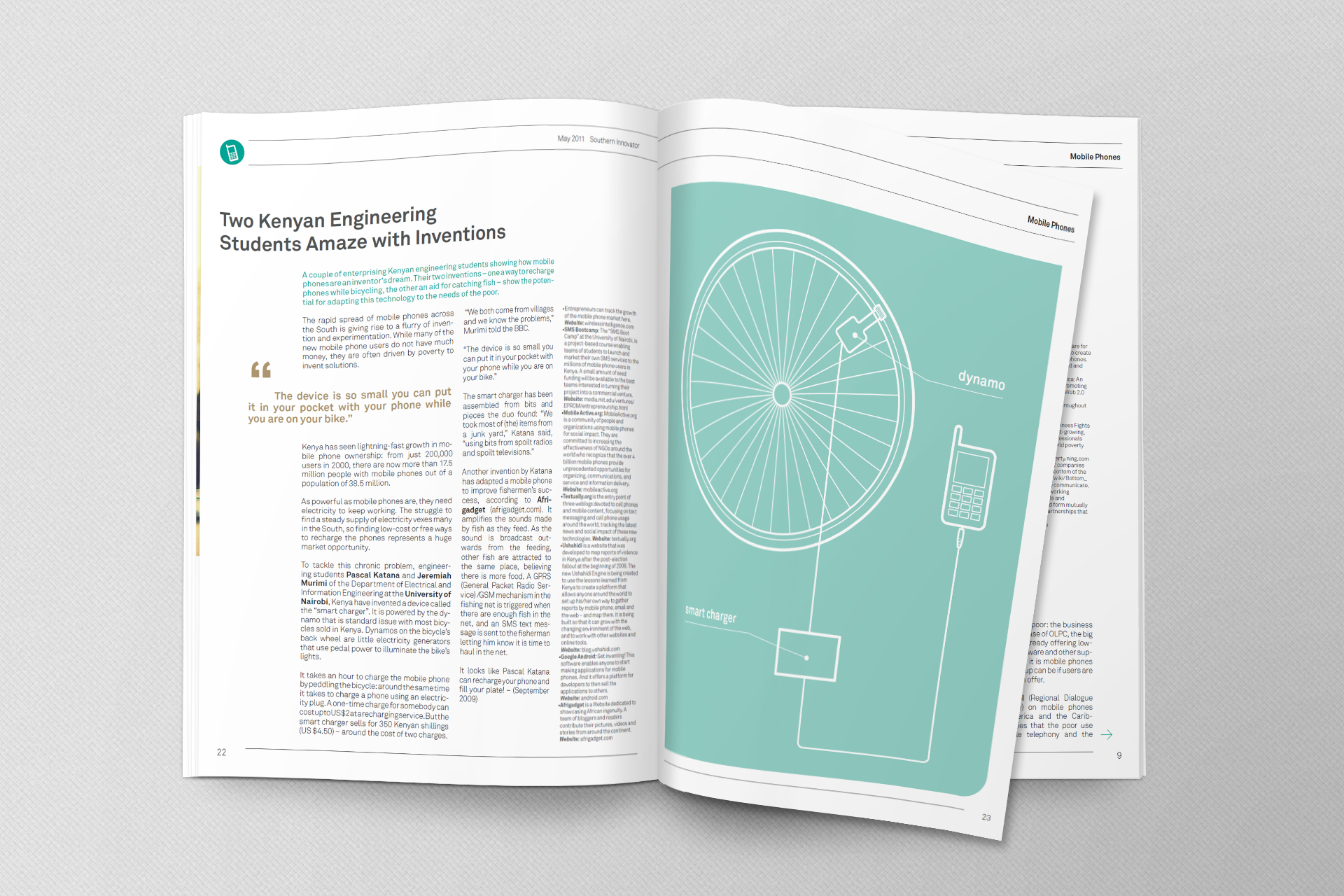
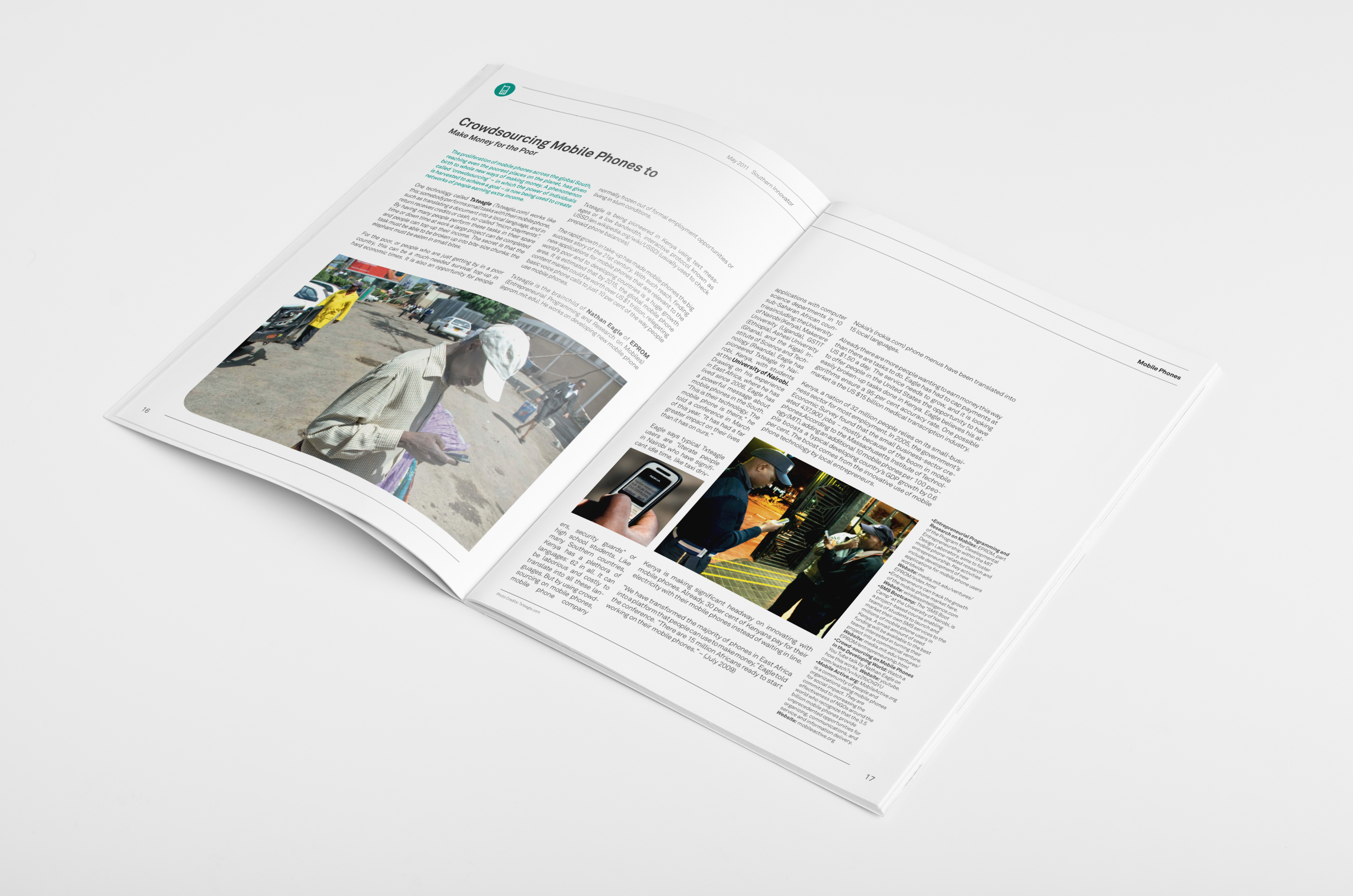
    Development Challenges, South-South Solutions was launched as an e-newsletter in 2006 by UNDP’s South-South Cooperation Unit (now the United Nations Office for South-South Cooperation) based in New York, USA. It led on profiling the rise of the global South as an economic powerhouse and was one of the first regular publications to champion the global South’s innovators, entrepreneurs, and pioneers. It tracked the key trends that are now so profoundly reshaping how development is seen and done. This includes the rapid take-up of mobile phones and information technology in the global South (as profiled in the first issue of magazine Southern Innovator), the move to becoming a majority urban world, a growing global innovator culture, and the plethora of solutions being developed in the global South to tackle its problems and improve living conditions and boost human development. The success of the e-newsletter led to the launch of the magazine Southern Innovator.

    Creative Commons License

    This work is licensed under a
    Creative Commons Attribution-Noncommercial-No Derivative Works 3.0 License.

    ORCID iD: https://orcid.org/0000-0001-5311-1052.

    © David South Consulting 2022

  • New Battery Back-up Technology Targeting Developing Countries and Remote Regions

    New Battery Back-up Technology Targeting Developing Countries and Remote Regions

    By David SouthDevelopment Challenges, South-South Solutions

    SOUTH-SOUTH CASE STUDY

    Africa’s greater global engagement and economic growth in the past few years has started to draw attention back towards the continent’s dearth of reliable power sources and inadequate power infrastructure. While demand grows at a fast pace, sadly political instability and lack of security in many countries scares off foreign investors and multinational companies who could help to expand capacity. This leaves people running small enterprises and organisations – especially in rural areas – significantly neglected. According to Zandile Mjoli, senior general manager for resources and strategy at South African utility Eskom, two-thirds of Africa’s 700 million people live in rural areas, and less than 10 per cent of the rural population has access to electricity. Each one per cent increase in available power will increase GDP by an estimated two to three per cent.

    The extent of the looming crisis in 2007 can be seen in the problems of the Southern African Power Pool, which coordinates power production and trade in the Southern African Development Community (SADC). It predicts an energy shortfall in 2007 that will force countries like South Africa and Mozambique, which have provided about 40 percent of Zimbabwe’s power requirements for example, to scale down on exports in order to meet rising demand from their own domestic markets.

    Plug Power is a research and development company in the US specializing in clean, reliable energy products for areas where power supply is unreliable or non-existent. It uses fuel cell technology to build back-up power supplies for telecommunications, utilities and uninterruptible power supply needs like refrigerators and medical supplies. It is now targeting Africa with its new GenCore back-up fuel cell system using ultra capacitor technology, basically the mechanism by which the fuel cell stores electricity. It is specifically built for remote regions with severe climates where the limited lifespan of a battery and harsh weather conditions can lead to power supply disruptions.

    Fuel cells use chemicals to create electricity and heat similar to batteries, but when hydrogen is used, they only produce clean water as a by-product. Most importantly for those working in development, it provides a continuous power supply as long as the fuel is provided. Plug Power’s system allows for hydrogen to be taken from multiple sources to power the cells.

    Published: January 2007

    Website: http://www.plugpower.com/

    Development Challenges, South-South Solutions was launched as an e-newsletter in 2006 by UNDP’s South-South Cooperation Unit (now the United Nations Office for South-South Cooperation) based in New York, USA. It led on profiling the rise of the global South as an economic powerhouse and was one of the first regular publications to champion the global South’s innovators, entrepreneurs, and pioneers. It tracked the key trends that are now so profoundly reshaping how development is seen and done. This includes the rapid take-up of mobile phones and information technology in the global South (as profiled in the first issue of magazine Southern Innovator), the move to becoming a majority urban world, a growing global innovator culture, and the plethora of solutions being developed in the global South to tackle its problems and improve living conditions and boost human development. The success of the e-newsletter led to the launch of the magazine Southern Innovator.

    Creative Commons License

    This work is licensed under a
    Creative Commons Attribution-Noncommercial-No Derivative Works 3.0 License.

    ORCID iD: https://orcid.org/0000-0001-5311-1052.

    © David South Consulting 2022

  • Teenager Uses Technology to Protect Livestock from Lions

    Teenager Uses Technology to Protect Livestock from Lions

    By David SouthDevelopment Challenges, South-South Solutions

    SOUTH-SOUTH CASE STUDY

    In Kenya, a teenage Maasai (http://en.wikipedia.org/wiki/Maasai_people) inventor has developed a way to chase lions away from livestock that doesn’t harm the lions. It is a common practice to kill lions when they threaten or kill livestock, and this has led to a precipitous drop in the local lion population at Nairobi National Park (http://www.kws.org/parks/parks_reserves/NANP.html/), near the country’s capital, Nairobi. Lions are a significant tourist attraction for Kenya and the population decline is a threat to the future of the tourist industry.

    Trying to find the right balance between livestock and wild animals is a problem across the global South. As populations rise, and the number of animals kept for domestic food markets increases, so does conflict between farmers and predatory wild animals looking for an easy meal. And there is no more tempting easy meal than domesticated animals tamed and kept in herds.

    According to Reuters, 13-year-old Richard Turere has developed a system of flashing lights to scare off lions at night. The LED (light-emitting diode) (http://en.wikipedia.org/wiki/Light-emitting_diode) bulbs were gathered from broken flashlights. Turere then wired them to a solar-powered car battery used to power the family’s TV.

    Turere has placed the lights on poles surrounding the enclosure where the cattle stay at night.

    “Lions were eating our cattle at night, which made me very annoyed,” he told Reuters. “And I thought that I have to come up with an idea of making bulbs. Because I knew that the lions were afraid of something moving.

    “When someone wakes up at night and moves with a torch, they are afraid. So I made the bulbs which flash at night and keep away lions.”

    Nairobi National Park is wild and unfenced, leaving lions free to wander on to farmland. Tragically for the lions, increasing numbers are being killed by farmers protecting herds. Conservationists say Kenya’s lion population has plummeted from 15,000 to just 2,000 in a decade. Since October 2011, Wildlife Direct (http://wildlifedirect.org/) has documented 169 killings of livestock by lions in the location near Turere’s farm.

    Kenya depends heavily on tourism to the national parks where people want to see lions. Kenya has been enjoying significant growth in tourism and has the goal of reaching 2 million international tourists in 2012 (Kenyan Ministry of Tourism). Earnings from international tourism are the second largest source of foreign exchange for the country and the services sector – 63 per cent of GDP (gross domestic product) – is dominated by tourism (Brand Kenya). So-called ‘photo safaris’ to the country’s national parks and game preserves are the main attraction for international tourists.

    But farmers need to have their herds protected since livestock are a critical income source for them, as well as a food source for the country. Cattle herding has long been an important income source and livelihood for the Maasai people.

    According to conservationist Dr. Paula Kahumbu, executive director of Wildlife Direct, other herding families would like Richard to set up the light system on their farms too.

    Since Richard installed the lights, his family has not lost any cattle to lions. This bright idea has also dramatically altered Turere’s life. The attention he has received for the invention has led to him being funded by local environment groups to attend a prestigious private school, Brookhouse International School (http://www.brookhouse.ac.ke/) in Nairobi. Things are truly looking bright for Turere!

    Published: August 2012

    Resources

    1) Experience Kenya: The web portal packed with information on Kenyan tourist attractions and investment opportunities. Website: http://www.experiencekenya.co.ke/index.php

    2) Brand Kenya: The official Brand Kenya website shows how the country is weaving together all things Kenyan to create a strong global brand for the country. Website: http://brandkenya.co.ke/

    Development Challenges, South-South Solutions was launched as an e-newsletter in 2006 by UNDP’s South-South Cooperation Unit (now the United Nations Office for South-South Cooperation) based in New York, USA. It led on profiling the rise of the global South as an economic powerhouse and was one of the first regular publications to champion the global South’s innovators, entrepreneurs, and pioneers. It tracked the key trends that are now so profoundly reshaping how development is seen and done. This includes the rapid take-up of mobile phones and information technology in the global South (as profiled in the first issue of magazine Southern Innovator), the move to becoming a majority urban world, a growing global innovator culture, and the plethora of solutions being developed in the global South to tackle its problems and improve living conditions and boost human development. The success of the e-newsletter led to the launch of the magazine Southern Innovator.

    Creative Commons License

    This work is licensed under a
    Creative Commons Attribution-Noncommercial-No Derivative Works 3.0 License.

    ORCID iD: https://orcid.org/0000-0001-5311-1052.

    © David South Consulting 2022

  • Venezuela’s Currencies Promote Cooperation Not Competition

    Venezuela’s Currencies Promote Cooperation Not Competition

    By David SouthDevelopment Challenges, South-South Solutions

    SOUTH-SOUTH CASE STUDY

    The global economic crisis has spread around the world and is bringing many problems in its wake.  As global currency markets gyrate wildly, and people find they can go from having wealth to being poor almost overnight, the question is being asked: “is there another way?”

    The global economy is slowing rapidly. Even Iceland – a country recently named as having the best quality of life in the world (Human Development Index) (HDI) – has gone broke, and many other nations around the world will face serious economic crises. People will need to protect themselves from the worst effects of the fallout from various economic bubbles bursting.

    Runaway inflation, as is occurring in Zimbabwe – reaching 231 million percent in October, 2008 according to official sources – shows faith in a country’s currency can be sorely tested. But do people and the poor in particular, need to be prisoners of the economy managed by a national currency?

    The ‘prosumer’ movement (http://en.wikipedia.org/wiki/Prosumer), where consumers take an active role in re-shaping markets and economies to their benefit, around the world is looking for ways to bypass national currencies and make food, goods and services more affordable and stable, improving the lives of the poor. One way this is done is through alternative currencies (http://en.wikipedia.org/wiki/Alternative_currency).

    Cimarrones, or the Cimarron, joins 10 other alternative currencies currently in operation across Venezuela. They are circular cardboard tokens with a picture of a runaway slave on them.

    Supported by Hugo Chavez, the country’s president, the new currencies are aimed at tackling poverty and establishing new economies. The currencies can’t be exchanged for the Venezuelan currency, the bolivar.

    It works like this: to be a prosumer, you must first bring something to sell before you can buy anything. The range of products for sale at prosumer markets is not vast, but that isn’t the point.

    “It’s magic,” Pablo Mayayo, an Argentinian advising Venezuela on prosumer schemes, told The Economist. “ When you take away money, which is the cause of almost all the great evils in the world, people relate to each other in a different way, by cooperating, not competing.”

    Argentina pioneered so-called “barter markets” in response to its economic crises, helping people avoid starvation, looting and perhaps a revolution. By the end of 2002, there were 4,500 barter markets being used by half a million people producing 600 million credits.

    “They were organized geographically around church halls, car parks and baseball courts,” recalled Peter North, a Liverpool University geographer. “They offered a wide range of products and services, supplied by professionals, trades people and farmers, as well as housewives and the unemployed. Stalls attracted ‘prosumers’ in their thousands, who paid with credit coupons issued by one or more barter markets. Everyone involved was both a prosumer and a producer, since you couldn’t purchase credits or exchange them for pesos.”

    In Rio Chico, a small town in the Venezuelan coastal region of Barlovento, the prosumer currency market has people happy with the prices.

    “I grow coconuts,” said Angenia Hernandez. “In the shops they cost 3.5 bolivares each (US $1.63) at the official exchange rate), but we we’re going to sell them at [the equivalent of] 1.5.” She calls it an end to “commercial fascism.”

    Because of global currency speculation and investment flows, national currencies are not entirely at the control of national governments. High inflation seriously hurts the poor and low-waged, and national currencies can hurt the rural poor, who become prisoners to high interest rates charged by urban lenders.

    Turning to a local, alternative currency has many advantages: it stops currency speculation, stops the flow of wealth to urban areas, preserves purchasing power, keeps trading local. Avoiding the draining away of wealth to middlemen, it addresses currency scarcity, and fosters greater awareness of how economies function and the mechanisms of trade

    Criticism of these schemes say it is just a re-run of regressive company currencies and feudal tokens that were used in the past to control people and force them to only buy products from the landowner or boss.

    In Papua New Guinea , shells are used for money and are called Tabu.  It is an ancient currency system used by the Tolai people of East New Britain Island . Stephen Demeulenaere (www.network-economies.com), who has worked on alternative currencies around the world and helped with the re-introduction of the Tabu in Papua New Guinea , sees it playing a key role in the local economy.

    “Tabu was very effective at addressing poverty,” he said, “because anything could be purchased with it, from a handful of peanuts up to a piece of land or even a car, without needing national currency.  Tabu is produced traditionally by women, so theoretically nobody would suffer from a lack of it.  The advantage over the national currency is that it has a very long history of use, and people trust it more than the national currency.

    “Tabu builds wealth by facilitating the exchange of locally-produced goods and services which may not circulate in a ‘national-currency only’ economy, and values activities that may not be considered to be economically viable if the use of national currency was the only option.  In the west we see this where ‘mother’s work’, hobbies, mutual-aid and other traditional under-valued but economically important activities are not valued monetarily.

    “By encouraging the exchange of locally-produced goods and services, wealth is built in the community from the ground up.”

    Over 75,000 people now use the shells, usually traded in great rings.

    Getting the introduction of an alternative currency right is critical. In Argentina, such currencies were criticised for being manipulated by criminal gangs and political forces.

    “The main advice I have is to study the community closely, and our website at http://www.complementarycurrency.org, provides free resources for people wishing to start their system,” Demeulenaere said.

    “The system must be transparent so that people trust it and participate in maintaining its health and stability; democratic, so that it can not be abused by those in power; appropriate, so that it achieves general social and economic goals and aspirations of the community; and to be complementary to the regular economy so that the system helps its members to improve their lives economically.”

    At the Jai Marketplace in Thailand , all of the goods in the market can be bought entirely in the local currency called “Jai’. Jai is convertible to Thai Baht or to organic, locally made cow fertilizer, and is designed to improve the local economy and the climate for micro, small and medium enterprises through the local exchange network.

    Published: January 2009

    Resources

    https://davidsouthconsulting.org/2022/10/26/african-trade-hub-in-china-brings-mutual-profits-2/

    https://davidsouthconsulting.org/2022/10/14/cash-machines-for-the-poor/

    https://davidsouthconsulting.org/2020/12/15/development-challenges-south-south-solutions-newsletter-2007-2010-2/

    https://davidsouthconsulting.org/2020/12/15/development-challenges-south-south-solutions-newsletter-2011-2014-2/

    https://davidsouthconsulting.org/2022/04/12/djibouti-re-shapes-itself-as-african-trade-hub/

    https://davidsouthconsulting.org/2022/02/10/food-inflation-ways-to-fight-it/

    https://davidsouthconsulting.org/2022/10/20/global-souths-rising-economies-gain-investor-spotlight-2/

    https://davidsouthconsulting.org/2021/07/19/global-south-trade-boosted-with-increasing-china-africa-trade-in-2013/

    https://davidsouthconsulting.org/2022/07/01/poorest-countries-being-harmed-by-euro-currency-crisis/

    https://davidsouthconsulting.org/2022/11/17/sos-shops-keep-food-affordable-for-poor-unemployed/

    https://davidsouthconsulting.org/2021/07/19/south-south-trade-helping-countries-during-economic-crisis/

    https://davidsouthconsulting.org/2021/01/23/the-sweet-smell-of-failure-the-world-bank-and-the-persistence-of-poverty/

    https://davidsouthconsulting.org/2022/10/20/trade-to-benefit-the-poor-up-in-2006-and-to-grow-in-2007/

    https://davidsouthconsulting.org/2022/10/05/women-empowered-by-fair-trade-manufacturer/

    https://davidsouthconsulting.org/2022/06/16/women-mastering-trade-rules/

    Development Challenges, South-South Solutions was launched as an e-newsletter in 2006 by UNDP’s South-South Cooperation Unit (now the United Nations Office for South-South Cooperation) based in New York, USA. It led on profiling the rise of the global South as an economic powerhouse and was one of the first regular publications to champion the global South’s innovators, entrepreneurs, and pioneers. It tracked the key trends that are now so profoundly reshaping how development is seen and done. This includes the rapid take-up of mobile phones and information technology in the global South (as profiled in the first issue of magazine Southern Innovator), the move to becoming a majority urban world, a growing global innovator culture, and the plethora of solutions being developed in the global South to tackle its problems and improve living conditions and boost human development. The success of the e-newsletter led to the launch of the magazine Southern Innovator.

    https://davidsouthconsulting.org/2021/03/05/southern-innovator-issue-2/

    Creative Commons License

    This work is licensed under a
    Creative Commons Attribution-Noncommercial-No Derivative Works 3.0 License.

    ORCID iD: https://orcid.org/0000-0001-5311-1052.

    © David South Consulting 2023