Category: Development Challenges, South-South Solutions Newsletters

The Development Challenges, South-South Solutions e-newsletter was published by the United Nations Office for South-South Cooperation (UNOSSC) from 2006 to 2014.

  • African Theatre Becomes European Success

    African Theatre Becomes European Success

    By David SouthDevelopment Challenges, South-South Solutions

    SOUTH-SOUTH CASE STUDY

    In Britain, the country that gave the world the plays of William Shakespeare (http://en.wikipedia.org/wiki/William_Shakespeare), a new creative force has taken stages by storm: African theatre.  And it is proving how economically rewarding Southern culture can be.

    “African theatre is very eclectic and very narrative driven, which I think appeals to audiences.  Here (the United Kingdom) it’s very much more reflective and intellectual,” director Nick Kent told The Independent newspaper.

    Over the last decade, the world’s creative industries have gained greater recognition as an important spark that can drive economic development and entrepreneurship. World exports of creative products were valued at US $424.4 billion in 2005 as compared to US $227.5 billion in 1996, according to UNCTAD figures. It has grown by 8.8 percent a year between 1996 and 2005 (UNCTAD).

    In Germany, more than 35 million people go to almost 110,000 theatre performances – not including opera and ballet – every year. That’s almost half the population.

    The creative economy is seen as a fast growth area and good job creator, and importantly, a lynchpin of cultural identity and diversity. While the creative economy flourishes in North America and Europe, Southern countries are still not reaping its full benefits. Despite their cultural diversity and richness, out of 132 developing countries, 85 have never produced a commercial film.

    UNESCO, through its Global Alliance for Cultural Diversity, has been in the forefront of helping African countries re-shape their policies to take this into consideration. The promotion of cultural industries also has been incorporated into the New Partnership for Africa’s Development (NEPAD).

    Kent, the artistic director of London’s Tricycle Theatre, believes the popularity of African theatre is a product of its vibrancy and the fact both music and stories’ narratives engage with difficult topics.

    “Since the apartheid era (in South Africa), African theatre has been more engaged socially,” continues Kent. “South Africa has managed to capture music and storytelling.”

    Nigeria’s Nobel Prize-winning playwright Wole Soyinka packed Britain’s National Theatre recently by tackling tensions in colonial Nigeria in his play Death and the King’s Horseman. Another Nigerian play is Iya-lle (The First Wife), about a chief’s preparations for his wife’s 40th birthday. It runs at London’s Soho Theatre.

    Yet another success is a re-telling stories from the Bible called The Mysteries – Yiimimangaliso — by the South African theatre company Isango Portobello. It was such a huge success when it first appeared on London’s stages in 2002, it will be returning in September.

    One way companies in countries like Britain use to introduce audiences to new cultures and creative experiences is to run a special ‘season.’ In April, London’s Tricycle Theatre began a season of 12 plays about Afghanistan by a variety of writers. They were divided into half-hour mini-plays that could be seen in parts over several evenings or in a weekend marathon of 12 plays.

    The project was so successful that the Tricycle is starting a South Africa season, beginning with the play Karoo Moose, an award-winning story about a girl’s struggle to survive in a village with the help of an escaped moose. Another play in the season is Koos Sas: Last Bushman of Montagu, a musical about a heroic rebel.

    West Africa features in the play The Observer, also at London’s National Theatre. It tells the story of an election observer forced to rubber-stamp the victory of a corrupt president. Lost in the Stars, a musical adaptation of the novel Cry, the Beloved Country – a global success in the 1940s – explores racial tensions in apartheid South Africa and runs at the Queen Elizabeth Hall.

    “African theatre addresses issues of identity and conflict,” said Dr .Yvette Hutchison, who lectures in African theatre at the University of Warwick.”Because of its history, there is much to explore. “European theatre became very intellectual and rational after the Enlightenment. African theatre remains spiritual and metaphysical. There is also less formality – the audience expects to contribute.”

    The fresh perspective brought by African theatre is its appeal.

    “I do think people have become tired of formulaic music in theatre,” said the British-born South African director of The Mysteries, Mark Dornford-May.

    “African culture will incorporate, for example, Mozart and a work song, and perceive them as equally valid, or perhaps favour the work song. There’s also a lot of physicality. The audience expects to be engaged. In Europe you sit in your seat and don’t have contact with anyone and you may as well be watching a DVD. There’s a sense of excitement in African theatre and exuberance of performance.”

    Published: July 2009

    Resources

    The British Council sponsors numerous awards for international creatives. Website: www.creativeconomy.org.uk

    Creative Clusters: Creative Clusters is an independent policy conference examining the growth of the creative economy. It is interested in initiatives from around the world that are designed to have an impact in both cultural and economic terms.   Website: www.creativeclusters.com

    Iroko Theatre Company: The theatre uses traditional African theatre art forms to explore social issues that are of interest to children and young people and in doing so help them to experience new cultures and art forms. Website:www.irokotheatre.org.uk/index.html

    A BBC story on the success of African theatre. Website: www.bbc.co.uk/africabeyond/africanarts/18625.shtml

    Development Challenges, South-South Solutions was launched as an e-newsletter in 2006 by UNDP’s South-South Cooperation Unit (now the United Nations Office for South-South Cooperation) based in New York, USA. It led on profiling the rise of the global South as an economic powerhouse and was one of the first regular publications to champion the global South’s innovators, entrepreneurs, and pioneers. It tracked the key trends that are now so profoundly reshaping how development is seen and done. This includes the rapid take-up of mobile phones and information technology in the global South (as profiled in the first issue of magazine Southern Innovator), the move to becoming a majority urban world, a growing global innovator culture, and the plethora of solutions being developed in the global South to tackle its problems and improve living conditions and boost human development. The success of the e-newsletter led to the launch of the magazine Southern Innovator.

    Creative Commons License

    This work is licensed under a
    Creative Commons Attribution-Noncommercial-No Derivative Works 3.0 License.

    ORCID iD: https://orcid.org/0000-0001-5311-1052.

    © David South Consulting 2022

  • The Disabled in the South can Make Money, Restore Dignity

    The Disabled in the South can Make Money, Restore Dignity

    By David SouthDevelopment Challenges, South-South Solutions

    SOUTH-SOUTH CASE STUDY

    The South’s disabled are a large population and often suffer more than even the poorest residents. It is estimated that there are 500 million disabled people in the world, with either mental, physical or sensory impairment. As many as 80 percent of all disabled people live in isolated rural areas in developing countries, and in some countries more than 20 percent of the population is classed as disabled (UN).

    Obstacles are everywhere for the disabled and just being able to economically survive, let alone thrive, can be a superhuman struggle. There are many physical and social barriers in most countries which thwart full participation, and millions of children and adults live lives of segregation and degradation.

    But two radically different approaches show something can be done, and perceptions re-shaped.

    In the Republic of Congo in central Africa, blind entrepreneur Jean-Pierre Louya is mentoring other blind people in the business of making soap. There are an estimated 11,709.95 blind people, or 0.3% of the population of 3,903,318 (http://www.uniteforsight.org/eye_stats.php). Most are blind because their eye infections have gone untreated, or they have diseases like diabetes.

    Life is very hard for many in Congo. Brazzaville, the capital, was heavily damaged in a civil war in 1997 and many thousands were killed.

    Jean-Pierre, who is also the head of the country’s association for the blind (http://www/afub-uafa.org/pages/pages3.asp), picked up his soap-making skills from a soap cooperative. Once a truck driver, he went blind as a result of an eye disease 25 years ago. With the training from the soap cooperative, he has been successfully running his soap-making business, where he turns palm oil into high-lather soap, and used the profits to raise his seven children and buy some land.

    But rather than just keeping his business secrets to himself, Jean-Pierre mentors other blind people in this delicate art. There are many stages in the process of making soap that are risky, but he mixes 20 litres of water with three kilograms of caustic soda – the most dangerous part of making soap – by using his memory. He knows what temperature it is by touch, how to get the mixture right by smell, and what amounts to use by sound.

    Pouring in the hot palm oil, he told Reuters: “The barrel was already hot, so the first bit of oil I poured made noise: that’s how I l knew I had poured the liquid inside the barrel.”

    “It was very hard for me to accept this condition,” he said. “it was two years before I could go out in public because I was embarrassed that my friends see me this way.”

    “A blind person is teaching a trade to another blind person,” said Samuel Koubouana, a blind apprentice soapmaker Jean-Pierre is teaching. “It really means a lot to me. JP is improving my life.”

    Jean-Pierre relies a great deal on the goodwill of local people to get around. As local Lenvo Lydie told Reuters: “Blind people really suffer in this country. The blind should be driven from one point to another rather than being left alone to fend for themselves in the streets.”

    But in Congo there are few government programmes for disabled people and none for the blind. As president of the Association of the Blind in Congo, Jean-Pierre is helping other blind people take control of their lives.

    In Angola, the Miss Landmine contest has taken a highly controversial approach to restoring dignity to the disabled. The brainchild of Norwegian theatre director Morten Traavik, the beauty contest featuring landmine amputees took place for the first time in April in Angola’s capital, Luanda. Angola has one of the highest rates of landmine amputees in the world, after a brutal 27-year civil war. Estimates place the number injured at 80,000.

    The 18 contestants represented each province of the country, and the contest is about restoring self-esteem in women who have been isolated and marginalised. Traavik was shocked by the large number of amputees, but he also saw that Angolans really liked beauty contests. The contest’s motto is “Everyone has the right to be beautiful”.

    It is funded by the Angolan government’s de-mining commission and Norway’s Arts Council. Participants receive US $196 a day and get to keep their dresses and jewellery. The winner, 31-year-old Augusta Hurica from Luanda, becomes an ambassador for international landmine survivors.

    While the contest has had many critics, it has been so successful it will be replicated in Cambodia next year. And a worldwide contest is in the works for 2015.

    Emilia Luzia, a contestant, told Marie Claire magazine: “I am happy to be representing my region and all disabled people, but it is also good to feel special and glamorous. This is the first time I’ve worn such nice clothes.”

    Another contestant took on the critics. Twenty-six-year-old Sandra Tichika, said: “Most of the ladies here are from small villages: we struggle, we are isolated, yet here we are being noticed and accepted – how bad can that be?”

    Published: June 2008

    Resources

    Development Challenges, South-South Solutions was launched as an e-newsletter in 2006 by UNDP’s South-South Cooperation Unit (now the United Nations Office for South-South Cooperation) based in New York, USA. It led on profiling the rise of the global South as an economic powerhouse and was one of the first regular publications to champion the global South’s innovators, entrepreneurs, and pioneers. It tracked the key trends that are now so profoundly reshaping how development is seen and done. This includes the rapid take-up of mobile phones and information technology in the global South (as profiled in the first issue of magazine Southern Innovator), the move to becoming a majority urban world, a growing global innovator culture, and the plethora of solutions being developed in the global South to tackle its problems and improve living conditions and boost human development. The success of the e-newsletter led to the launch of the magazine Southern Innovator.

    Creative Commons License

    This work is licensed under a
    Creative Commons Attribution-Noncommercial-No Derivative Works 3.0 License.

    ORCID iD: https://orcid.org/0000-0001-5311-1052.

    © David South Consulting 2022

  • Disabled Congolese Musicians Become World Hit

    Disabled Congolese Musicians Become World Hit

    By David SouthDevelopment Challenges, South-South Solutions

    SOUTH-SOUTH CASE STUDY

    A group of Congolese musicians is using music to overcome obstacles – both economic and social – that come with being disabled in a poor country. Called Staff Benda Bilili, they are on course to be a global sensation and are looking forward to their first European tour. A remarkable achievement for anyone from a war-torn country, let alone for musicians who live as paraplegics in the slums of the Democratic Republic of Congo’s capital, Kinshasa (http://en.wikipedia.org/wiki/Kinshasa).

    The South’s disabled are a large population and often suffer more than even the poorest residents. It is estimated that there are 500 million disabled people in the world, with mental, physical or sensory impairment. As many as 80 percent of all disabled people live in isolated rural areas in developing countries, and in some countries more than 20 percent of the population is classed as disabled (UN).

    Obstacles are everywhere for the disabled and just being able to economically survive, let alone thrive, can be a superhuman struggle. There are many physical and social barriers in most countries which thwart full participation, and millions of children and adults live lives of segregation and degradation.

    The four songwriters and musicians of Staff Benda Bilili use homemade wheelchairs to get around Kinshasa. The ‘wheelchairs’ resemble bicycles, tricycles and motorbikes, and are a testament to the resourcefulness of the band’s members. They sing about contemporary problems, like the importance of polio vaccinations – several of the band members are confined to wheelchairs because of polio (http://www.polioeradication.org/).

    When performing, they are joined by a young group of acoustic rhythm musicians to complete their act.

    One of the musicians, Roger Landu, just 17, plays a one-string lute called the satonge. He built it from old milk powder tin cans, a discarded fish basket and a single electrical wire. He builds the instruments for sale as well, charging US $20 for each one.

    Benda Bilili means “look beyond appearances” in Lingala, a Bantu language spoken in Kinshasa.

    Lounging after a recent performance on his hand-built moped wheelchair, Coco Ngambali, the group’s primary songwriter, told The Independent: “We see ourselves as journalists. We’re the real journalists because we’re not afraid of anyone. We communicate messages to mothers, to those who sleep on the streets on cardboard boxes, to the shégués (the disabled homeless).”

    The band has a scrappy, street-wise persona. Being disabled, the members have had to fiercely protect their own security and economic position in society. Life on the streets for the band members, who were homeless – living near the city’s zoo – when they started, involved violent attacks and frequent attempts by thieves to rob them of the few possessions they have.

    Polio victims were often abandoned by their parents and left on the streets to survive in Congo. It is a double pain: the disabled are seen as possessing demonic powers and are feared by able-bodied people. With this outsider status, the disabled have developed highly creative ways to survive, working as traders on the streets.

    Staunchly self-reliant, the band members built up their musical careers with no help from others and have only just recently garnered attention from European world music fans. Prior to their recent success, they would have to busk on the street near the zoo – or even across the street from the United Nations office in Kinshasa – to make money for food.

    None of the band members have formal musical training and they have learned what they know by training their ears to the sound of musical notes. Their songs can be decorated with the sounds of animals commonly heard, such as chirping frogs, or just the street noise around the zoo (http://www.youtube.com/watch?v=JtVZhaZp6Ng).

    The powerful web video service You Tube has driven awareness of the band, as hundreds of thousands of people have viewed their videos online. Their debut album is called Très Très Fort (Very, Very Strong) and is available from  Crammed Discs (http://www.crammed.be/news/index.htm). A feature film about Staff Benda Bilili is about to be completed by film producers Renaud Barrett and Florent de la Tullaye.

    Another band with disabled members that is garnering success is Liyana (http://www.youtube.com/watch?v=GLayxPj8OpI) from Zimbabwe. Despite the obstacles of hyperinflation, cholera, hunger and poverty in the country, the band recently completed a US tour. Their song ‘Never Give Up’ says it all: after being rejected from the African Idol television talent contest because of their wheelchairs, they didn’t let it stop them from going on to do a US tour.

    Published: April 2009

    Resources

    https://davidsouthconsulting.org/2022/10/02/african-afro-beats-leads-new-music-wave-to-europe/

    https://davidsouthconsulting.org/2022/11/17/cashing-in-on-music-in-brazil/

    https://davidsouthconsulting.org/2021/11/09/mauritanian-music-shop-shares-songs-and-friendship/

    https://davidsouthconsulting.org/2020/12/17/mongolias-musical-entrepreneurs-led-way-out-of-crisis-2018/

    https://davidsouthconsulting.org/2023/02/07/mongolian-rock-and-pop-book-mongolia-sings-its-own-song/

    https://davidsouthconsulting.org/2021/11/09/ring-tones-and-mobile-phone-downloads-are-generating-income-for-local-musicians-in-africa/

    https://davidsouthconsulting.org/2021/11/09/taxis-promote-african-music-beats/

    Development Challenges, South-South Solutions was launched as an e-newsletter in 2006 by UNDP’s South-South Cooperation Unit (now the United Nations Office for South-South Cooperation) based in New York, USA. It led on profiling the rise of the global South as an economic powerhouse and was one of the first regular publications to champion the global South’s innovators, entrepreneurs, and pioneers. It tracked the key trends that are now so profoundly reshaping how development is seen and done. This includes the rapid take-up of mobile phones and information technology in the global South (as profiled in the first issue of magazine Southern Innovator), the move to becoming a majority urban world, a growing global innovator culture, and the plethora of solutions being developed in the global South to tackle its problems and improve living conditions and boost human development. The success of the e-newsletter led to the launch of the magazine Southern Innovator.

    https://davidsouthconsulting.org/2022/11/01/southern-innovator-magazine-2010-2014/

    Creative Commons License

    This work is licensed under a
    Creative Commons Attribution-Noncommercial-No Derivative Works 3.0 License.

    ORCID iD: https://orcid.org/0000-0001-5311-1052.

    © David South Consulting 2022

  • Betterplace.org HQ Photos

    Betterplace.org HQ Photos

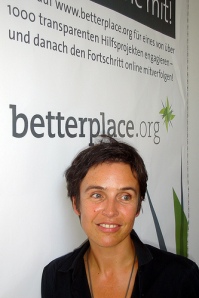
    Betterplace sign
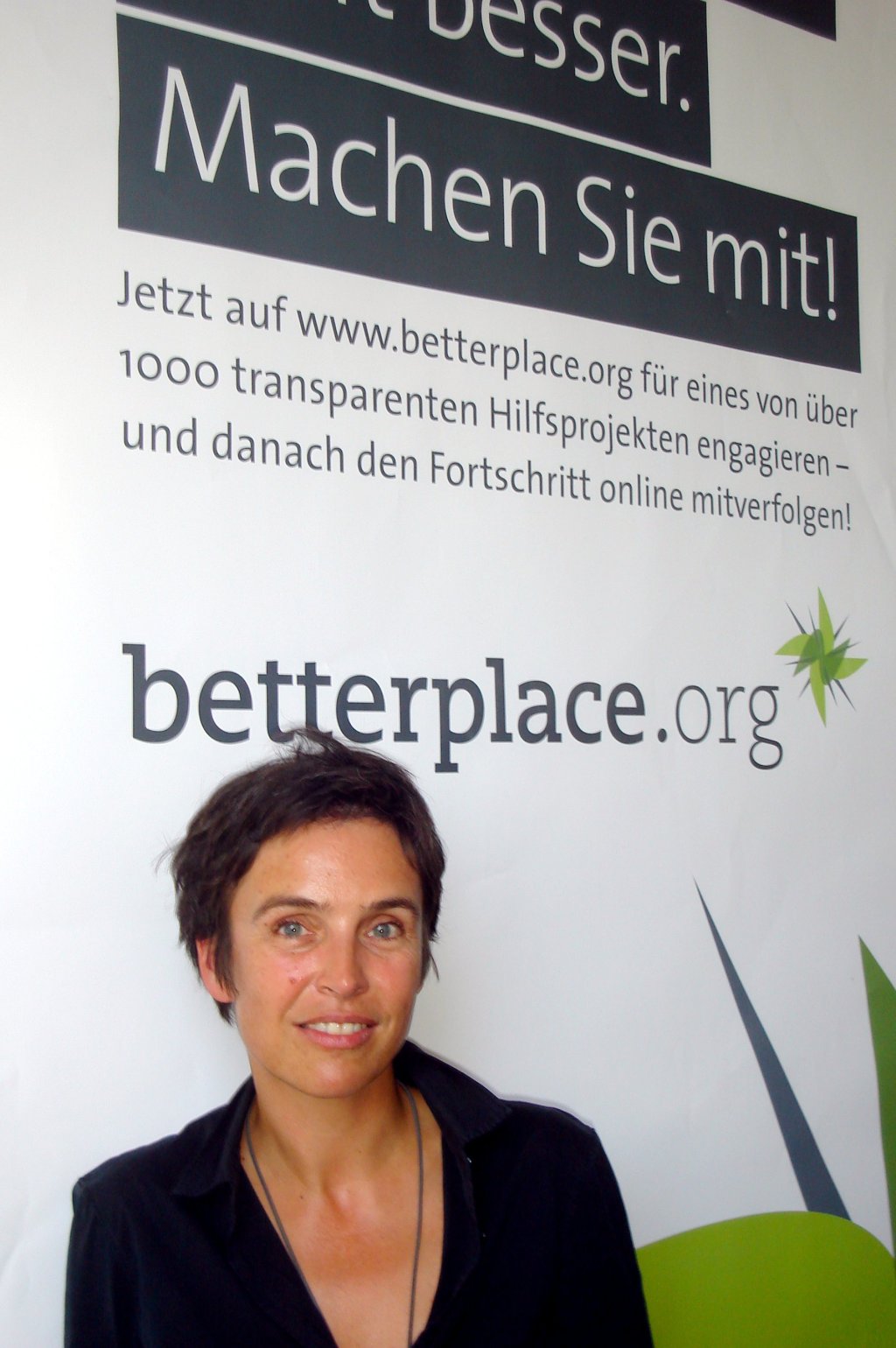
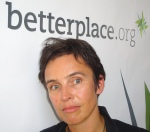
    Joana at Betterplace HQ, Berlin
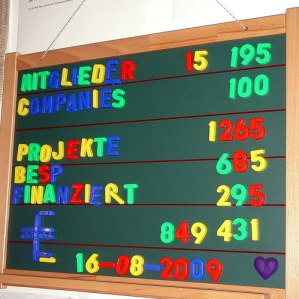
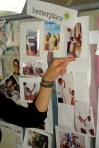
    Betterplace project board
    Joana points
    Joana 3
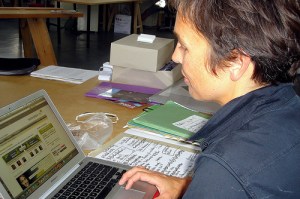
    Joana at work
    Joana Breidenbach at betterplace.org HQ
    United Nations e-newsletter Development Challenges, South-South Solutions visited the Berlin, Germany headquarters of start-up betterplace.org in 2009. It was the dawn of the Berlin digital tech boom.

    Making The World A Better Place For Southern Projects

    By David SouthDevelopment Challenges, South-South Solutions

    SOUTH-SOUTH CASE STUDY

    Good ideas are plentiful, but how to fund life-improving projects has always been a thorny issue. Judging how effective a project is can also be fraught with debate and contention. Over the past two decades, the number of NGOs in the global South has exploded (http://lboro.ac.uk/gawc/rb/rb144.html). The best of them offer the local knowledge and understanding required to make development gains. But unlike NGOs in the North, many lack the powerful fundraising capabilities of the big global NGO brands.

    An exciting new initiative based in Germany, but already featuring hundreds of projects from across the South, is using the power of the internet to directly connect projects and donors.

    Joana Breidenbach, an anthropologist, author and co-founder of betterplace.org (www.betterplace.org), says NGOs are emerging in India and other countries of the South to challenge the big Northern global NGOs.

    “Why wouldn’t you want to donate to these Southern NGOs? There are more entrepreneurs and local approaches which are better.

    “Betterplace gives local institutions a platform to express themselves.”

    Started in 2007, betterplace is an online marketplace for projects to raise funds. It is free, and it passes on 100 percent of the money raised on the platform to the projects. The foundation that runs betterplace supports its overheads by offering additional services that people can pay for if they wish. It works in a way similar to the online marketplace eBay (http://www.ebay.com): NGOs post their project, set up an account, blog about their achievements and successes and needs, and receive donations direct to their bank account when they come in.

    Breidenbach points out up to a third of any NGO’s income is spent on fundraising. In Germany, that represents more than Euro 1.3 billion out of over Euro 4 billion in private donations – money that could have gone directly into the hands of the people needing help.

    With betterplace, donators can surf through the projects and pick the one they want. Already, more than 100 large corporations trawl through betterplace seeking projects to fund to meet their corporate social responsibility (CSR) obligations (http://en.wikipedia.org/wiki/Corporate_social_responsibility).

    “I find it very exciting to introduce a good and innovative NGO to a corporate sponsor,” Breidenbach said.

    Breidenbach says betterplace’s ultimate goal is “to transfer the donation market online.” It hopes to change the rules in donation and charity in the same way blogs and the search engine Google changed the way people publish and search for information.

    “This provides better transparency, feedback,” Breidenbach said. “Now (with betterplace) donors and organizations can cut out the middlemen. A lot of established organizations do not like this too much.”

    Over the past decade, new concepts like social entrepreneurs and venture philanthropy have emerged to straddle the delicate line between social good and private profit. Betterplace joins this wave of new thinking about how to do development better.

    In the 20 months since betterplace went online more than 1,500 projects have joined. They are now averaging between 20 to 35 new projects joining every week.

    Betterplace is a simple open-plan office on the top floor of a Berlin warehouse beside the city’s Spree river. The small team (http://www.betterplace.org/about_us/team) work on laptop computers. A blackboard on the wall details in bright colours a running tally of the projects that have joined.

    Breidenbach gives the example of a mother in Cameroon who is using betterplace to raise the school fees for her children. The mother blogs about the children’s progress and has been able to raise the fees for a year and a half.

    “People are now directly connected to somebody in need.”

    “Right now the functionality (of the website) does not allow people getting in contact publicly and we want to enable this knowledge transfer in 2010. If you want to build a well in Cameroon then you could search for the best technology and to contact other people who are doing similar projects to learn from them.”

    Success on betterplace is by no means certain. “The experience of the project managers has been as varied as development work is – some have done really well, raising thousands of Euros over the website – others have received no funding at all,” Breidenbach said.

    But betterplace provides tools to give the projects the best chance possible. “Projects can present their work, breaking it down in a transparent way (in order to let supporters know exactly what is needed for their realization), there are sound payment processes in place and project managers can give feedback through their project blog, supporters can download project widgets etc., all supplied free of charge.”

    Breidenbach has other tips for making betterplace work for a project: post details in English when creating a profile, break down the project into much smaller, low-cost goals (few people are willing to make large donations) – this also has the advantage of receiving payments straight away when they are small. Tell a good story about the project, and try and use actual testimonials from the people affected. Blog and update regularly with photos and videos to keep people engaged. Also avoid copying and pasting text from a previous grant application.

    “We have the numbers to show that projects which give regular feedback and have a lively web of trust receive more donations than others, which are not very active.”

    “Don’t think you can just go on to betterplace and the money starts rolling in,” said Breidenbach.

    The betterplace platform places all projects seeking funds on the same level, allowing individuals and small NGOs to compete equally with the big, branded global NGOs with their websites and sophisticated fundraising operations.

    “All the big NGOs have their own websites,” continues Breidenbach. “But it is the small initiatives that often don’t have a website or know how to use Pay Pal etc. (http://www.paypal.com). We are very useful for smaller NGOs.”

    “Another big advantage is that we are a real marketplace: whatever your interests (as a potential donor), you will find a project tackling this issue on the platform.”

    But what about fraud and people seeing betterplace as a coin-making machine rather than a way to make the world a better place?

    “We have a feeling for dodgy projects. We check the IP address. We have a number of trust mechanisms in place (and are currently working on enlarging them). Thus projects on betterplace can create trust through their good name … But we also include something which I would call network-trust: In our web of trust different kinds of stakeholders of an organization or a project have a voice and can publicly state what they think of it. Thus beneficiaries of a project can say if the project has done them good or has been counterproductive, people who have visited the project on the ground can describe what they have seen etc. … we hope to give a much denser and more varied impression of social work and give donors (a terribly badly informed group of people), the basis for a much more informed choice.

    “If a contributor to a project is dissatisfied with the project’s outcome … she can either directly contact the project manager via betterplace, or openly voice her concern on the project page for other potential donors to see her views.”

    For now, betterplace is still only useful to people who have access to the internet and have a bank account (necessary for the money transfers). But in the future betterplace hopes to have mobile phone interactivity and more features to expand who they can reach.

    “We are also re-working our site to make it more intuitive and easier to use for people without computer skills,” Breidenbach said. “In the pipeline is also a knowledge backbone, enabling people to access knowhow about development and social innovation issues and exchange views and experiences. This will be very useful for projects in the South as so many people are working on the same issues without knowing about it. They could learn a lot from each other, without the “help” of the north.”

    With internet broadband in Africa set to take off, according to the report Africa Connect: Undersea Cables to Drive an African Broadband Boom (http://www.pyr.com/downloads.htm?id=5&sc=PR090309_INSAME1.6), even more people will soon be able to make the most of initiatives like betterplace.

    Betterplace.org Sign

    https://davidsouthconsulting.org/2021/04/08/making-the-world-a-better-place-for-southern-projects/

    Published: September 2009

    Resources

    1) CSR Wire: This is a news service with all the latest news, reports and events and where companies announce their CSR (corporate social responsibility) programmes and how much they are contributing. A great resource for any NGO looking to make a targeted appeal for funds. Website: http://www.csrwire.com/

    2) Alibaba: Alibaba.com is an online marketplace started in China but is now global. It allows businesses from all over the world to trade with each other, make deals and find funding. Website: http://www.alibaba.com/

    3) More photos from the Betterplace HQ in Berlin, Germany. Website: http://www.flickr.com/photos/15195144@N06/sets/72157622386871044/

    https://davidsouthconsulting.org/2022/10/10/crowdfunding-technology-start-up-success-in-africa/

    https://davidsouthconsulting.org/2022/06/10/info-ladies-and-question-boxes-reaching-out-to-the-poor/

    Development Challenges, South-South Solutions was launched as an e-newsletter in 2006 by UNDP’s South-South Cooperation Unit (now the United Nations Office for South-South Cooperation) based in New York, USA. It led on profiling the rise of the global South as an economic powerhouse and was one of the first regular publications to champion the global South’s innovators, entrepreneurs, and pioneers. It tracked the key trends that are now so profoundly reshaping how development is seen and done. This includes the rapid take-up of mobile phones and information technology in the global South (as profiled in the first issue of magazine Southern Innovator), the move to becoming a majority urban world, a growing global innovator culture, and the plethora of solutions being developed in the global South to tackle its problems and improve living conditions and boost human development. The success of the e-newsletter led to the launch of the magazine Southern Innovator.  

    Follow @SouthSouth1

    Google Books: https://books.google.co.uk/books?id=uXWUyfb4MacC&dq=development+challenges+september+2009&source=gbs_navlinks_s

    Slideshare: http://www.slideshare.net/DavidSouth1/development-challengessouthsouthsolutionsseptember2009issue

    Southern Innovator Issue 1: https://books.google.co.uk/books?id=Q1O54YSE2BgC&dq=southern+innovator&source=gbs_navlinks_s

    Southern Innovator Issue 2: https://books.google.co.uk/books?id=Ty0N969dcssC&dq=southern+innovator&source=gbs_navlinks_s

    Southern Innovator Issue 3: https://books.google.co.uk/books?id=AQNt4YmhZagC&dq=southern+innovator&source=gbs_navlinks_s

    Southern Innovator Issue 4: https://books.google.co.uk/books?id=9T_n2tA7l4EC&dq=southern+innovator&source=gbs_navlinks_s

    Southern Innovator Issue 5: https://books.google.co.uk/books?id=6ILdAgAAQBAJ&dq=southern+innovator&source=gbs_navlinks_s

    https://davidsouthconsulting.org/2021/03/05/southern-innovator-issue-2/

    Creative Commons License

    This work is licensed under a
    Creative Commons Attribution-Noncommercial-No Derivative Works 3.0 License.

    ORCID iD: https://orcid.org/0000-0001-5311-1052.

    © David South Consulting 2024