Category: Development Challenges, South-South Solutions Newsletters

The Development Challenges, South-South Solutions e-newsletter was published by the United Nations Office for South-South Cooperation (UNOSSC) from 2006 to 2014.

  • Saving the Amazon Forest While Making a Living

    Saving the Amazon Forest While Making a Living

    By David SouthDevelopment Challenges, South-South Solutions

    SOUTH-SOUTH CASE STUDY

    The vast Amazon rainforest straddles Brazil (over half is there), and stretches over many countries, including Peru, Ecuador and Bolivia. It holds more than 2,500 tree species and 30 per cent of all known plant species – 30,000 in all. It contains the world’s largest tropical forest national park, Brazil’s Tumucumaque Mountains National Park(http://www.amazon-rainforest.org/places-of-interest.html). Over 25 per cent of drugs sold in pharmacies contain rainforest ingredients, and the rainforest acts as the Earth’s lungs, absorbing carbon dioxide, and emitting oxygen.

    Logging in the forest is widespread and highly wasteful – 356,000 square kilometres of rainforest have been deforested (WWF). In the past 50 years, Ecuadorhas lost over 50 per cent of its tropical rainforest.

    More than 26 million people live in the forest, with 11 million on the Brazilian side. While the Amazon’s indigenous people have little ecological impact, it is people drawn in to logging and farming who do most of the damage. Slash and burn techniques are common.

    Preserving this critical natural environment while providing jobs for the local inhabitants is a challenge being taken up by a clutch of entrepreneurs. This new wave of entrepreneurs seeks to run businesses that respect the environment and provide a good living to those they employ.

    The global garment industry is one of the most lucrative in the world (in 2000 consumers spent over US $1 trillion on buying clothes). Most of the manufacturing takes place in the poorest places on earth, and the garment and fashion industries contribute to vast quantities of pollution in these countries, either by using toxic chemicals and pesticides, by polluting and depleting water supplies, or through inefficient processes, transport and waste.

    Brazilian enterprise Treetap (http://www.treetap.com.br/) (formally AmazonLife) is seeking to change the fashion industry by selling sustainable materials to top designers. Their patented rubberized natural latex is sold under the brand name Treetap. It is made from natural rubber native to the region, and it uses a fair trade system to ensure its suppliers receive a living wage. The company itself uses the substance to produce its own handbags and purses.

    By promoting the sustainable use of a rainforest resource and focusing on social as well as financial returns, the company is proving the value of a “triple-bottom line” approach to business – where social and environmental concern is just as important as profit.

    The company has placed the preservation of the Amazon rainforest at the centre of its business plan. Tribal communities in the Amazon depend on rubber tree tapping for their livelihoods, and Treetap works with the Rubber Tappers Association (http://www.brazilmax.com/news2.cfm/tborigem/pl_amazon/id/10) to save 900,000 hectares of forest from exploitation.

    Over 45 families are supported, and they are paid eight times the market rate for their rubber. Its Rio de Janeiro factory supplies several European fashion designers with their faux-leather fabric to make clothes, backpacks, upscale furniture and handbags.

    “Europe is our main market,” said Treetap Project Coordinator and designer Maria Beatriz Saldanha, “We are developing relationships in France, Italy, Germany and The Netherlands.”

    High profile French fashion house Hermes Sellier has been using this rubber since 1998 for handbags. Italian furniture company Moroso uses it to upholster chairs. “They (fashion designers) love it. The material is shiny and supple and has the fair fashion appeal.”

    Treetap has now moved into making bike courier bags for the world’s largest bicycle company, Giant, selling over 10,000 bags.

    Saldanha’s partner, Joao Augusto Fortes, first came upon the idea of using natural rubber when the pair opened a store in Rio in the 1990s.

    Wild rubber is favoured because it does not kill the trees and provides jobs for the tappers. The increase in synthetic rubber made from oil-based products has driven down the price for natural rubber, and led to people clearing forests to make way for more profitable products like timber and cattle.

    After nasty battles in the 1980s to protect the rubber tappers’ way of life, the Brazilian government began to take action. It has now set aside protected forests for the tappers so they can still make a living.

    Saldanha hunted around for products for her EcoMercado store. She came across the rubber tappers of the state of Amazonas, who were using the natural rubber to make their traditional rubber sacks.

    “We had the idea, so we met with rubber tappers and ordered laminates from them,” said Saldanha. “We then used the rubber to make a small quantity of bags, briefcases and other products.”

    Things did not go swimmingly at the beginning. The first run of 500 bags sold out quickly, but “Two months later all of the bags we had just sold melted,” said Saldanha. “We hadn’t figured out that the rubber needed to be vulcanized.”

    Back at the drawing board, they adapted the vulcanizing process used by big factories to a small-scale process that the rubber tappers could do. And then they patented it. The company now sells 30,000 sheets of wild rubber a year.

    Another Brazilian company, Hering Instruments, is using sustainability as a marketing boost for its musical instruments. When legendary musician and current Brazilian minister of culture, Gilberto Gil, (http://en.wikipedia.org/wiki/Gilberto_Gil) played a guitar made from Hering Instruments’ parts, there was pride: “Yes, that was a good moment for us,” said Alberto Bertolazzi, CEO of Hering Instruments. Gil’s guitar was one of the first to be made of Hering crafted parts, all sourced from high-quality woods from the Amazon forests.

    They are now being sold by the world’s largest guitar and bass companies. Certified by the Forest Stewardship Council, the wood is harvested from 1.8 million hectares of managed forest in the state of Acre.

    Trees are chosen for harvesting based on their age, location and how many have been cut down.

    It is targeting the US $30 billion/year global market for musical instruments. The clever marketing has used celebrity musicians and a series of “Amazonas” guitars decorated by well-known painters like Gustavo Rosa and Antonio Peticov.

    At Florestas (www.ikove.com) (www.florestas.com), owner Fernando Lima is producing all-natural Amazonian personal care products sourced from across the Amazon. Florestas has successfully partnered with Brazilian university labs to study indigenous Amazonian therapeutics, like Babacu oil, Acerola fruit, and Acai berries. Rain forest plants are rich in nutrients, vitamins and anti-oxidants – all highly coveted by health consumers around the world.

    Certified as organic and ecologically sustainable by the French Ecocert group, all goods are purchased from Amazon cooperatives, thus enabling indigenous people to avoid cutting down forests to make a living. Brazilian nuts are purchased directly from the harvesters, avoiding middlemen and increasing the amount Florestas pays local families.

    The company uses a range of methods to sell its products: e-commerce, catalogues, stores, including in Japan, France and the US.

    An innovative enterprise with another university connection is Ouro Verde Amazonia. Founded in 2002 by University of Sao Paulo Professor Luiz Fernando Laranja da Fonseca, and his wife, Ana Luisa, when they moved to the southern rural region of the Amazon.

    The couple has single handily revitalised the declining Brazil nut industry in Mato Grosso, while protecting the ecosystem and generating income for farmers. Ouro Verde, or green gold, enables farmers to avoid having to work in the logging industry. They make nut-based cooking oils, butters and granulated powders. Rich in omega-3, it is marketed as a healthy alternative to conventional cooking oils for the health conscious consumer. At present it is sold in 100 stores in Brazil, but wants to go global.

    Published: November 2007

    Resources

    • Amazon Watch is a non-profit organization that works with indigenous and environmental organizations in the Amazon Basin to defend the environment and advance indigenous peoples’ rights in the face of large-scale industrial development.”
    • Design that Matters: Timothy Prestero, CEO (Cambridge, MA): Design that Matters (DtM) was founded to help social enterprises in developing countries scale up enterprises more quickly by providing them access to better products designed specifically for their business needs.
    • World of Good: Priya Haji, Co-founder and CEO (Emeryville, CA): World of Good seeks to lift thousands of women in the developing world out of poverty. It creates opportunities for hundreds of artisan cooperatives around the world by serving as a bridge to the U.S. retail market and providing access to fair wages, safe working conditions and long-term economic sustainability.

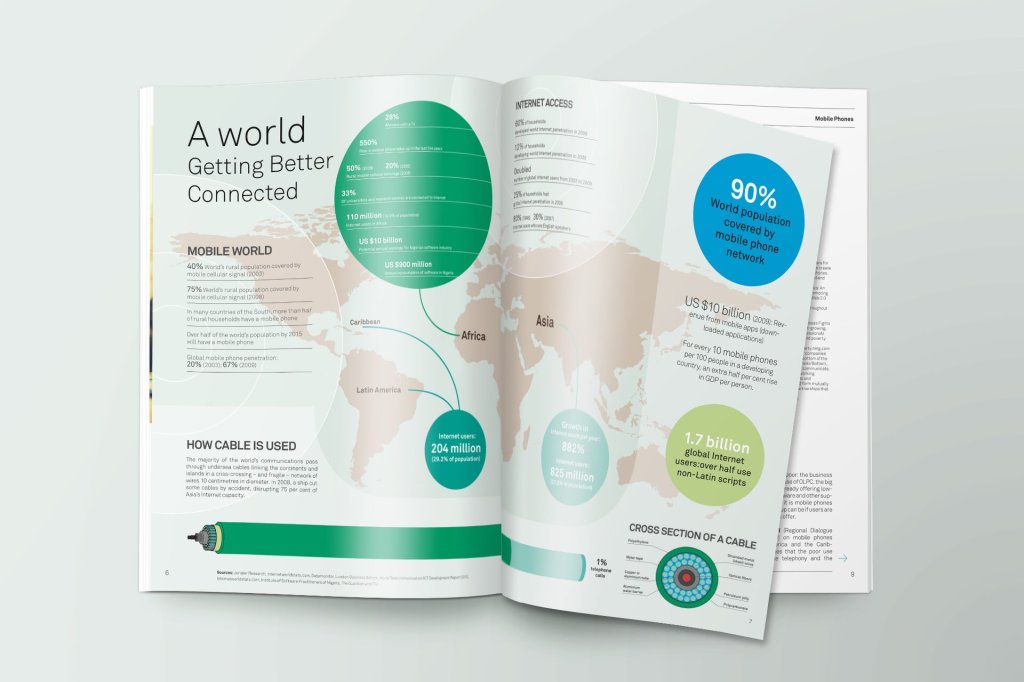
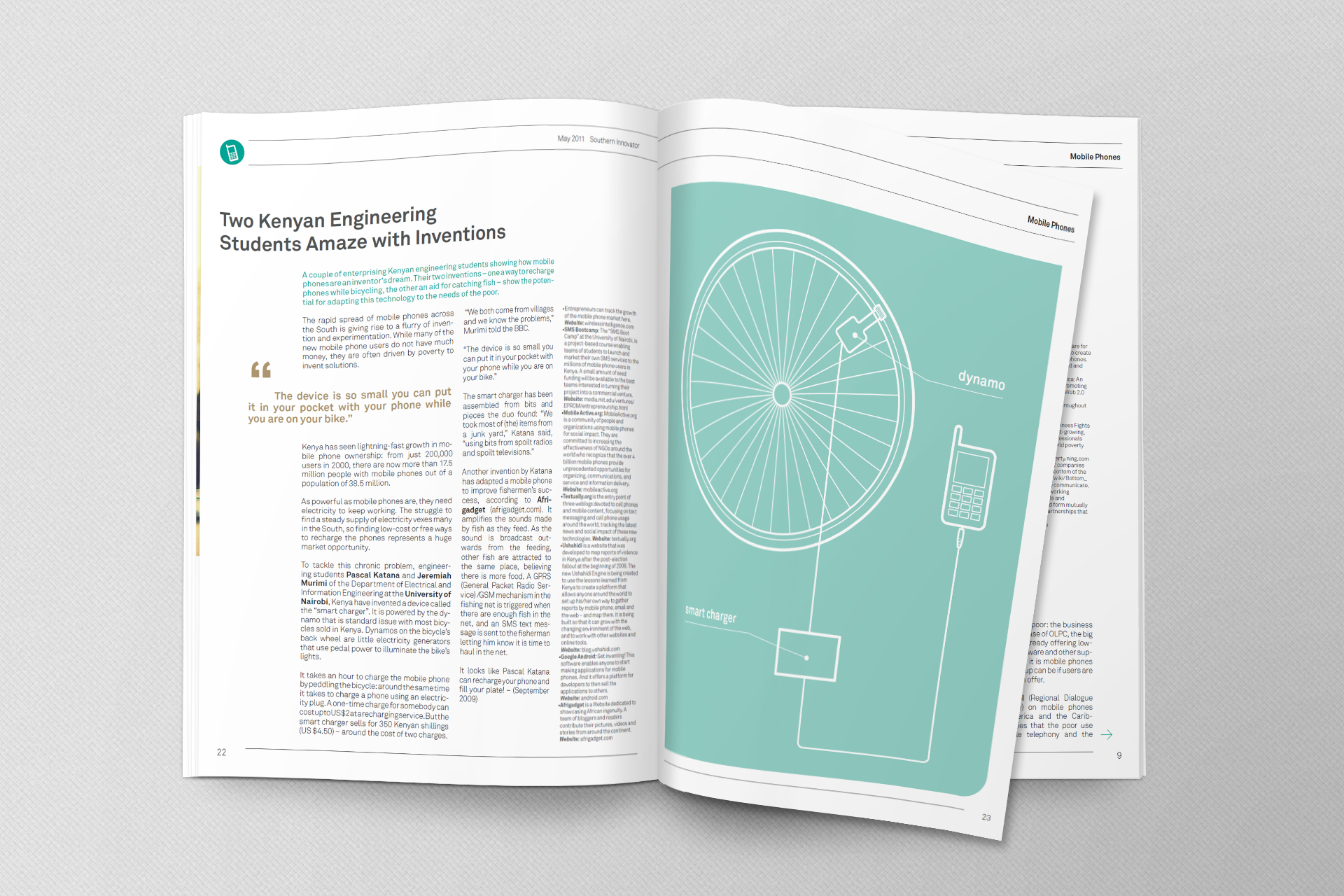
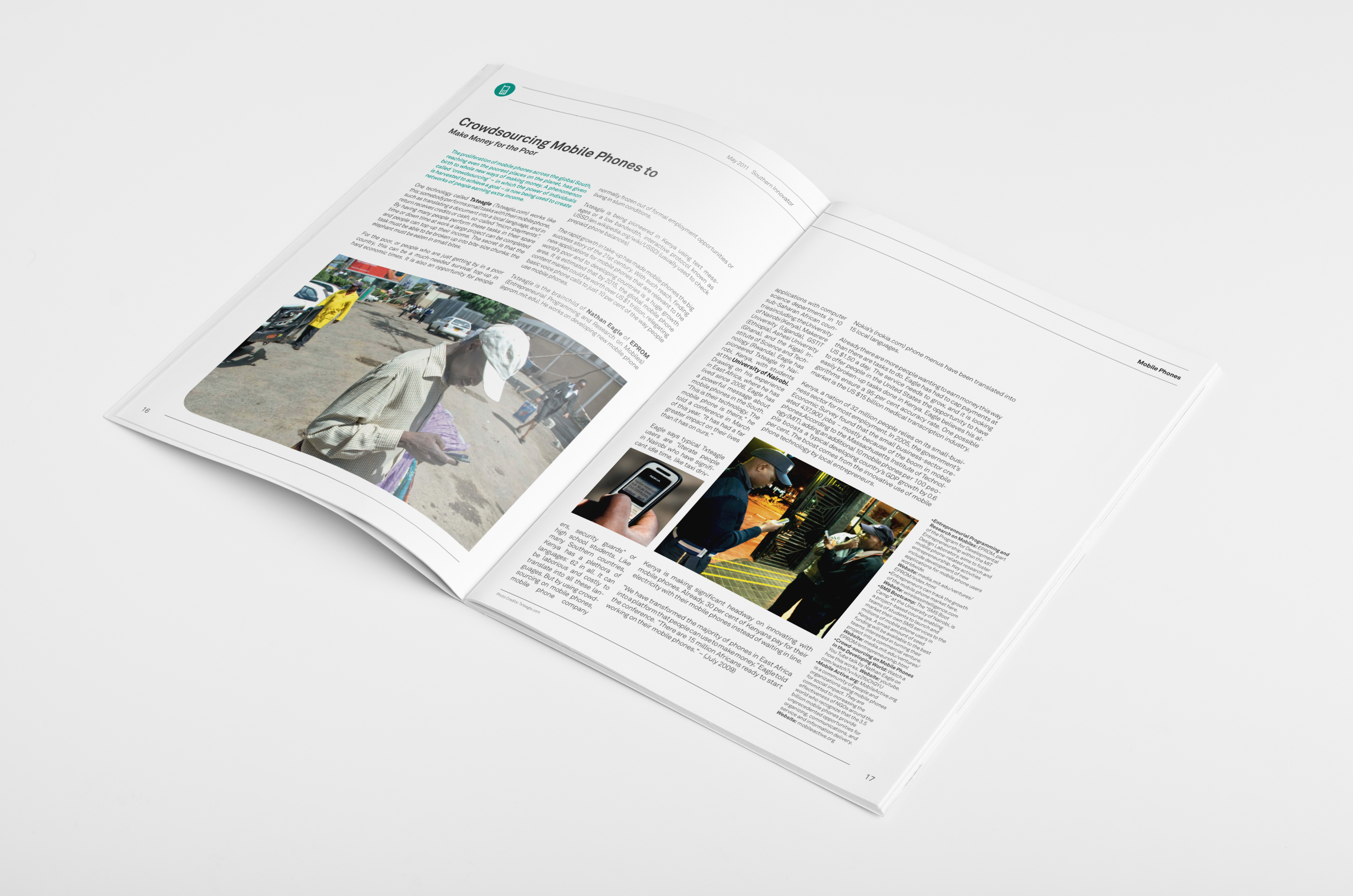
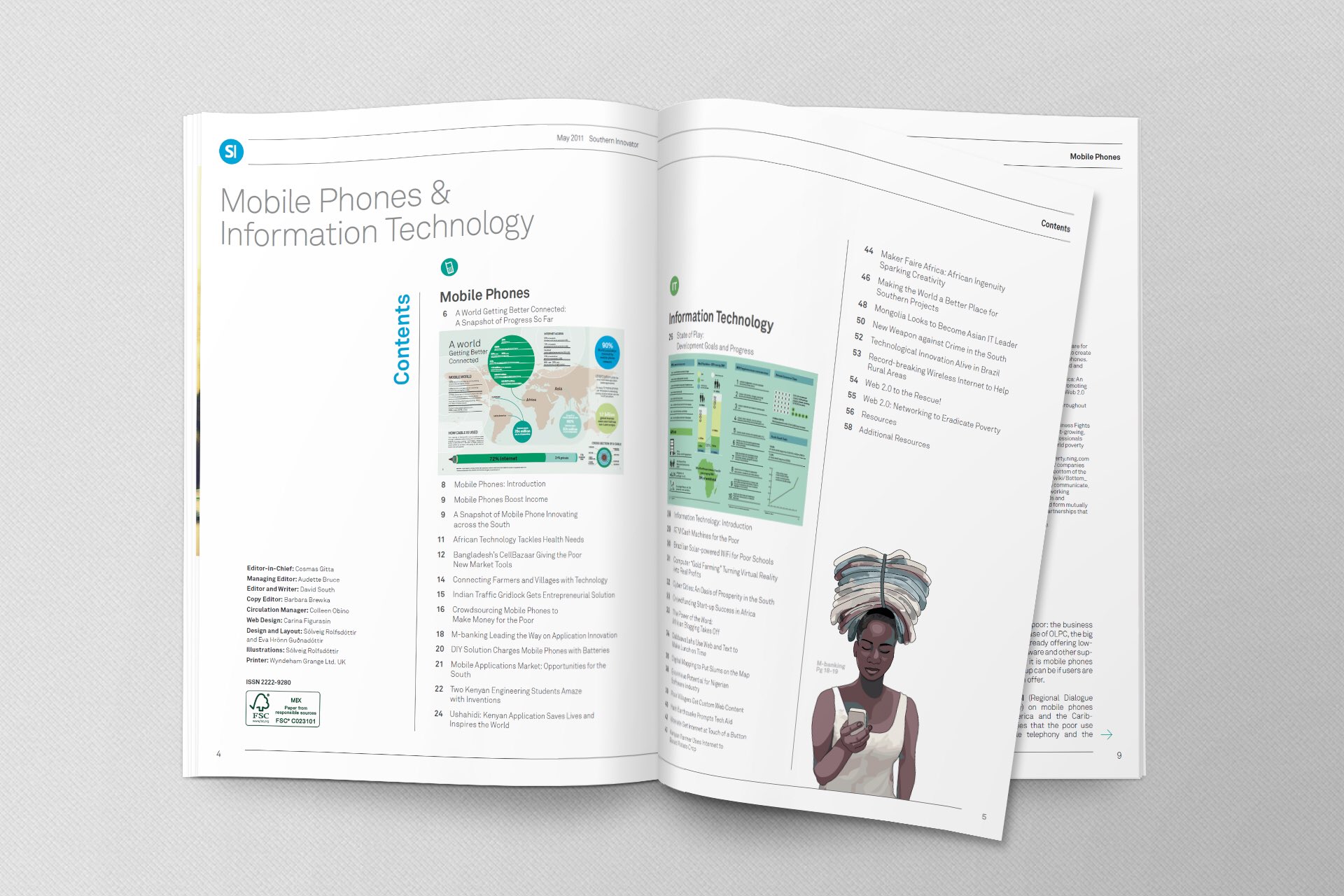
    Development Challenges, South-South Solutions was launched as an e-newsletter in 2006 by UNDP’s South-South Cooperation Unit (now the United Nations Office for South-South Cooperation) based in New York, USA. It led on profiling the rise of the global South as an economic powerhouse and was one of the first regular publications to champion the global South’s innovators, entrepreneurs, and pioneers. It tracked the key trends that are now so profoundly reshaping how development is seen and done. This includes the rapid take-up of mobile phones and information technology in the global South (as profiled in the first issue of magazine Southern Innovator), the move to becoming a majority urban world, a growing global innovator culture, and the plethora of solutions being developed in the global South to tackle its problems and improve living conditions and boost human development. The success of the e-newsletter led to the launch of the magazine Southern Innovator. 

    Creative Commons License

    This work is licensed under a
    Creative Commons Attribution-Noncommercial-No Derivative Works 3.0 License.

    ORCID iD: https://orcid.org/0000-0001-5311-1052.

    © David South Consulting 2022

  • African Online Supermarket Set to Boost Trade

    African Online Supermarket Set to Boost Trade

    By David SouthDevelopment Challenges, South-South Solutions

    SOUTH-SOUTH CASE STUDY

    Online retailing and marketing strategies are revolutionizing how people around the world buy products and services – but so far they have not benefited most of Africa’s small businesses and traders. On a continent where trading for survival is the norm, very few people are reaping the benefits of selling on the Internet.

    Not only has limited access to the Internet and the lack of high bandwidth in Africa impeded communication within the continent, it has restricted African businesses from taking advantage of the most profound change in global business for decades: e-retailing (also known as e-tailing or e-commerce).

    But the African information technology pioneers of Ghana – a country that has already gained a reputation as an IT leader in West Africa (www.ghanaictawards.com) – are setting out to change this situation, and in turn to change the way people access African goods and services.

    Pledging in its motto to reach “every African nook and cranny,” ShopAfrica53 is an online shopping portal similar to famous brands like Amazon or eBay, but focused entirely on giving African traders the ability to sell across the continent and to the world online.

    The one-stop shopping site – taking its name from the 53 countries on the continent – can be accessed by Internet users, or better still, by the enormous number of mobile phone users not only in Africa but around the world.

    The number of mobile phone subscribers in Africa surpassed 300 million in 2008 (ITU), representing a significant market in their own right. Research group Informa Telecoms and Media estimates mobile networks now cover 90 per cent of the world’s population – 40 per cent of whom are covered but not connected.

    ShopAfrica53 works like this: merchants first fill out an online form on the ShopAfrica53 website. They are then contacted by ShopAfrica, and an account is set up.

    People wanting to buy goods and services on the website use the African Liberty Card to ensure the transactions are safe and not at risk from hackers and fraudsters. The disposable pre-paid scratch card can be used on mobile phones and the Internet and is purchased from store outlets.

    ShopAfrica handles the logistical hassles of shipping to customers around the world, facilitates payment transfers, and helps with record keeping for merchants.

    ShopAfrica offers an eclectic selection of goods: apparel and accessories, books and stationery, groceries, handicraft, health and personal care, home and garden, machinery and tools, technology and entertainment. It promises to offer the “best selection of African products, anywhere, worldwide” – everything from building supplies, household items and electronics to processed foods and fabrics.

    One Ghanaian merchant, Mohammed Salifu, promises to deliver in two days a “large brown cow for delivery or collection. The size, colour and weight of animal will vary. This merchant provides live goats, sheep, cattle for special occasions and festivities and can also provide a slaughtering service for clients.”

    Then there is Vera Ami Kpogli, who is selling a ‘Beyonce’ Electric Blue necklace. Tse-Lee Fashions offers Batik/Tie and Dye Print Shirt in aqua and navy. And for the ‘king’ of the house, Ama Afrique Designs is selling Men’s Royal Rulers, sandals “worn many centuries ago by African kings.”

    The potential of this service to boost incomes is considerable: in the United Kingdom, online sales now make up 15 percent of all retail spending, reaching £43.8 billion (US $66.12 billion) in 2008 (IMRG).

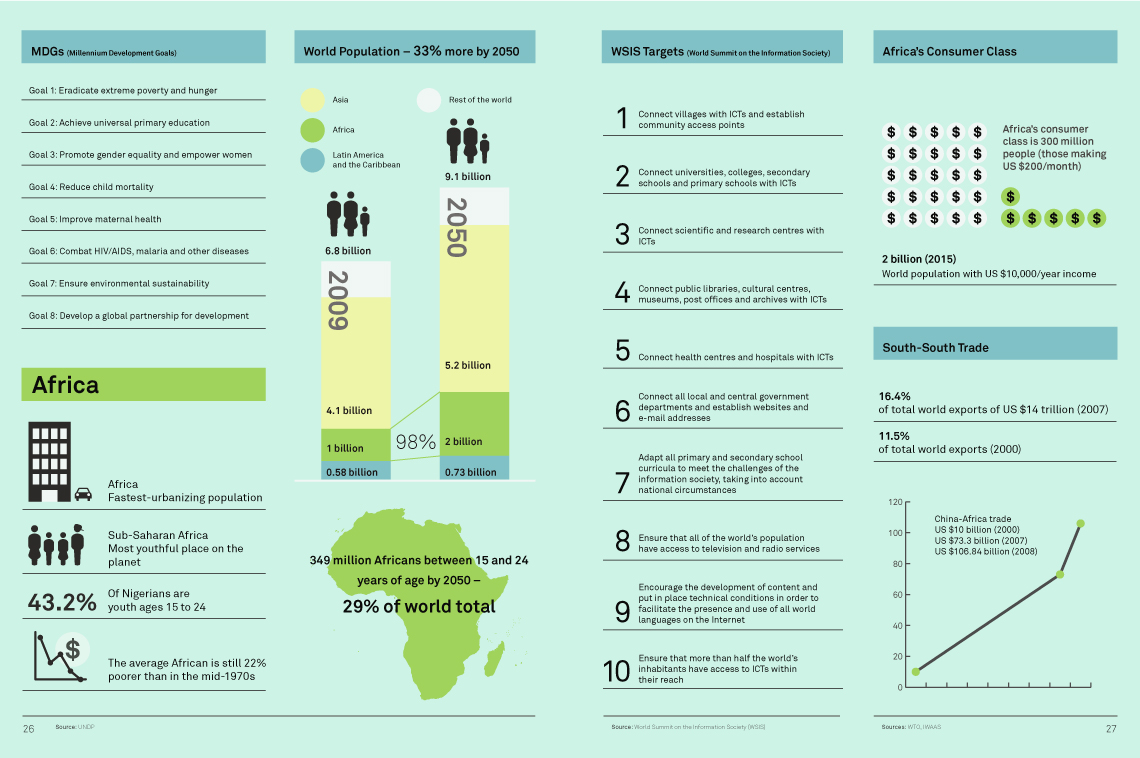
    As has been seen with other countries of the Global South, trade in high quality goods boosts incomes. South-South trade grew by an average of 13 percent per year between 1995 and 2007. By 2007, South-South trade made up 20 percent of world trade. And over a third of South-South commerce is in high-skill manufacturing. Making finished goods, rather than just selling raw materials, improves workers’ skill levels and increases the return on trade.

    The rapid changes to African countries – the tilt to being more urban than rural, and being home to a larger urban population than North America, with 25 of the world’s fastest growing cities (International Institute for Environment and Development) – means there is an urgent need to boost incomes and better connect traders and manufacturers to the global economy.

    ShopAfrica53 could be the start of a very big thing for African trade.

    Published: May 2009

    Resources

    • The red dot logo stands for belonging to the best in design and business. The red dot is an internationally recognised quality label for excellent design that is aimed at all those who would like to improve their business activities with the help of design.
      Website: www.red-dot.de
    • BOP Source is a platform for companies and individuals at the BOP (bottom of the pyramid) to directly communicate, ultimately fostering close working relationships, and for NGOs and companies to dialogue and form mutually valuable public-private partnerships that serve the BOP.
      Website: http://bopsource.ning.com/
    • Business Fights Poverty: Business Fights Poverty is the free-to-join, fast-growing, international network for professionals passionate about fighting world poverty through good business.
      Website: businessfightspoverty.ning.com
    • Dutch Design in Development: As a matchmaker, DDiD puts together European clients, Dutch designers and small and medium-sized enterprises in developing countries. The designers share their knowledge of European consumer tastes, product development, design and quality standards
      Website: www.ddid.nl
    • Afriville is a Web 2.0 service and an African Caribbean social network. Afriville is a community website along the lines of the famous MySpace. Users are free to message and post profiles. The difference is that the user is able to choose how closed or open the networks are. The site features a state of the art music management system which allows African and Caribbean artists to get straight in touch with their fans.
      Website: www.afriville.com
    • Business Action for Africa: Business Action for Africa is an international network of businesses and business organisations from Africa and elsewhere, coming together in support of three objectives: to positively influence policies for growth and poverty reduction, to promote a more balanced view of Africa, and to develop and showcase good business practice in Africa
      Website: www.businessactionforafrica.org
    • Interactive Media in Retail Group (IMRG) is a membership community for the e-retail industry, whose vision is to maximise the commercial potential of online shopping
      Website: www.imrg.org

    https://davidsouthconsulting.org/2021/03/20/accessing-global-markets-via-design-solutions/

    https://davidsouthconsulting.org/2022/06/02/afghanistans-juicy-solution-to-drug-trade/

    https://davidsouthconsulting.org/2022/10/26/african-trade-hub-in-china-brings-mutual-profits-2/

    https://davidsouthconsulting.org/2021/03/20/carbon-markets-need-to-help-the-poor/

    https://davidsouthconsulting.org/2022/11/21/chinese-trade-in-angola-helps-recovery/

    https://davidsouthconsulting.org/2021/03/20/computer-gold-farming-turning-virtual-reality-into-real-profits/

    https://davidsouthconsulting.org/2022/04/12/djibouti-re-shapes-itself-as-african-trade-hub/

    https://davidsouthconsulting.org/2021/07/19/global-south-trade-boosted-with-increasing-china-africa-trade-in-2013/

    https://davidsouthconsulting.org/2020/12/12/mobile-phone-shopping-to-create-efficient-markets-across-borders/

    https://davidsouthconsulting.org/2021/12/08/new-media-markets-and-screen-finance/

    https://davidsouthconsulting.org/2022/10/26/perfume-of-peace-helps-farmers-switch-from-drug-trade/

    https://davidsouthconsulting.org/2022/10/04/popular-chinese-social-media-chase-new-markets/

    https://davidsouthconsulting.org/2021/07/19/south-south-trade-helping-countries-during-economic-crisis/

    https://davidsouthconsulting.org/2022/11/17/sos-shops-keep-food-affordable-for-poor-unemployed/

    https://davidsouthconsulting.org/2022/11/16/thai-organic-supermarkets-seek-to-improve-health/

    https://davidsouthconsulting.org/2022/10/20/trade-to-benefit-the-poor-up-in-2006-and-to-grow-in-2007/

    https://davidsouthconsulting.org/2020/04/17/virtual-supermarket-shopping-takes-off-in-china/

    https://davidsouthconsulting.org/2022/10/05/women-empowered-by-fair-trade-manufacturer/

    https://davidsouthconsulting.org/2022/06/16/women-mastering-trade-rules/

    Development Challenges, South-South Solutions was launched as an e-newsletter in 2006 by UNDP’s South-South Cooperation Unit (now the United Nations Office for South-South Cooperation) based in New York, USA. It led on profiling the rise of the global South as an economic powerhouse and was one of the first regular publications to champion the global South’s innovators, entrepreneurs, and pioneers. It tracked the key trends that are now so profoundly reshaping how development is seen and done. This includes the rapid take-up of mobile phones and information technology in the global South (as profiled in the first issue of magazine Southern Innovator), the move to becoming a majority urban world, a growing global innovator culture, and the plethora of solutions being developed in the global South to tackle its problems and improve living conditions and boost human development. The success of the e-newsletter led to the launch of the magazine Southern Innovator. 

    https://davidsouthconsulting.org/2021/03/05/southern-innovator-issue-2/

    Creative Commons License

    This work is licensed under a
    Creative Commons Attribution-Noncommercial-No Derivative Works 3.0 License.

    ORCID iD: https://orcid.org/0000-0001-5311-1052.

    © David South Consulting 2023

  • Indonesian Food Company Helps Itself by Making Farmers More Efficient

    Indonesian Food Company Helps Itself by Making Farmers More Efficient

    By David SouthDevelopment Challenges, South-South Solutions

    SOUTH-SOUTH CASE STUDY

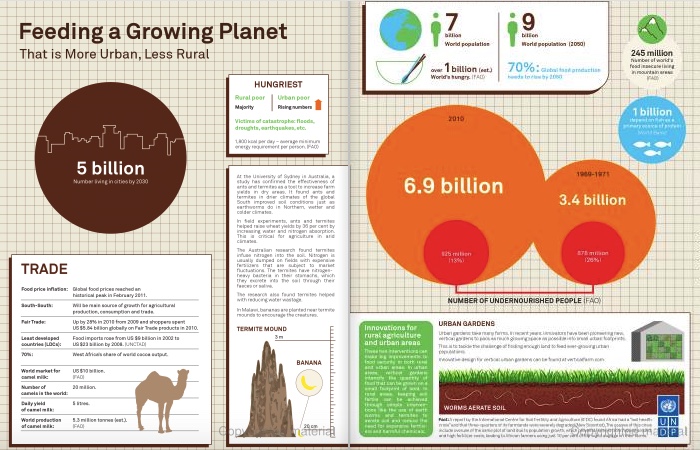
    The current global economic crisis is taking place at the same time as a global food crisis. Food inflation took off at the beginning of 2011. This is having a devastating affect on countries dependent on food imports and experiencing decreasing domestic production capabilities. The least developed countries (LDCs) saw food imports rise from US $9 billion in 2002, to US $23 billion by 2008 (UNCTAD), prompting Supachai Panitchpakdi, secretary general of UNCTAD, to say “the import dependence has become quite devastating.”

    Garuda Food (www.garudafood.com), one of Indonesia’s leading snack food and drink manufacturers, has been boosting its own productivity by investing in improving the productivity of domestic small-scale farmers. This led to a doubling of crop purchases from peanut farmers between 2007 and 2009. By stabilising the market for peanuts and better guaranteeing income, it has attracted more people into becoming peanut farmers in the region.

    This is crucial for the future of feeding the planet: we need more farmers.

    Indonesia is the world’s fourth most populous country, with a population of over 238 million, spread out over a network of islands. Peanut farmers in West Nusa Tenggara (http://en.wikipedia.org/wiki/West_Nusa_Tenggara) (one of Indonesia’s poorest places) are a key part of the region’s wealth. Peanuts are the area’s third largest crop after rice, maize and soybeans, and the region supplies six percent of the country’s peanut production and 10 percent of Garuda Food’s needs.

    Garuda Food says investing in farmers has raised its own productivity by a third. Turning past practices on its head, this large agri-food company is supporting small-scale farmers and helping them to boost their productivity and incomes. Conventional wisdom had been to view small-scale farmers as an inefficient hold-over from the past – the quicker they were driven out of business, the better.

    The Indonesian peanut farmers were using traditional farming methods and local seeds. Knowledge of more sustainable farming methods and land management techniques was poor. The farmers were also beholden to the whims of local buyers and fluctuating market prices.

    Then Garuda Food stepped in. The company’s field staff offer the farmers training, and through its subsidiary PT Bumi Mekar Tani, it spreads knowledge about new agricultural practices and provides the farmers with quality seeds and farming equipment.

    The company buys crops directly from the farmers, rather than from middlemen, increasing the amount the farmer makes. A premium is also paid if the farmer achieves better quality for their crop.

    “We receive substantial supply from peanut farmers in NTB (West Nusa Tenggara) and we hope the arrangement will continue,” Garuda Food’s managing director Hartono Atmadja told the Enchanting Lombok website.

    Garuda Food’s initiative, with support from the World Bank’s International Finance Corporation and AusAID, through the Australia Indonesia Partnership, has raised the productivity for 8,000 small-scale farmers by 30 percent: an income boost for the farmers of 3.9 million Indonesian rupiah (US $456) per hectare annually.

    Peanut farmer H. Sajidin told the IFC (International Finance Corporation): “My farm’s productivity doubled, my income improved significantly, and I can sleep peacefully at night knowing that Garuda Food will buy my crops at agreed prices.”

    Raj Patel, author of Stuffed and Starved: Markets, Power and the Hidden Battle for the World Food System (http://stuffedandstarved.org/drupal/frontpage), has grappled with the conundrum of how to feed a rapidly growing planet. He finds the world is not lacking in food, but distributes its bounty very poorly and wastefully, leaving a planet where some people are literally ‘stuffed’ with too much food (the well-documented global obesity crisis) and others left to starve.

    He finds the solution is often local.

    “It turns out that if you’re keen to make the world’s poorest people better off, it’s smarter to invest in their farms and workplaces than to send them packing to the cities,” Patel wrote recently in Foreign Policy. “In its 2008 World Development Report, the World Bank found that, indeed, investment in peasants was among the most efficient and effective ways of raising people out of poverty and hunger.”

    Patel uses the example of the southern African nation of Malawi, where “according to one estimate, the marginal cost of importing a ton of food-aid maize is $400, versus $200 a ton to import it commercially, and only $50 to source it domestically using fertilizers.”

    Published: May 2011

    Resources

    1) Emprapa: The Brazilian Agricultural Research Corporation’s mission is to provide feasible solutions for the sustainable development of Brazilian agribusiness through knowledge and technology generation and transfer. Website: http://www.embrapa.br/english

    2) Divine Chocolate: The highly successful global chocolate brand from the Kuapa Kokoo farmers’ cooperative in Ghana, West Africa. Website: http://www.divinechocolateshop.com

    3) Olam: The highly successful global food product supplier brand which got its start in Nigeria, West Africa. Website: http://www.olamonline.com

    4) Insects as food: Tapping the world’s vast insect population offers many ways to supplement world food sources. Website: http://ssc.undp.org/other/e-news/newsletters/april-2008/

    5) Cooperhaf: The Brazilian farmers’ cooperative Cooperhaf: Cooperativa de Habitacao dos Agricultores Familiares, has put together what it calls a “social technology”, combining housing and farm diversification to support family farmers. Website: http://www.cooperhaf.org.br

    Development Challenges, South-South Solutions was launched as an e-newsletter in 2006 by UNDP’s South-South Cooperation Unit (now the United Nations Office for South-South Cooperation) based in New York, USA. It led on profiling the rise of the global South as an economic powerhouse and was one of the first regular publications to champion the global South’s innovators, entrepreneurs, and pioneers. It tracked the key trends that are now so profoundly reshaping how development is seen and done. This includes the rapid take-up of mobile phones and information technology in the global South (as profiled in the first issue of magazine Southern Innovator), the move to becoming a majority urban world, a growing global innovator culture, and the plethora of solutions being developed in the global South to tackle its problems and improve living conditions and boost human development. The success of the e-newsletter led to the launch of the magazine Southern Innovator. 

    Creative Commons License

    This work is licensed under a
    Creative Commons Attribution-Noncommercial-No Derivative Works 3.0 License.

    ORCID iD: https://orcid.org/0000-0001-5311-1052.

    © David South Consulting 2023

  • New Journal Celebrates Vibrancy of Modern Africa

    New Journal Celebrates Vibrancy of Modern Africa

    By David SouthDevelopment Challenges, South-South Solutions

    SOUTH-SOUTH CASE STUDY

    Africa has seen huge changes to its communications and media in the past five years. The rise and rise of mobile phones, the expansion of the Internet and the explosion in African blogging and social media, on top of flourishing print and broadcast media, all bring an increasing range of options for telling African stories and increasing dialogue.

    With all this new media creating new communications channels – and all the turmoil and change affecting millions as economies and countries change – people need the ability to make sense of it all. One magazine is trying to play that role.

    An entrepreneur and multimedia innovator has created a unique publication that is capturing the spirit, ideas and stories of modern Africa. It is a high-quality product, has gathered together talented writers and photographers and is gaining a growing global audience. Chimurenga Magazine (http://www.chimurenga.co.za/) based in Cape Town, South Africa, calls itself a “pan African publication of writing, art and politics.” Named for the Zimbabwean Shona word for “revolutionary struggle,” it is published three times a year. Editor Ntone Edjabe is from Cameroon and came to Cape Town in the 1990s after the end of South Africa’s racist Apartheid regime.

    With more than 100 contributors, the magazine offers insight into contemporary Africa, what occupies people’s thoughts and how their lives are actually lived.

    It is involved in a wide range of other activities, including co-curating a Global South Dialogue Series. And its readership is truly diverse.

    “We have readers who are long-term prisoners at Pretoria Central Prison, who have subscriptions that they get to us in coins, and readers who are successful businessmen,” Edjabe said to The Financial Times Magazine.

    Chimurenga is out to challenge perceptions of Africa. Practicing the art of long-form journalism more associated with established high-end publications like The New Yorker (newyorker.com), the magazine sets out to challenge perceptions about Africa.

    “Discourse on Africa is geared towards simplicity,” Edjabe told CNN. “Everything must be simple – ‘he’s a poor black man, he’s a victim’ – like there has to be a simple story, in a way this is what signifies Africa and global consciousness.

    “The moment you bring a degree of complexity to it, it kind of throws people off, they just don’t know where to look anymore. It’s like, ‘what’s going on?’ So Chimurenga in a way does not try to maintain the superficiality of this narrative – we engage with life, we try to present life as complex as it really is.”

    Stories in the journal include Billy Kahora writing on the decay of a neighbourhood in Nairobi, Kenya, Michael Abrahams writing about his time in the Cape Town mental hospital after a suicide attempt, and Sean O’Toole following a Zimbabwean immigrant on his journey into South Africa.

    The magazine’s website carries back issues of the journal, along with a shop selling magazines, books and t-shirts and the “Chimurenga Library,” an archive of pan-African, independent periodicals. There’s also live online streaming of music – “from ancient techno to future roots” – through the Pan African Space Station radio station, there is a biennial publication of urban life it calls “Africa-style,” and the writings of 14 African writers who visited 14 African cities to check-up on life in urban areas.

    As an example of the creativity of Chimurenga’s talent, a special issue of the magazine tried to better understand the impact of violence in South Africa in May 2008 that led to the deaths of 62 people. It did this by creating a fictitious newspaper called The Chimurenga Chronic (http://www.chimurenga.co.za/chimurenga-magazine/current-issue) set during the violence.

    The writers are a mix of Anglophones and Francophones, all based in Africa. Common subjects focus on the world of lower-middle class Africa. Examples of past issues show the variety of its content: Conversations With Poets Who Refuse To Speak, Futbol, Politricks & Ostentatious Cripples, Conversations in Luanda and Other Graphic Stories, *We’re all Nigerian!

    Well-travelled editor Edjabe has studied and lived in Lagos, Nigeria and Johannesburg, South Africa. He has worked as a disc jockey, music writer and basketball coach. He launched Chimurenga in 2002. He told The Financial Times Magazine “I printed 1,000 copies, which I carried around in my bag. I sold it mainly to friends.”

    It was supposed to be a one-off publication but became a journal, initially written mostly by his friends.

    “I found out later that this is how most journals actually begin,” he said. “At the time I thought it was unique.”

    He aspired to get Africans writing about the Africa they saw and lived in. The challenge was changing the dynamic he found of writers only considering something worth writing about if it had been featured in non-African media.

    Edjabe had already made his mark with an innovative initiative to show the diversity of what Africa has to offer. Three years after arriving in South Africa he started the Pan African Market (PAM) in Cape Town. An African cultural centre, it began as a craft market with various traders able to run their individual businesses and leasing stall space from the market. PAM became very successful because it brought together Africans from across the continent and offered a vibrant mix of artists, small businesses and food. It now has 33 stores and stalls from 14 countries of Africa. Shoppers can find arts and crafts, hair dressing, tailoring, holistic healing and catering.

    Hard copies of Chimurenga are distributed around Africa and sent to Europe, the United States and India.

    “There’s a feeling about writing something, sharing something that is beautiful and truthful from one’s perspective,” Edjabe told CNN.

    Published: June 2012

    Resources

    1) How to Start a Magazine: Simple online advice on starting and running a magazine. Website: http://www.ehow.com/how_16579_start-magazine.html

    2) Venture Capital for Africa: VC4Africa is the largest online community of investors, angels and entrepreneurs working to build businesses on the continent. Website: http://vc4africa.biz/landing/?redir_to=%2F

    https://davidsouthconsulting.org/2022/10/21/african-media-changing-to-reach-growing-middle-class/

    https://davidsouthconsulting.org/2021/01/05/development-challenges-south-south-solutions-newsletter/

    https://davidsouthconsulting.org/2021/07/14/freedom-of-expression-introducing-investigative-journalism-to-local-media-in-mongolia-1999-25-january-2016/

    https://davidsouthconsulting.org/2021/05/25/ger-mongolias-first-web-magazine-and-a-pioneering-web-project-for-the-united-nations-12-january-2016/

    https://davidsouthconsulting.org/2022/11/01/indian-newspapers-thrive-with-economy/

    https://davidsouthconsulting.org/2022/10/04/popular-chinese-social-media-chase-new-markets/

    https://davidsouthconsulting.org/2022/11/01/southern-innovator-magazine-2010-2014/

    Development Challenges, South-South Solutions was launched as an e-newsletter in 2006 by UNDP’s South-South Cooperation Unit (now the United Nations Office for South-South Cooperation) based in New York, USA. It led on profiling the rise of the global South as an economic powerhouse and was one of the first regular publications to champion the global South’s innovators, entrepreneurs, and pioneers. It tracked the key trends that are now so profoundly reshaping how development is seen and done. This includes the rapid take-up of mobile phones and information technology in the global South (as profiled in the first issue of magazine Southern Innovator), the move to becoming a majority urban world, a growing global innovator culture, and the plethora of solutions being developed in the global South to tackle its problems and improve living conditions and boost human development. The success of the e-newsletter led to the launch of the magazine Southern Innovator. 

    https://davidsouthconsulting.org/2021/03/05/southern-innovator-issue-1/

    Creative Commons License

    This work is licensed under a
    Creative Commons Attribution-Noncommercial-No Derivative Works 3.0 License.

    ORCID iD: https://orcid.org/0000-0001-5311-1052.

    © David South Consulting 2022