Category: Development Challenges, South-South Solutions Newsletters

The Development Challenges, South-South Solutions e-newsletter was published by the United Nations Office for South-South Cooperation (UNOSSC) from 2006 to 2014.

  • Thai Organic Supermarkets Seek to Improve Health

    Thai Organic Supermarkets Seek to Improve Health

    By David SouthDevelopment Challenges, South-South Solutions

    SOUTH-SOUTH CASE STUDY

    A Thai business is working hard to expand access to organic food in the country. It sees this as part of a wider campaign to improve health in the country – and its success has caught the attention of the government, which wants to turn Thailand into a global health destination.

    The Lemon Farm chain run by Suwanna Langnamsank (http://www.lemonfarm.com/lmf/) was started 13 years ago and has grown to nine organic supermarkets in the capital, Bangkok. Lemon Farm works with 200 organic farms in Thailand and employs 160 people.

    Organic food (http://en.wikipedia.org/wiki/Organic_food) – grown without chemicals and artificial fertilizers and not irradiated or subjected to other tampering – is believed by many to be healthier because it avoids the harmful effects of accumulating chemicals. It is also thought to be richer in vitamins and minerals because of the use of non-chemical fertilizers on the soil.

    Lemon Farm sells made-in-Thailand organic vegetables and fruit, natural gift sets, soap and tea. There are also macrobiotic cafes in the supermarkets called Be Organic.  A macrobiotic diet avoids foods containing toxins (http://www.cancerresearchuk.org/cancer-help/about-cancer/treatment/complementary-alternative/therapies/macrobiotic-diet).

    The supermarkets use eye-pleasing modern design to set themselves apart from more conventional supermarkets.

    According to Lemon Farm’s website, it is a social enterprise and practices fair trade. It is using market-driven solutions to increase the availability of healthy food in the country. It seeks to support small-scale farmers and champion change in farming methods, encouraging a move away from dependence on harmful chemicals that damage human health and the environment and promoting “agricultural and economic self-sufficiency”.

    The macrobiotic restaurant operates to six values, among them using fresh vegetables and only using produce from associated farms. The restaurants do not use added sugar, they cook using a pressure cooker, and use natural ingredients such as sea salt, ginger, fermented soy sauce and natural miso. They do not use any artificial preservatives or flavour enhancers such as monosodium glutamate (MSG), a common practice in Asian cooking.

    Lemon Farm’s success as an organic food pioneer has caught the attention of the Thai government. The Ministry of Commerce (http://www2.moc.go.th/main.php?filename=index_design4_en) has contracted Lemon Farm to join its campaign to offer organic food in schools and hospitals.

    By promoting organic food, the government is hoping to boost farmers’ incomes while improving health in the country and bolstering the country’s thriving medical services industry serving foreign patients.

    “We need to promote healthy food and a healthy environment,” Piramol Charoenpao, deputy permanent secretary at the Ministry of Commerce, told Monocle magazine. “Thailand is a medical hub. The idea is to have retreat-style hospitals serving organic food. We’re increasing organic food production and educating people about it.”

    Thailand has already built a good reputation with its medical and health services. More than 1.6 million non-Thais are treated in Thai hospitals annually, with an estimated 500,000 travelling specifically for medical treatment (The Guardian).

    Former Thai Prime Minister Thaksin Shinawatra mooted the idea of making the country an international leader in medical tourism in 2003. It is expected providing medical services to overseas patients will make the country US $3.3 billion by 2015 (The Guardian).
 
It is hoped that offering organic food in hospitals and health facilities will boost the attractiveness and effectiveness of using health services in Thailand.

    Medical tourism is considered one of the fastest-growing sectors in the world. Estimates place it as a market worth US $100 billion. Three countries that compete in this market by offering medical services in the English language include India, Singapore and Thailand. They compete by offering services comparable to wealthier countries but at considerably less cost.

    Lemon Farm says it is on a mission to develop the marketplace for organic food in Thailand by educating consumers and producing “innovative natural food”.  It looks like it has already made a big impact.

    Published: February 2013

    Resources

    1) Whole Foods Market: The world’s leader in natural and organic foods, with more than 340 stores in North America and the United Kingdom. Website: wholefoodsmarket.com

    2) Conscious Capitalism: A book by Co-CEO of Whole Foods Market, John Mackey. Website:http://consciouscapitalism.org/resources/538

    3) Live Plan: A step-by-step online resource for creating a business plan for an organic supermarket. Website:http://www.bplans.com/organic_food_store_business_plan/company_summary_fc.php

    4) Start your own: Health food store: Advice and business tips on starting a health food store. Website:http://www.startups.co.uk/health-food-store.html

    Southern Innovator logo

    London Edit

    31 July 2013

    Google Books: https://books.google.co.uk/books?id=hvRcAwAAQBAJ&dq=development+challenges+february+2013&source=gbs_navlinks_s

    Slideshare: http://www.slideshare.net/DavidSouth1/development-challenges-february-2013-issue

    Southern Innovator Issue 1: https://books.google.co.uk/books?id=Q1O54YSE2BgC&dq=southern+innovator&source=gbs_navlinks_s
    Southern Innovator Issue 2:https://books.google.co.uk/books?id=Ty0N969dcssC&dq=southern+innovator&source=gbs_navlinks_s

    Southern Innovator Issue 3:https://books.google.co.uk/books?id=AQNt4YmhZagC&dq=southern+innovator&source=gbs_navlinks_s
    Southern Innovator Issue 4: https://books.google.co.uk/books?id=9T_n2tA7l4EC&dq=southern+innovator&source=gbs_navlinks_s

    Southern Innovator Issue 5:https://books.google.co.uk/books?id=6ILdAgAAQBAJ&dq=southern+innovator&source=gbs_navlinks_s


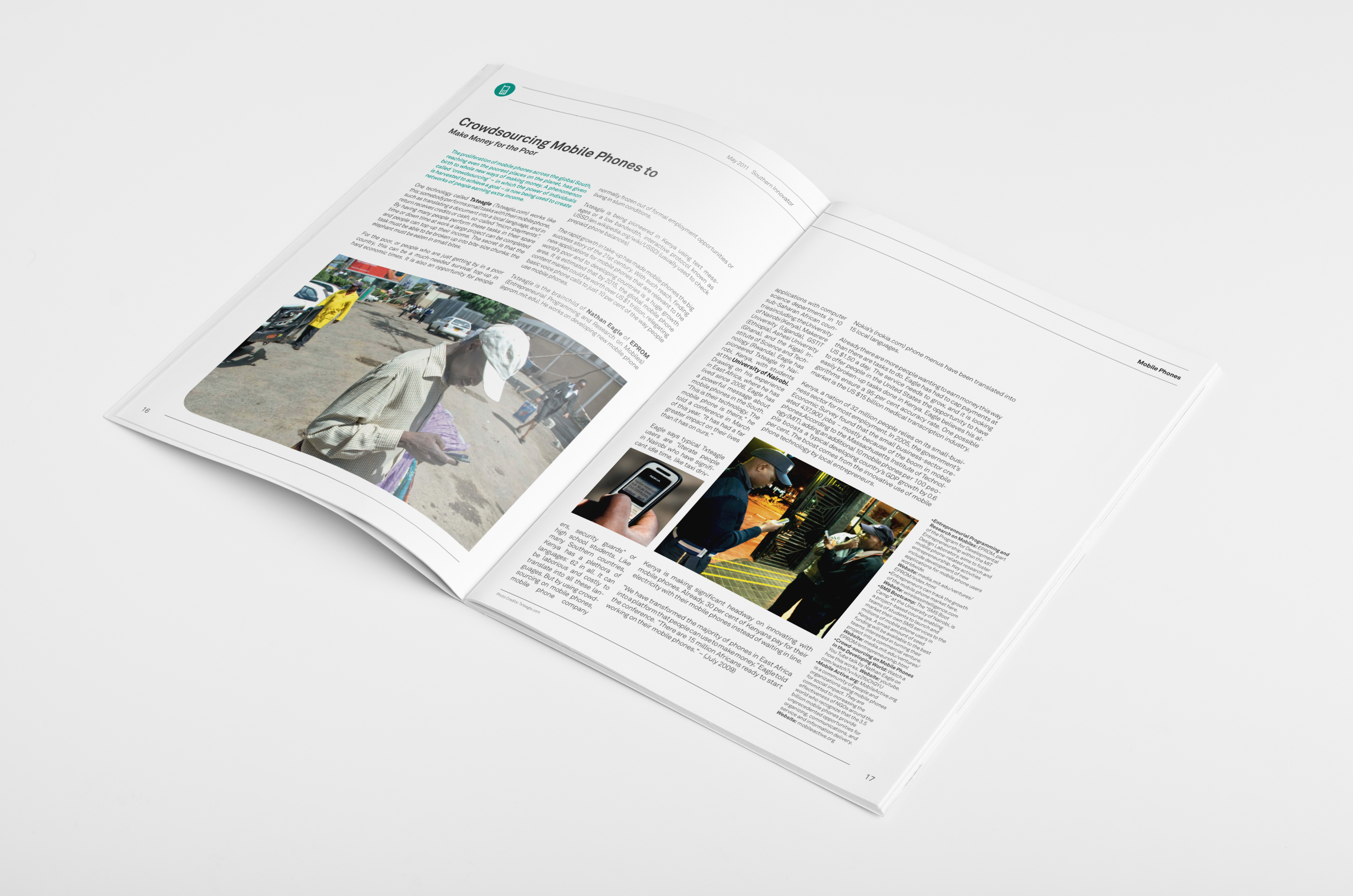
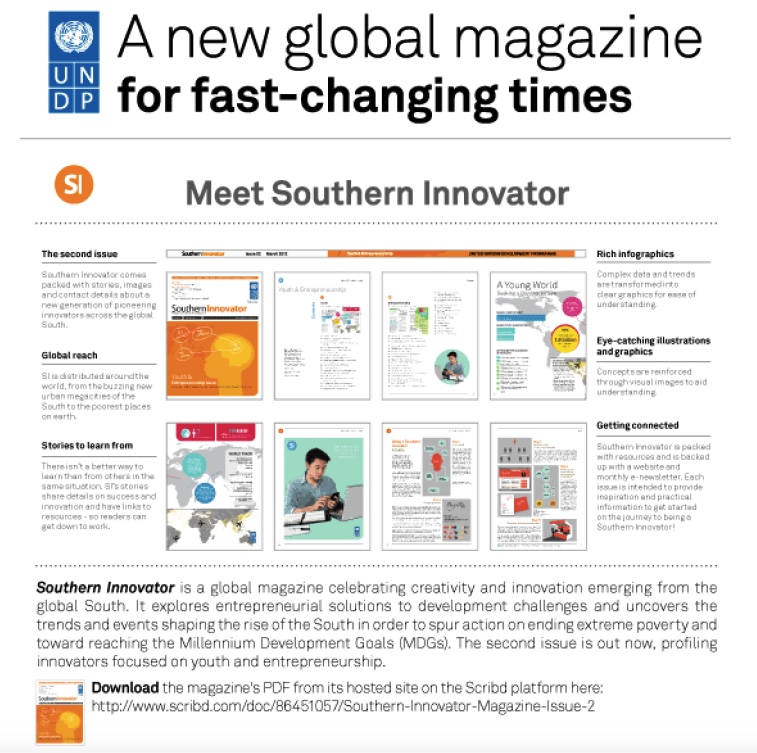
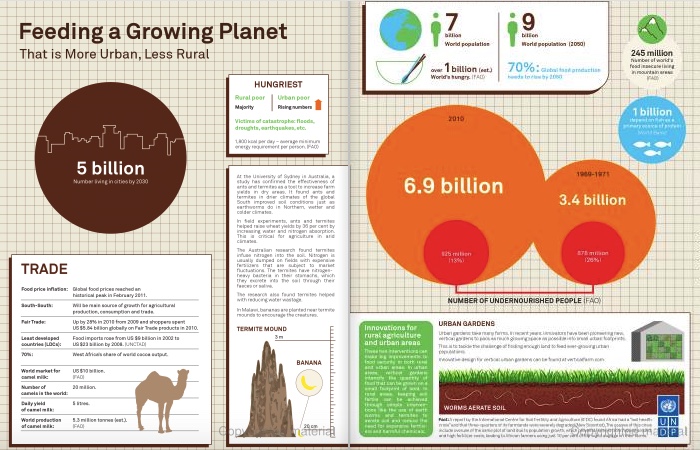
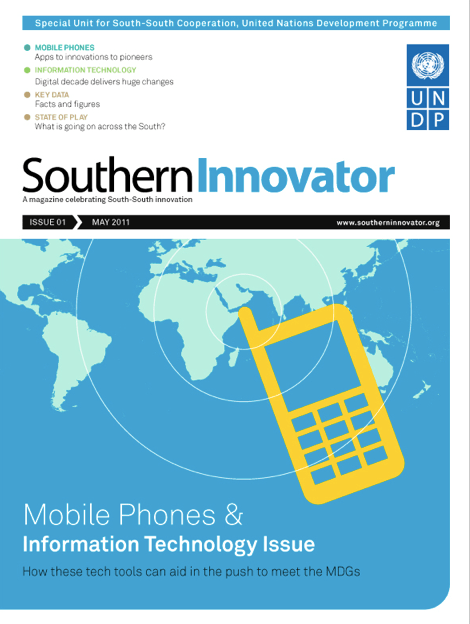
    Development Challenges, South-South Solutions was launched as an e-newsletter in 2006 by UNDP’s South-South Cooperation Unit (now the United Nations Office for South-South Cooperation) based in New York, USA. It led on profiling the rise of the global South as an economic powerhouse and was one of the first regular publications to champion the global South’s innovators, entrepreneurs, and pioneers. It tracked the key trends that are now so profoundly reshaping how development is seen and done. This includes the rapid take-up of mobile phones and information technology in the global South (as profiled in the first issue of magazine Southern Innovator), the move to becoming a majority urban world, a growing global innovator culture, and the plethora of solutions being developed in the global South to tackle its problems and improve living conditions and boost human development. The success of the e-newsletter led to the launch of the magazine Southern Innovator. 

    Creative Commons License

    This work is licensed under a
    Creative Commons Attribution-Noncommercial-No Derivative Works 3.0 License.

    ORCID iD: https://orcid.org/0000-0001-5311-1052.

    © David South Consulting 2022

  • Maker Faire and the R & D Rise in the South

    Maker Faire and the R & D Rise in the South

    By David SouthDevelopment Challenges, South-South Solutions

    SOUTH-SOUTH CASE STUDY

    The majority of the world’s research and development (R & D) in science and technology is now shifting to the global South. Powerhouses like China boast vast numbers of published papers in peer-reviewed journals and hefty cash inputs into research and development.

    China increased its R & D spending in 2009 to US $25.7 billion, a 25.6 percent increase over 2008, according to Du Zhanyuan, vice minister of the Ministry of Science and Technology. China is rapidly closing the science funding gap with Japan: in 2009 it allotted US $37.1 billion for R & D.

    The times have never been better for those with new ideas in the global South.

    And it’s not just big companies that are involved. There is R & D going on at ground level as well. African inventors, innovators and creatives met in Nairobi, Kenya in August as part of the Maker Faire Africa 2010 (http://makerfaireafrica.com). This is research and development on a shoestring, and done in a very practical, problem-solving way. While Africa’s inventors and innovators lack the big budgets of other economies, they are not short on ideas and drive.

    The Maker Faire Africa is a family-friendly gathering where the inventors can showcase their work and connect with others. It is a mix of workshops, tips on business skills, awards and a party.

    The global economy thrives on innovation and so-called ‘creative destruction’ – as economist Joseph Schumpeter called it (http://en.wikipedia.org/wiki/Creative_destruction) – that takes place as out-of-date technologies and ways of doing are surpassed by better ideas and more efficient methods. The power to innovate is the deciding factor for sustained economic growth.

    The philosophy behind Maker Faire Africa 2010 – the brainchild of ‘venture catalyst’ and entrepreneur Emeka Okafor (http://timbuktuchronicles.blogspot.com) – is to prove that innovation doesn’t just happen with computers.

    As its website says, “The aim of a Maker Faire-like event is to create a space on the continent where Afrigadget-type innovations (http://www.afrigadget.com), inventions and initiatives can be sought, identified, brought to life, supported, amplified, propagated, etc.”

    Maker Faire Africa is working with research organizations like Ghana’s Ashesi University (http://www.ashesi.edu.gh/index.html) and Kwame Nkrumah University of Science and Technology (http://www.knust.edu.gh/pages) “to sharpen focus on locally-generated, bottom-up prototypes of technologies that solve immediate challenges to development.”

    In the end, the goal of engaging all this creative and inventive energy is to spur Africans towards building “a manufacturing base that supplies innovative products in response to market needs.”

    This initiative stands out in several ways: it is truly inspiring, it gets to the core of how wealth is created, and helps build communities of innovators and inventors to tackle the problems facing Africa – and humanity.

    “We have a broader variety of makers this time around,” says Emeka Okafor of the 2010 Maker Faire. He notes makers are bringing more complex systems to the Faire, rather than just single devices. And that they “have more makers who are actually from the region.”

    “Maker Faire Africa is essentially a platform whereby innovators, inventers, creative types, across all disciplines, share ideas, showcase their products, interact with attendees and other makers,” he continues. They “begin the process of building what we think is an essential community of what I like to term the productive class. That is essentially where we see ourselves playing a key role. A productive class whose foundation is laid upon building problem-solving systems.”

    Okafor believes Africa just doesn’t “have enough wealth creation as we should.”

    “We have things backwards. … One of the essential steps is that you had productive systems that allowed those countries (Asia and Europe) to create wealth. And they had to draw those resources from within.

    “We see Maker Fair Africa celebrating resources that we already have, with knowledge from within and outside.

    “In many ways the Makers as we see them, epitomise the very sense of problem-solving that as a society acquires more of it, it begins to deal with its challenges very differently. And not look elsewhere in terms of dealing with its challenges. We want to make our Makers sexy, we want to make inventors sexy, innovators celebrities.”

    Some of the inspiring inventors from this year’s Faire include Norbert Okec from Uganda. His prototype for a solar powered street lighting system comes straight from his frustration with the traffic lights of Kampala, Uganda. Many don’t work and so he has developed a prototype solar-powered traffic light using a mix of recycled local parts and some LEDs (http://en.wikipedia.org/wiki/Light-emitting_diode) brought by a friend from China.

    He hopes to produce an e-book on his invention to share with other inventors. He was joined by fellow inventors working on a dashboard for managing wireless networks, how to recycle plastic parts, solar-power torches, water and sanitation products, junk art, community cookers, sculptures, eye glasses, bicycles, and an automatic lighting system for homes.

    Okafor is a passionate advocate of the Maker philosophy and how it changes the game: “…building is equivalent to making and making is a joyful thing, it is an interesting thing. It is a very satisfactory thing. It is not work. Most of the individuals around here have the biggest smiles on their faces. They don’t see what they are doing as work.

    “The fact they are sitting next to other people like them if anything is one of the biggest take-aways for them. Because for some of them they were toiling away on their own. Now they see others like them. And they realise they aren’t crazy.

    “When you build a community and the community begins to get stronger and sustain itself, all the other things come naturally: businesses get formed, partnerships happen: and then everything else people look for first…actually begins to happen.”

    And Africa’s future prosperity is what is at stake at the Faire: “There is a market for the products. And we believe as more individuals – Africans and otherwise – come into contact with what is on display, they will come to see their own societies differently. ”

    Published: September 2010

    Resources

    • Flickr photo gallery: A clickable archive of the Maker Faire inventors and their inventions. Website: http://www.flickr.com/groups/makerfaireafrica/pool/
    • Afrigadget: ‘Solving everyday problems with African ingenuity’: This blog never ceases to amaze and fascinate. Website: http://www.afrigadget.com/
    • Afrobotics: A competition for African engineering students to develop robots. Website: http://www.afrobotics.com/
    • International Development Design Summit: The Summit is an intense, hands-on design experience that brings together people from all over the world and all walks of life to create technologies and enterprises that improve the lives of people living in poverty. Website: http://iddsummit.org/
    • Butterflyworks: A social design studio using design to make social change. They use media, social branding and experiential learning to share knowledge, trigger creativity and build sustainable businesses. Website: http://www.butterflyworks.org
    • AshokaTECH: AshokaTECH is a blog about technology and invention within the realm of social entrepreneurship. It aims to find, support, and celebrate social innovators whose technologies offer fresh, effective approaches to advancing social change. Website: http://tech.ashoka.org/

    Development Challenges, South-South Solutions was launched as an e-newsletter in 2006 by UNDP’s South-South Cooperation Unit (now the United Nations Office for South-South Cooperation) based in New York, USA. It led on profiling the rise of the global South as an economic powerhouse and was one of the first regular publications to champion the global South’s innovators, entrepreneurs, and pioneers. It tracked the key trends that are now so profoundly reshaping how development is seen and done. This includes the rapid take-up of mobile phones and information technology in the global South (as profiled in the first issue of magazine Southern Innovator), the move to becoming a majority urban world, a growing global innovator culture, and the plethora of solutions being developed in the global South to tackle its problems and improve living conditions and boost human development. The success of the e-newsletter led to the launch of the magazine Southern Innovator. 

    Creative Commons License

    This work is licensed under a
    Creative Commons Attribution-Noncommercial-No Derivative Works 3.0 License.

    ORCID iD: https://orcid.org/0000-0001-5311-1052.

    © David South Consulting 2022

  • Indonesia Best for Entrepreneurs

    Indonesia Best for Entrepreneurs

    By David SouthDevelopment Challenges, South-South Solutions

    SOUTH-SOUTH CASE STUDY

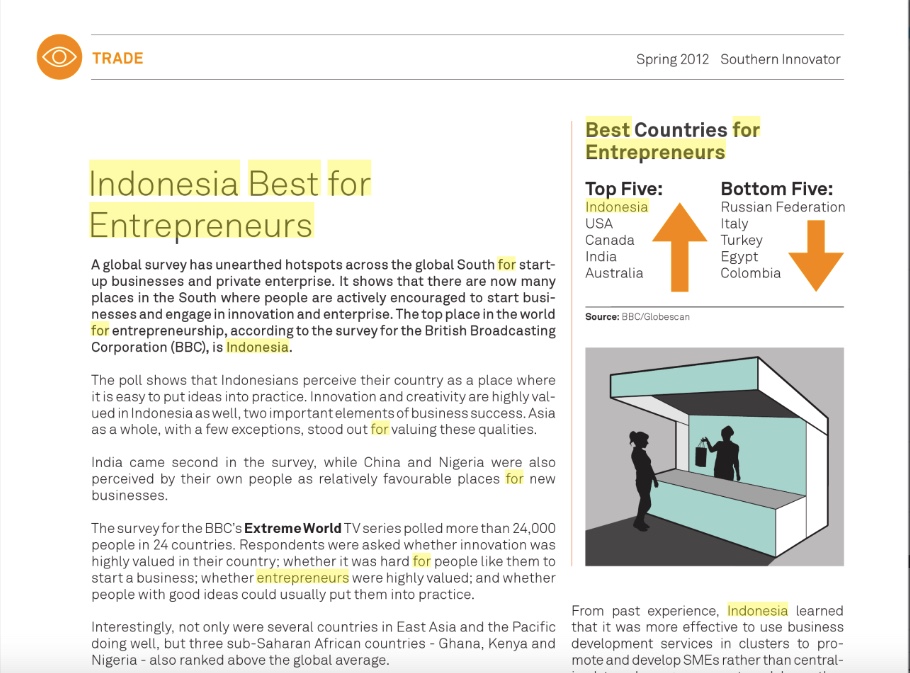
    A global survey has unearthed hotspots across the global South for start-up businesses and private enterprise. It shows there are now many places in the South where people are actively encouraged to start businesses and engage in innovation and enterprise. The top place in the world for entrepreneurship, according to the survey for the British Broadcasting Corporation (BBC), is Indonesia.

    The poll shows that Indonesians perceive their country as a place where it is easy to put ideas into practice. Innovation and creativity are highly valued in Indonesia as well, two important elements of business success. Asia as a whole, with a few exceptions, stood out for valuing these qualities.

    India came second in the survey, while China and Nigeria were also perceived by their own people as relatively favourable places for new businesses.

    The survey for the BBC’s Extreme World TV series polled more than 24,000 people across 24 countries (http://www.globescan.com/news_archives/bbc2011_entrepreneur/backgrounder.html). Respondents were asked whether innovation was highly valued in their country; whether it was hard for people like them to start a business; whether entrepreneurs were highly valued; and whether people with good ideas could usually put them into practice.

    Interestingly, not only were several countries in East Asia and the Pacific doing well, but three sub-Saharan African countries – Nigeria, Kenya and Ghana – ranked above the global average.

    The survey found work still needed to be done in Latin America. While Mexico and Peru scored highly, Brazil and Colombia ranked below average.

    So, what are the things that make Indonesia so positive for entrepreneurs and private business? And what do they do – or not do – for small business start-ups?

    According to Bali International Consulting Group, the Indonesian economy is highly dependent on small and medium-sized enterprises: they make up 99.95 percent of the total number of enterprises, and provide most of the country’s jobs. Authorities have identified a problem with the sector, however: productivity per worker is very low compared to large enterprises. Poor productivity matters because it means people are working very hard for low return and this affects the overall standard of living in the country and its human development.

    The Indonesian government has set about boosting productivity in the sector, adopting a ‘clustering’ approach in partnership with non-governmental organizations (NGOs). Like-minded businesses tend to cluster together across the archipelago of islands that makes up the nation. By targeting these places with resources and support, it can use those resources more efficiently. The country has a dedicated ministry for small and medium enterprises (http://www.depkop.go.id) and a wide range of businesses and services targeting them. From dedicated trading and office facilities (http://www.smescoindonesia.com) to an online marketplace to display, trade and sell SME products (http://www.smescotrade.com), extensive resources are applied to give SMEs a boost and a competitive edge in the global marketplace.

    From past experience, Indonesia learned it was more effective to use business development services in clusters to promote and develop SMEs, rather than centralised, top-down government models or other approaches.

    As Bali International Consulting Group notes, “The government has introduced many models for promoting SMEs, including business incubators, business consulting clinics and technology centers. However, those sponsoring programs have not been productive and could not sustain themselves for a long time. The government then turned to supporting BDS (Business Development Services) providers to serve a certain cluster in a selected area.”

    Developed countries like the United States significantly grew their wealth by allowing entrepreneurs and small and medium-sized enterprises to flourish. The USA’s highly innovative and globe-straddling high tech and information technology businesses would not have been so successful without entrepreneurs. Think of Bill Gates, one of the founders of Microsoft, or Steve Jobs, one of the pioneers behind the Apple computer brand.

    China – the country that has seen the largest lifting of people out of poverty in our time – is awash with entrepreneurs. So successful at providing manufacturing services to foreign companies, China is fast on track to become the wealthiest country in the world. The International Monetary Fund recently issued a report predicting China would be number one within five years.

    Entrepreneurs play a key role in any country’s economic strategy. The more they are encouraged to flourish – and build wealth and their businesses – the better a country can do. Large human development gains can come about when entrepreneurs are matched with a fair and transparent tax system, balancing between social and economic needs.

    China is the source of one of the most successful aids to small business growth in the global South. Hong Kong-based Alibaba (http://www.alibaba.com) is an online trading and selling marketplace aimed at small businesses and start-ups. Packed with support, advice and inspiration, it makes it possible for people anywhere in the world to get trading and selling.

    To help small businesses trade with each other, New Delhi, India-based Go4World Business.com (http://indonesia.go4worldbusiness.com) has for the past 12 years helped exporters and importers to explore new markets and increase their international business in a simple, cost effective manner.

    The Internet has not only radically transformed how to trade and sell, it has also opened up many ways for small and medium-sized businesses to raise funds and borrow money. Examples include Zopa (www.zopa.com) – “Where people meet to lend and borrow money”; social lenders like Kiva (www.kiva.org)w, whose mission is to connect people, through lending, for the sake of alleviating poverty; and Betterplace (www.betterplace.org), an online marketplace for projects to raise funds. It is free to use, and it passes on 100 percent of the money raised on the platform to the projects. For those with a creative business idea, Kickstarter (http://www.kickstarter.com) is a funding platform for artists, designers, filmmakers, musicians, journalists, inventors, and explorers.

    Published: June 2011

    Resources

    1) Small business guide: An online resource packed with advice and resources on starting a small business. Website: http://www.smallbusiness.co.uk/

    2) The red dot logo stands for belonging to the best in design and business. The red dot is an internationally recognized quality label for excellent design that is aimed at all those who would like to improve their business activities with the help of design. Website: http://www.red-dot.de

    3) Dutch Designers in Development: The Dutch NGO works with producers to develop skills and adapt producers’ products to present and future demands in Europe. By following this approach, Southern producers can reduce the risk of making products nobody wants, or that lack originality in the marketplace and thus won’t sell. Website: http://www.ddid.nl/english/index.html

    4) SME toolkits abound: Here are two from Africa: SME Toolkit Kenya Website: http://kenya.smetoolkit.org/kenya/en and SME Toolkit South Africa: Website: http://southafrica.smetoolkit.org/sa/en

    5) African Alliance for Capital Expansion: A management consultancy focused on private sector development and agribusiness in West Africa. Website: http://www.africanace.com/v3

    6) World Business Fair: The World Business Fair is an international trade platform for global entrepreneurs and professionals. Website: http://www.worldbusinessfair.com

    7) Small businesses looking to develop their brand can find plenty of free advice and resources here. Website: www.brandingstrategyinsider.com

    8) Brandchannel: The world’s only online exchange about branding, packed with resources, debates and contacts to help businesses intelligently build their brand. Website: www.brandchannel.com

    9) ZanaAfrica (ZanaA) is a non-profit whose mission is to craft tools from within Africa to slay the giants of poverty. The tools are in the nexus of health, education, and environment with a particular focus on gender and technology. These tools address root causes of poverty, and are primarily market-based solutions with a national and replicable scope to provide leveraged, lasting solutions with significant multiplier effects. Website: http://www.zanaa.org/

    10) Small Business in Indonesia by Peter Van Diermen. Explores how critical families are to business success in Indonesia. Website: http://books.google.com/books/about/Small_business_in_Indonesia.html?id=WSu1AAAAIAAJ

    11) SME Toolkit Indonesia: The SME Toolkit Indonesia offers a wide range of how-to articles, business forms, free business software, online training, self-assessment exercises, quizzes, and resources to help entrepreneurs, business owners, and managers in emerging markets and developing countries start, finance, formalize, and grow their businesses. Website: http://indonesia.smetoolkit.org/indonesia/en

    12) The 3rd Indonesia International Conference on Innovation, Entrepreneurship, and Small Business 2011: From July 25 to 28, is aimed at challenging researchers, Indonesians in particular, to study and create local knowledge on Innovation, Entrepreneurship, and Small Business. Website: http://www.ciel-sbm-itb.com/iicies2011

    Development Challenges, South-South Solutions was launched as an e-newsletter in 2006 by UNDP’s South-South Cooperation Unit (now the United Nations Office for South-South Cooperation) based in New York, USA. It led on profiling the rise of the global South as an economic powerhouse and was one of the first regular publications to champion the global South’s innovators, entrepreneurs, and pioneers. It tracked the key trends that are now so profoundly reshaping how development is seen and done. This includes the rapid take-up of mobile phones and information technology in the global South (as profiled in the first issue of magazine Southern Innovator), the move to becoming a majority urban world, a growing global innovator culture, and the plethora of solutions being developed in the global South to tackle its problems and improve living conditions and boost human development. The success of the e-newsletter led to the launch of the magazine Southern Innovator. 

    Creative Commons License

    This work is licensed under a
    Creative Commons Attribution-Noncommercial-No Derivative Works 3.0 License.

    ORCID iD: https://orcid.org/0000-0001-5311-1052.

    © David South Consulting 2023