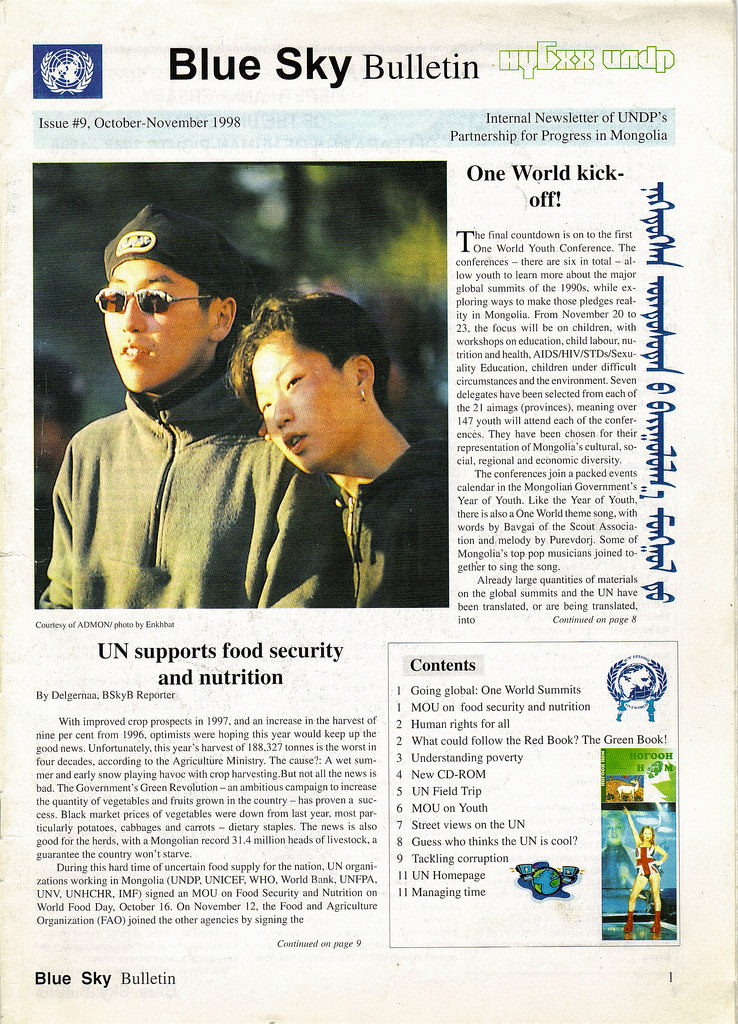
In 1998 and 1999, the United Nations in Mongolia began the six One World Youth Conferences – on children, human rights, population and development, social development, women and development plus a national summit. One World brought together youth from across Mongolia to debate and challenge the country’s decision-makers on how they were meeting Mongolia’s international obligations.
It drew praise from then-UN Secretary-General Kofi Annan: “This One World Conference Series is a shining example of Mongolia’s determination to build a more democratic and prosperous future for all its citizens based on human rights, good governance, and a free and fair market economy. … Never should young people have to be protected from government.”
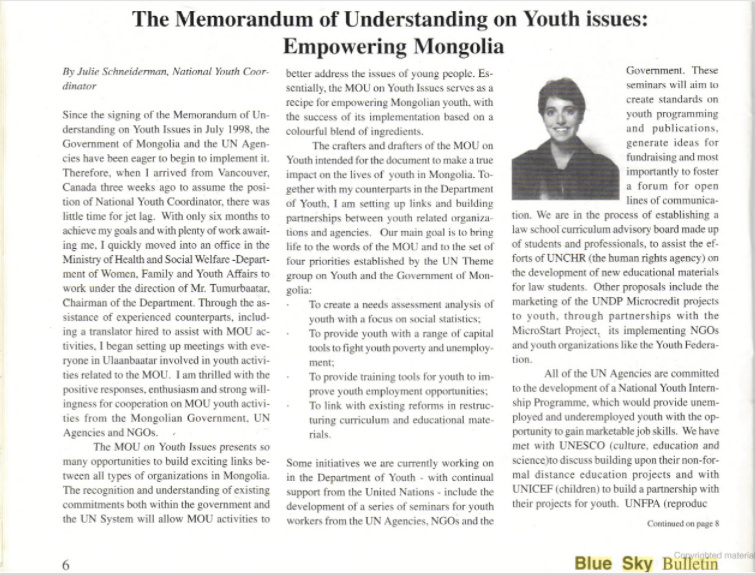
Blue Sky Bulletin Issue 9: The One World Kick-Off!Blue Sky Bulletin Issue 10: The youth of One World featured on the cover.The Memorandum of Understanding on Youth: Negotiated with the Government of Mongolia, it led to the One World Youth Conferences. Pictured: National Youth Coordinator Julie Schneiderman.The Nobel Peace Prize 2001 joint winners. “Never should young people have to be protected from government.” Kofi Annan, UN Secretary-General, 1999.
African youth need to play more according to a new landmark study published in the UK’s leading medical journal, The Lancet. The study tackles the high rates of illiteracy and educational under-achievement in Africa and finds that malnourishment and lack of stimulation are leaving millions unable to benefit from schooling. It found projects that encouraged learning through play led to children boosting their IQs and getting better reading skills. And it comes up with a very simple and low-cost solution – but excellent opportunity for entrepreneurs – toys and play.
“These are not high tech interventions,” said team leader for the study, Professor Sally McGregor of the Institute of Child Health of University College London. “Research over decades in Jamaica (and other countries) has shown that women with only primary school-level education and a few home made toys can be trained to make a significant difference in the education, intelligence and mental health of disadvantaged children. The Millennium Goal of universal primary education for all cannot be met unless these children’s poor development is tackled.”
The paper – Strategies to Avoid the Loss of Developmental Potential among Over 200 Million Children in the Developing World – is published in three parts in the journal.
Twenty projects around the world were evaluated for the benefits they produce for children under five who use toys. McGregor, who has set up several projects in Kenya, Tanzania and Uganda designing and constructing toys using whatever materials are available, was appalled by the widespread neglect of play throughout these countries. With play, the study found children read better, have better mental health and better self-esteem. In Africa it is ‘desperate, really desperate’ she says.
African primary school enrolments and literacy rates are among the lowest in the world, with over 42 million school children in sub-Saharan Africa not enrolled in school, and many children not able to afford to go or stay in primary school. Today a little more than half of African adults are literate and some 60 per cent of children go to school, according to UNESCO. The agency has forecasted the need for an additional 1.6 million teachers in Sub-Saharan African classrooms by 2015 – an increase of 68 percent.
The materials used to construct the toys do not need to be expensive or sophisticated. Toys can be constructed from banana trees, mud, corn on the cob, old plastic bottles, or cloth and straw dolls. It is key that the toys are safe for children under five and that anyone building such toys for sale must follow existing manuals.
McGregor continues: ‘One mother in a village was doing marvellous things with tiny scraps of material to make a doll. She received no recognition in the village for the work she was doing yet it was so important. It doesn’t take much – dolls or simple wooden blocks – they are so versatile. You see schools with nothing – it is unforgivable. The problem is how poor these people are – food just takes priority over toys – it is that stark.”
Locally produced toys are key to resolving this crisis for several reasons. Cost is the most important, with those most adversely affected also the least able to pay for toys and who are already living a precarious existence where basic survival takes precedence over play. Another factor is Africa being home to the countries who import the least number of toys: Somalia, Liberia, Togo, Rwanda and Chad. But the situation for African toymakers is often desperate as well, with many craft workers living at the economic margins. Several initiatives have emerged in the last couple of years to address this problem and ensure African toys are local and toymakers earn a living.
Initiatives like the African Toyshop based in Johannesburg, South Africa – a fair trade business – work to ensure African toymakers can make a living and get their wares to as wide a market as possible. The toymakers featured all use natural resources or recycled materials. Most work at the village level and produce toys that are culturally relevant to Africa. The organization COFTA – Cooperation For Fair Trade in Africa – is a network of Fair Trade producer Organizations in Africa involved and working with disadvantaged grassroots producers to eliminate poverty through fair trade. It is an excellent resource for grassroots organizations wanting to work with African toymakers.
Published: January 2007
Resources
The UK charity TALC – Teaching-aids At Low Cost – is planning to make available toy making manuals on a CD. Tel: (0) 1727 853869
Book: Africa on the Move: Toys from West Africa Stefan Eisenhofer, Karin Guggeis, Jacques Froidevaux Stuttgart, Germany: Arnoldsche, 2004. 216 pp., 195 color, 28 b/w illustrations. $75.00, cloth.
Development Challenges, South-South Solutions was launched as an e-newsletter in 2006 by UNDP’s South-South Cooperation Unit (now the United Nations Office for South-South Cooperation) based in New York, USA. It led on profiling the rise of the global South as an economic powerhouse and was one of the first regular publications to champion the global South’s innovators, entrepreneurs, and pioneers. It tracked the key trends that are now so profoundly reshaping how development is seen and done. This includes the rapid take-up of mobile phones and information technology in the global South (as profiled in the first issue of magazine Southern Innovator), the move to becoming a majority urban world, a growing global innovator culture, and the plethora of solutions being developed in the global South to tackle its problems and improve living conditions and boost human development. The success of the e-newsletter led to the launch of the magazine Southern Innovator.
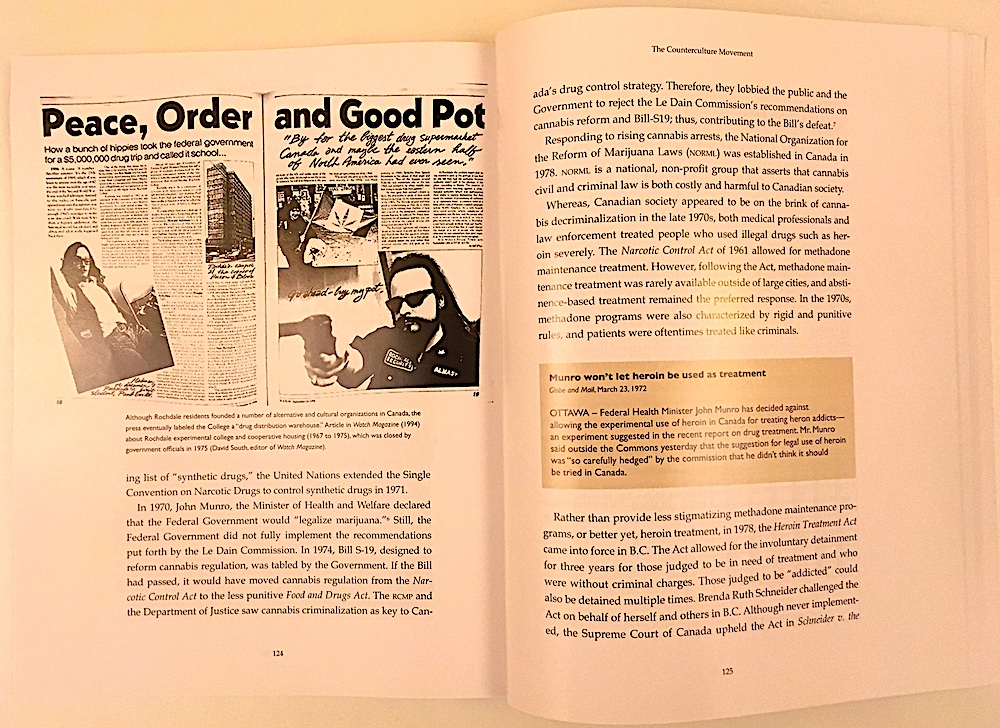
Upon my return from a United Nations workshop in Dhaka, Bangladesh, I was delighted to receive a copy of the new book Busted: An Illustrated History of Drug Prohibition in Canada (Fernwood Publishing, 2017, ISBN 978-1-55266-976-1) by Professor Susan Boyd from the Faculty of Human and Social Development at the University of Victoria in British Columbia, Canada.
Busted: An Illustrated History of Drug Prohibition in Canada by Susan Boyd (Fernwood Publishing).
It is a beautifully illustrated book and an excellent introduction to Canada’s unique history surrounding drug use and drug prohibition. As the country embarks on a new phase in its relationship to some drugs, the book gives the bigger picture that many Canadians are probably unaware of. Canada had a period of extensive social experimentation in the late 1960s and early 1970s, defying perceptions the country is ‘boring’ and where excitement doesn’t happen.
A feature we did for Toronto’s Watch Magazine in 1994 (in which I was Editor-in-Chief) is on page 124 in the chapter on The Counterculture Movement: The 1960s and 1970s.
The deluge of data gathered by the digital revolution underway in the global South continues to offer a significant economic opportunity. How this data is harvested will forge the successful Internet business models of the future.
As the Internet spreads its way further across the global South, many are forecasting this new surge in web users and the data they generate will radically reshape the way people engage with and use the Internet. Unlike previous generations of web users, most of these new users will be accessing the Internet primarily with mobile phones and other devices, rather than computers. Many will not be native English speakers.
Argentinian philosopher and digital publisher Octavio Kulesz says “the digital experiences undertaken in the South suggest that new technologies represent a great opportunity for developing countries … but on the condition that local entrepreneurs seek out original models adapted to the concrete needs of their communities.”
In a report for the International Alliance of Independent Publishers, Kulesz said we “must ask ourselves how useful it would be to reproduce the prototypes from the North in the South.”
According to the Cisco Visual Networking Index Forecast (2010-2015), by 2015, there will be 3 billion Internet users in the world: 40 percent of the global population. Internet Protocol (IP) traffic is growing fastest in Latin America, where it is forecast to grow by 50 percent from 2010 to 2015. Next are the Middle East and Africa.
There are already as many networked devices – tablets, mobile phones, connected appliances and smart machines – on the planet as people. By 2015 – the year of the Millennium Development Goals (http://www.un.org/millenniumgoals) – they’ll outnumber people by two to one.
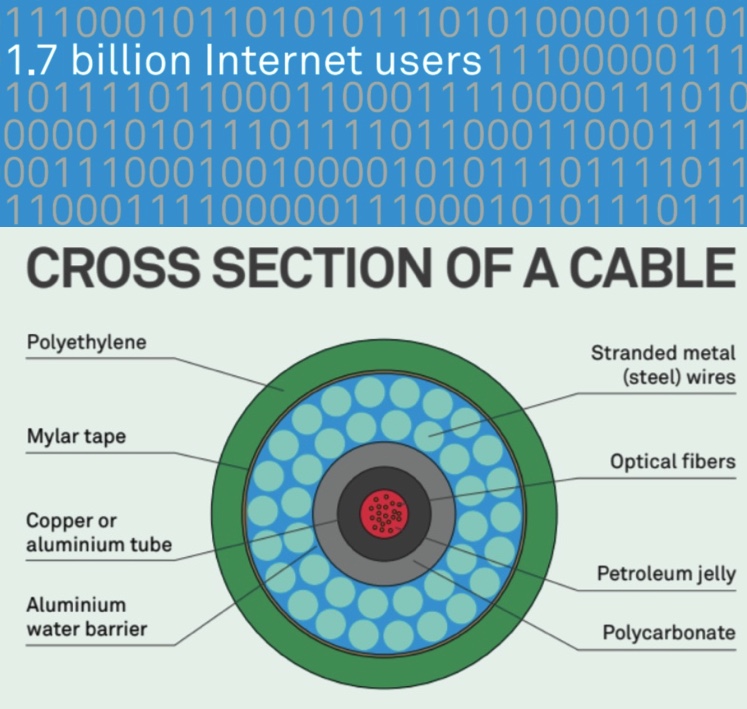
The potential of the Internet revolution is especially compelling in Africa, a continent neglected for so long in the global communications revolution. The 10,000 kilometre-long East African Submarine Cable System (EASSy), connecting sub-Saharan Africa with Europe and Asia, has joined other cables from the continent. Gradually, the infrastructure is coming in to place to connect Africa properly to the world.
The first batch of Internet users came from the United States, home of the Internet which grew out of the US military’s Arpanet system (http://en.wikipedia.org/wiki/ARPANET). This first wave of the Internet’s history was very much an American phenomenon. The priorities and content of the web were driven by the cultural and economic concerns of its American users. And the big brands of today’s web reflect this: Google, Facebook, eBay, Twitter, Yahoo, WordPress, to name a few.
As the web expanded across wealthy, developed nations in Europe, users mostly mimicked the priorities of the American approach, using the web to express themselves, be entertained, share files, access government services and sell and market products and services.
But the spread of the Internet across the global South is already showing itself to have a different character and set of priorities. One change is in the way people are accessing the web: through mobile phones and other devices, rather than through laptops and personal computers.
In the future, the trend is towards a global mobile world, in which the communications medium will favour video and audio over text, according to Fast Company magazine (http://www.fastcompany.com). Information is being shared across boundaries on a vast scale for the first time. People around the world are gaining access to data and information never available before, and all of it is nearly instantaneous.
Kulesz said countries of the South face a profound and difficult decision: follow the lead taken by the technology pioneers of the South, or try and replicate what was done in the North?
“Sooner or later, these countries will have to ask themselves what kind of digital publishing highways they must build,” his report said, “and they will be faced with two very different options: a) financing the installation of platforms designed in the North; b) investing according to the concrete needs, expectations and potentialities of local authors, readers and entrepreneurs. Whatever the decision of each country may be, the long-term impact will be immense.”
The costs of trying to replicate the technological infrastructure of the North makes little sense, when it is technologically possible to bypass this costly infrastructure with even newer work-arounds.
“Of course, it would be extraordinary to obtain 80 percent Internet penetration in Africa or make huge investments in infrastructure throughout the developing regions,” continues Kulesz, “but that may never happen. And in the event that it does occur some day, by then the industrialized countries will no doubt have made another technological leap, meaning that the disparity in infrastructure would still persist. So the most effective option is to start working right now, with what is available.”
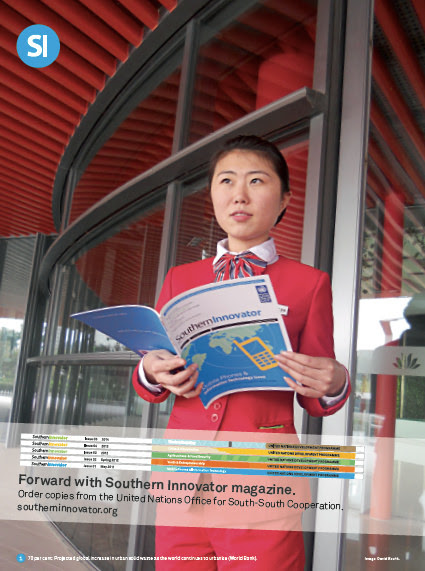
New global magazine Southern Innovator (http://www.scribd.com/doc/57980406/Southern-Innovator-Issue-1), published by UNDP’s Special Unit for South-South Cooperation, captures how this process is happening, as the people of the global South re-shape the Internet to be their own and to meet their needs.
2) Cisco Visual Networking Index Forecast (2010-2015): The annual Cisco VNI Forecast was developed to estimate global Internet Protocol traffic growth and trends. Widely used by service providers, regulators, and industry influencers alike, the Cisco VNI Forecast is based on in-depth analysis and modelling of traffic, usage and device data from independent analyst forecasts. Website:http://newsroom.cisco.com/press-release-content?type=webcontent&articleId=324003
3) Digital Publishing in Developing Countries: A report by the International Alliance of Independent Publishers. Website:http://alliance-lab.org/etude/archives/date/2010/01?lang=en
Development Challenges, South-South Solutions was launched as an e-newsletter in 2006 by UNDP’s South-South Cooperation Unit (now the United Nations Office for South-South Cooperation) based in New York, USA. It led on profiling the rise of the global South as an economic powerhouse and was one of the first regular publications to champion the global South’s innovators, entrepreneurs, and pioneers. It tracked the key trends that are now so profoundly reshaping how development is seen and done. This includes the rapid take-up of mobile phones and information technology in the global South (as profiled in the first issue of magazine Southern Innovator), the move to becoming a majority urban world, a growing global innovator culture, and the plethora of solutions being developed in the global South to tackle its problems and improve living conditions and boost human development. The success of the e-newsletter led to the launch of the magazine Southern Innovator.











 David South Consulting
You must be logged in to post a comment.